Busan IFC Mall (2F–4F) · 6,600㎡ One-Day Comprehensive Health Screening & Specialist Care · International Patient Concierge


Medical Guide
Same-Day Results Health Screening in Korea Explained
Which health screening results arrive the same day in Korea, which arrive about two weeks later, and why laboratory, imaging and pathology differ so much.
Schedule a ConsultationSame-Day Results Health Screening in Korea Explained
Medically reviewed by Dr. Bae Jae Kyoung, Family Medicine and Preventive Medicine Specialist
If you have been looking for a same day results health checkup Korea can offer before your flight home, the honest answer is more interesting than a simple yes or no. Some measurements really are finished while you are still in the building. Others cannot be, no matter how good the equipment is, because the biology itself takes time. Understanding which is which is the difference between a trip that works and a trip where you leave the country still waiting for the one answer you actually came for.
The Bottom Line
- At Yonsei Mirae IFC Medical Center in Busan, same-day results belong specifically to the one-day premium checkup program, which is built so that examinations and a results discussion fit inside a single visit.
- The center's general checkup process works to a different clock: the formal result sheet is normally received about two weeks after the examination.
- Speed depends on the test, not on how much you paid or how modern the machine is. Automated chemistry, hematology and immunoassay panels finish in hours; cultures, cytology and tissue pathology cannot be rushed past the biology and the processing they require.
- Imaging is acquired in minutes but interpreted afterward. The picture is fast; the signed report from the radiologist is a separate step.
- Plan your itinerary around the slowest result you are likely to need, not the fastest one you are likely to get.
What Same-Day Results Actually Refer To
It helps to be precise, because "same-day results" is often repeated as if it described every service a screening center offers. It does not.
Yonsei Mirae IFC Medical Center runs a one-day, one-stop premium checkup program, and that program is the one designed around a same-day answer. The visit is sequenced so that registration, consultation, the selected examinations and the review of what those examinations showed happen in one continuous flow rather than across separate appointments on separate days. That is a deliberate operational design, not a promise about every test that exists.
The center's general checkup process is organized differently. There, the formal result sheet is normally received about two weeks after the examination. Both statements are true at the same time, and travelers who confuse them end up booking a departure date around the wrong one.
So the first question to settle when you book is not "do you give same-day results?" It is "which program am I in, and which of my specific tests report inside it?" The center's booking and consultation channel is where that gets pinned down before you buy a plane ticket.
Why Some Results Are Genuinely Fast
Automated analyzers do most of the heavy lifting
A large share of any comprehensive checkup is blood and urine chemistry: glucose, lipids, liver and kidney panels, blood counts, thyroid and other hormone assays, common tumor markers. These run on automated instruments that pipette, incubate, measure and calculate without a human touching each sample. Yonsei Mirae IFC Medical Center operates its own ATELLICA immunology analyzer, AU680 biochemistry analyzer and XN1000 hematology analyzer on site, which matters mainly because the sample never has to be couriered to an outside facility and queued behind someone else's workload.
The size of that effect is well documented in the peer-reviewed literature. Randomized and observational research comparing point-of-care testing with central laboratory processing has repeatedly found large reductions in the interval between drawing a sample and having a usable number, with downstream effects on how quickly clinicians can act. The mechanism is unglamorous: transport, batching and queuing are often a bigger share of total turnaround than the chemistry itself.
What the regulators actually regulate
There is a useful vocabulary here borrowed from United States laboratory regulation, and it explains why "fast" and "simple" tend to travel together.
The Centers for Medicare & Medicaid Services runs the Clinical Laboratory Improvement Amendments program, which sets quality standards for laboratory testing performed on people, with the stated aim of ensuring that results are accurate, reliable and timely regardless of where the testing happened. CMS notes that the requirements scale with how complicated a method is: the more complex the test, the more stringent the rules around it.
The Centers for Disease Control and Prevention, which supports the same program, sharpens the distinction. It describes waived tests as simple procedures carrying a low risk of an incorrect result, and it warns against a common mix-up: "point-of-care" describes where a test is performed, not how complex it is. Moderate and high complexity testing, which CDC groups together as nonwaived testing, is subject to inspection and to quality standards covering proficiency testing, quality control and personnel.
Translated into the experience of a screening visit: the tests that can be read quickly are usually the ones with short, standardized, highly automated methods. The tests that take days are the ones where a trained human has to prepare, look at and judge something.
Imaging: Fast to Acquire, Slower to Report
This is the distinction most travelers miss, and it causes the most disappointment.
A 3.0T MRI sequence, a low-dose CT of the chest, a digital X-ray, a carotid or abdominal ultrasound, a 3D mammogram — all of these are acquired in minutes. The images exist almost immediately. What does not exist immediately is the report.
RadiologyInfo.org, the patient information service published jointly by the Radiological Society of North America and the American College of Radiology, sets out what that report involves. A radiologist supervises the examination, reads and interprets the images, and writes a structured document for the clinician who ordered it. That document has recognizable parts: the type of examination, the clinical history and reason for it, any comparison with prior studies, the technique used, the findings region by region, and finally the impression — the radiologist's summary of what matters and what should happen next. RadiologyInfo describes the impression as the most important part of the report for you and your care team, because it is where recommendations live.
Several things in that sequence take real time. Comparison with prior studies requires the prior studies to be available, which is why bringing earlier imaging from home is more than a courtesy. An abnormal or borderline finding may prompt the radiologist to recommend an additional sequence, a follow-up study after an interval, a biopsy, or correlation with laboratory results before anything is concluded. And the report is only final once the radiologist signs it.
Practically, this means an imaging finding can often be discussed with you on the day in preliminary terms, while the signed, formal interpretation is a distinct document that follows its own path.
Why Cultures, Cytology and Tissue Reports Cannot Be Rushed
Microbiology waits for organisms to grow
If any part of your checkup involves a culture, you are no longer waiting on a machine. You are waiting on living organisms to multiply to a detectable level.
Research published in the American Society for Microbiology's Journal of Clinical Microbiology illustrates the range. A study of more than 150,000 blood culture bottles in routine clinical use reported mean times to a positive signal of roughly 12 hours for Escherichia coli, about 18 hours for Staphylococcus aureus, and close to 49 hours for Candida species. The authors also note that the conventional interval laboratories hold a bottle before calling it negative has remained five days. A negative culture is a result too — and confirming one takes longer than detecting an obvious positive.
Cytology and histopathology require preparation before interpretation
Tissue and cell samples go through a physical process before anyone can form an opinion about them.
The National Cancer Institute describes the standard route. A specimen is chemically fixed, usually in formalin, then processed to remove water and replace it with paraffin wax, embedded into a block, sliced into very thin sections, mounted on slides and stained so that cell structures become visible. NCI states that preparing these fixed sections normally takes several days, and that a pathologist typically sends a report to the ordering doctor within about ten days of the biopsy or surgery. The same fact sheet explains the one genuine exception — frozen section — where tissue is rapidly frozen, cut and stained for an answer in roughly fifteen to twenty minutes. That technique exists for decisions that have to be made while a patient is still on an operating table, and it trades detail for speed.
The American Cancer Society sets out, in plain language, why two people can have biopsies on the same morning and wait very different lengths of time. Some routine biopsy and cytology results may be ready within a day or two. Others take longer for technical reasons: certain sample types, including bone and fatty tissue such as breast tissue, simply take longer to prepare. For larger specimens, only selected areas are processed first, and after looking at those initial sections a pathologist may decide more sections are needed.
When a finding triggers a second look
Additional time is also a sign that the process is working properly rather than failing.
A pathologist may order special or immunohistochemical stains to distinguish between possibilities that look similar on a routine slide. A case may go to a colleague for a second opinion. Molecular or biomarker testing may run separately and be attached later. The National Cancer Institute notes that a report's comments section is often where a pathologist flags tests that are still pending and recommends further work. None of that is delay in the ordinary sense. It is the difference between a quick answer and a correct one.
Laboratory medicine takes this seriously enough to treat it as a measurable quality problem. The College of American Pathologists runs a laboratory accreditation program under which laboratories are inspected against detailed checklist requirements, and the pathology literature includes published work on identifying bottlenecks in the surgical pathology workflow and shortening reporting intervals without compromising the diagnosis.
The Two Clocks You Are Planning Around
Set out side by side, the planning picture becomes simple.
- The one-day premium program at Yonsei Mirae IFC Medical Center is the route built for a same-day answer, and it is the route to ask about if your trip is short.
- The general checkup process delivers the formal result sheet about two weeks after the examination.
- Within either route, a culture, a cytology specimen or a tissue sample runs on its own biological schedule and will not be finished on the afternoon it was collected.
- A signed imaging report is a separate deliverable from the images themselves.
The center also supports the gap between those clocks. Result consultations are available by phone, and reports, doctor's notes and medical records can be prepared in English for international patients, so a result that lands after you have gone home is still a result you can use.
A Practical Rule for Timing Your Trip
Here is the rule worth writing down: build your schedule around the slowest test in your program, not the fastest.
Applied to a real itinerary, that produces a handful of concrete decisions.
- Book the checkup early in your time in Korea rather than on your final morning. If something needs a closer look, you want days in hand, not hours.
- Ask at booking which of your selected examinations involve tissue, cells or culture, because those are the ones that set your true timeline.
- Keep at least a working day between the examination and any flight if sedation is part of your program, for reasons of recovery rather than reporting.
- Confirm how a later report will reach you, and in what language, before you leave the building.
- Give the center a way to contact you after you are home, and make sure you know how to reach them.
Health screening at the center runs Monday through Friday from 7:30 AM to 4:30 PM and on Saturday mornings until 12:30 PM, Korean Standard Time, with Sundays and public holidays closed. Those hours matter to planning, because a Saturday examination has fewer working days behind it than a Tuesday one.
If you want to understand who is reviewing your results before you commit to a date, the center's clinic introduction page is a reasonable place to start.
Questions Worth Asking at the Booking Stage
A short list, asked before you pay for flights, removes almost all of the uncertainty:
- Which program am I booked into, and is it the one-day premium route?
- Which of my tests are expected to be discussed during the visit itself?
- Which of my tests involve pathology, cytology or culture?
- How will a later report reach me, and will it be in English?
- If something needs a second test, how quickly could that be arranged while I am still in Korea?
- Who do I contact after I return home, and what is the best channel?
Frequently Asked Questions
Does every test in a Korean health checkup produce a same-day result?
No. Same-day results at Yonsei Mirae IFC Medical Center are a feature of the one-day premium checkup program, and even inside that program the timing depends on the individual test. Automated blood and urine analysis finishes quickly, while anything requiring culture growth or tissue processing follows a longer schedule that no facility can compress.
When does the formal result sheet arrive for a general checkup?
For the center's general checkup process, the formal result sheet is normally received about two weeks after the examination. That is a different timeline from the one-day premium program, so it is worth confirming which route you are booked into before you plan your departure date.
Why does an MRI or CT take minutes but the report take longer?
The images are captured quickly, but a radiologist still has to interpret them. RadiologyInfo.org, published by the Radiological Society of North America and the American College of Radiology, describes a report that includes findings and an impression, sometimes compares the study with prior imaging, and may recommend further testing before anything is concluded. The signed report is a separate product from the scan.
Why do biopsy results take days rather than hours?
The National Cancer Institute explains that tissue is fixed, processed, embedded in wax, sliced, mounted and stained before a pathologist can examine it, and that preparing these sections normally takes several days. The American Cancer Society adds that some tissue types take longer to prepare and that a pathologist may need to examine additional sections before reaching a conclusion.
Can I get results after I fly home?
Yes. The center offers result consultations by phone, and examination reports, doctor's notes and medical records can be prepared in English for international patients. Agree on the contact method and the delivery channel before you leave, so a later report does not stall.
Should I schedule my checkup at the start or the end of my trip?
The start, in almost every case. Booking early leaves room for an additional test or a repeat study if a finding warrants one, and it means you are not choosing between a connecting flight and a follow-up appointment.
Does a longer wait mean something is wrong?
Not by itself. Extra time often reflects additional stains, a second pathologist reviewing the case, or molecular testing being added — all of which exist to make the answer more reliable. A result that takes longer is not a warning sign, and the meaning of any finding should be discussed with a physician rather than inferred from how long it took.
This article is for general informational purposes and does not constitute individualized medical advice, and it is not a self-diagnosis tool. Screening options, test selection, and the meaning of any result can only be determined through consultation with a qualified physician.
More Articles
Continue reading our clinical guides.
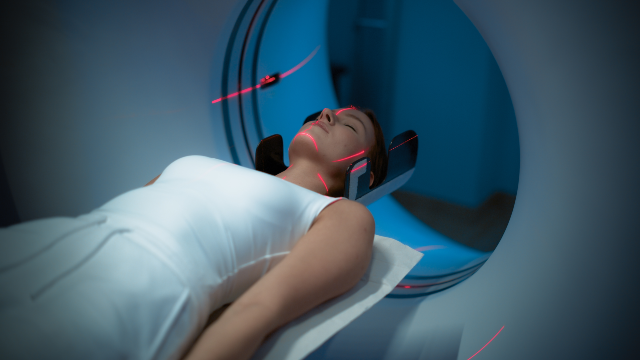
Is a 3.0T MRI Health Screening Safe? Radiation, Contrast
What MRI screening safety really involves: no ionizing radiation, gadolinium contrast risks, implant disclosure, pregnancy advice and claustrophobia help.
Learn More
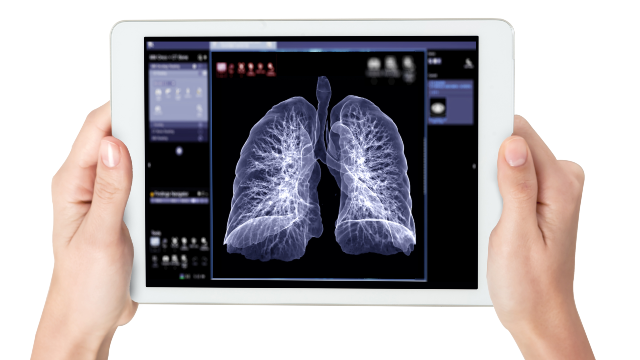
Low-Dose CT Lung Cancer Screening in Korea: Who Qualifies
Who should consider low-dose CT lung screening in Korea: age and smoking criteria from the USPSTF and ACS, trial evidence, risks, and follow-up planning.
Learn More
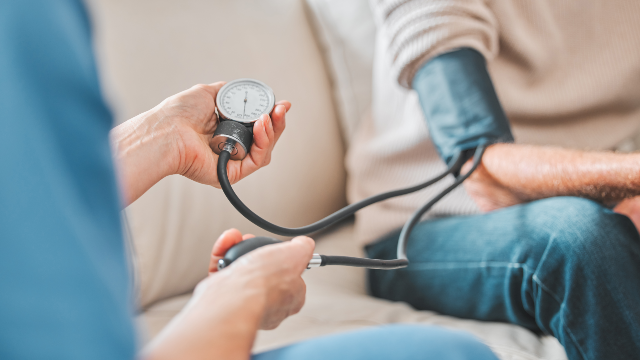
Combining a Health Checkup and GI Screening in Korea
How to combine a health checkup and colonoscopy in Korea on one trip: what the shared fast covers, how the day runs, and real limits of a combined visit.
Learn More