Busan IFC Mall (2F–4F) · 6,600㎡ One-Day Comprehensive Health Screening & Specialist Care · International Patient Concierge

Medical Guide
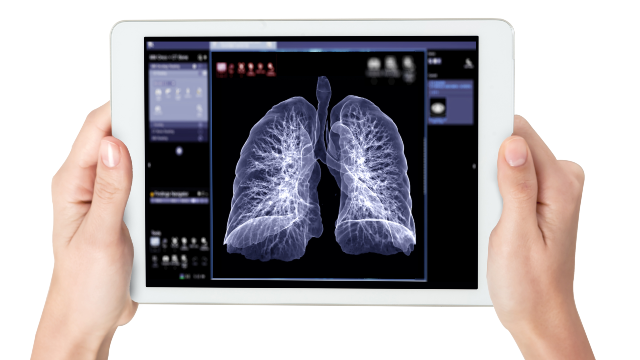
Low-Dose CT Lung Cancer Screening in Korea: Who Qualifies
Who should consider low-dose CT lung screening in Korea: age and smoking criteria from the USPSTF and ACS, trial evidence, risks, and follow-up planning.
Schedule a ConsultationLow-Dose CT Lung Screening in Korea: Who Should Consider It
Medically reviewed by Dr. Seo Jeong-su, M.D., Ph.D., Board Certified Radiologist
If you are researching low-dose CT lung screening in Korea as part of a comprehensive checkup, the first question worth answering is not where to have the scan but whether you are the kind of person the evidence supports scanning at all. Lung screening is one of the few imaging tests with strong randomized-trial data behind it, and that data applies to a specific group of adults defined by age and smoking history. For everyone else, the balance between finding an early cancer and being pulled into unnecessary testing looks very different. This guide explains who qualifies under the major published criteria, what the trials actually showed, what the drawbacks are, and how a chest CT scan fits into a health checkup in Korea.
The Bottom Line
- The U.S. Preventive Services Task Force recommends annual low-dose CT screening for adults aged 50 to 80 with at least a 20 pack-year smoking history who currently smoke or quit within the past 15 years.
- The American Cancer Society reaches a similar age and pack-year threshold but removed the years-since-quitting limit in its 2023 update, widening the eligible group.
- Two large randomized trials, the National Lung Screening Trial and NELSON, are the reason screening is recommended at all; both found fewer lung cancer deaths in the CT-screened group.
- The main drawbacks are false positives, incidental findings unrelated to the lungs, small repeated doses of radiation, and overdiagnosis, which is why this is a shared decision with a physician rather than a routine add-on for every traveler.
- Yonsei Mirae IFC Medical Center in Busan offers Low-Dose CT Scan as part of its Diagnostic Imaging services, performed on 128-channel MDCT equipment within a one-day, one-stop checkup.
What a Low-Dose CT Lung Screening Actually Is
A low-dose CT of the chest is a computed tomography scan performed with a reduced radiation setting, tuned to produce images good enough to spot small nodules in air-filled lung tissue without the fuller exposure of a standard diagnostic chest CT. According to RadiologyInfo.org, the patient education resource published jointly by the Radiological Society of North America and the American College of Radiology, a low-dose chest CT produces images of sufficient quality to detect many abnormalities while using a small fraction of the ionizing radiation of a conventional chest CT.
The reason this matters is contrast with the older approach. RadiologyInfo.org also notes that chest X-ray and sputum cytology, used alone or together, did not reduce the risk of dying from lung cancer. A plain chest radiograph compresses the whole chest into a single overlapping image; a CT reconstructs the lung as a stack of thin cross-sections, so a nodule of a few millimeters that would be hidden behind a rib or a blood vessel on a radiograph becomes visible.
How the scan is performed
The examination itself is short and undemanding. You lie on your back on a table, usually with your arms raised above your head, and the table moves through the scanner ring while you hold your breath for a few seconds. No contrast dye is injected for a screening lung CT, no needle is involved, and no sedation is used. At Yonsei Mirae IFC Medical Center the actual scanning time is under ten minutes, patients change into non-metallic examination clothing beforehand, and there is no recovery period afterward — you can eat, walk out, and continue your day immediately.
Who the Evidence Says Should Consider Screening
The USPSTF eligibility criteria
The most widely cited eligibility standard in the United States comes from the U.S. Preventive Services Task Force. Its recommendation is for annual screening with low-dose CT in adults aged 50 to 80 years who have a smoking history of at least 20 pack-years and who either currently smoke or have quit within the past 15 years. The Task Force also states that screening should stop once a person has gone 15 years without smoking, or once a health problem substantially limits life expectancy or the ability or willingness to undergo curative lung surgery. That last clause is easy to skip past, but it is the logic of the whole program: screening only helps if a cancer found early can actually be treated.
The 2021 version of that recommendation lowered the starting age from 55 to 50 and the smoking threshold from 30 pack-years to 20, which roughly doubled the number of American adults who meet the criteria.
A pack-year is a simple multiplication: packs smoked per day multiplied by years smoked. One pack a day for twenty years is 20 pack-years, and so is two packs a day for ten years. It is worth working this figure out honestly before a consultation, because it is the single number that most determines whether you fall inside or outside the recommended group.
Where the American Cancer Society differs
The American Cancer Society updated its lung cancer screening guideline in 2023 and recommends yearly low-dose CT for people aged 50 to 80 who smoke or formerly smoked and have a 20 pack-year or greater history. The important difference is that the Society dropped the years-since-quitting requirement entirely. Under the earlier version, a former smoker who had stopped 18 years ago was no longer advised to screen; under the current version, that person remains eligible. The Society's reasoning is that risk in long-term former smokers does not fall away as cleanly as the older cutoff implied. Its guidance also stresses that anyone being screened should first discuss the benefits, limits, and harms with a doctor, and that people who still smoke should be offered help to quit.
How Korea's own national program defines risk
Korea runs a national lung cancer screening program, introduced in 2019, which grew out of the Korean Lung Cancer Screening Project. Published evaluations of the Korean program describe biennial low-dose CT for adults in their mid-fifties to mid-seventies with a smoking history of at least 30 pack-years — a narrower group than the American criteria. A nationwide performance report on the Korean program's 2019 to 2020 results, indexed in the National Library of Medicine's PubMed database, reported a positive predictive value in the single digits, which is a useful reminder that most positive screens do not turn out to be cancer.
For an international visitor, the practical point is that the national program's thresholds govern state-funded screening for residents, while a private comprehensive checkup is arranged around your own risk profile and your physician's assessment.
The Evidence Behind the Recommendation
Lung screening is recommended because of two randomized trials rather than because CT is a good camera.
The National Cancer Institute's National Lung Screening Trial enrolled 53,454 current and former heavy smokers aged 55 to 74, all with at least a 30 pack-year history, and randomly assigned them to three annual screens with either low-dose helical CT or standard chest X-ray. The Institute reports that participants screened with low-dose CT had a 15 to 20 percent lower risk of dying from lung cancer than those screened with chest X-ray, which it describes as roughly three fewer deaths per 1,000 people screened over about seven years of observation. The Institute also reports that across the three rounds, 24.2 percent of the low-dose CT screens were positive, and that most positive screens in both arms led to additional testing.
The Dutch-Belgian NELSON trial, published in the New England Journal of Medicine, used volume-based nodule measurement rather than diameter alone and studied a largely male population over ten years. It found a lower rate of death from lung cancer in the screened group, and the American Cancer Society described the NELSON result as confirming the mortality benefit seen in the earlier American trial. Two independent trials in different health systems reaching the same direction of result is why professional bodies moved from cautious interest to positive recommendation.
Who Is Generally Not a Candidate
Screening is not simply better for everyone. Several groups fall outside the evidence:
- Adults who have never smoked and have no substantial occupational or environmental exposure. The trials did not enroll them, so the balance of benefit and harm in never-smokers is not established by randomized data.
- Adults younger than the recommended age band with a light smoking history, where the underlying chance of lung cancer is low enough that false positives dominate.
- People who have not smoked for many years and, under the Task Force framing, have passed the 15-year mark, though the American Cancer Society position differs here.
- Anyone whose general health means that a lung cancer found on screening could not be treated with curative intent. The Task Force is explicit that screening should stop in this situation.
- People who are pregnant, for whom radiation-based imaging is deferred or replaced unless there is a pressing clinical reason.
Yonsei Mirae IFC Medical Center describes candidates for its Low-Dose CT Scan as including long-term or former smokers, adults over 40, people with a family history of lung disease, and people with occupational exposure to industrial pollutants. Note that this is broader than the randomized-trial population. Being in that broader group is a reason to have the conversation with a physician, not a substitute for having it.
The Trade-Offs You Should Weigh
False positives and further testing
A positive screen means something was seen that needs another look, and in the large majority of cases it is not cancer. RadiologyInfo.org notes that more than 95 percent of lung nodules are not cancer. The National Cancer Institute's screening summaries describe false-positive results as the most common harm of lung screening, leading to extra imaging and, in a smaller number of people, to invasive procedures such as a needle biopsy or a surgical sampling, each of which carries its own small complication risk. There is also the harm that does not show up in a complication table: months of low-grade worry while waiting for a repeat scan.
Incidental findings
A chest CT images more than lung tissue. Coronary artery calcification, thyroid nodules, liver lesions, adrenal nodules, and vertebral changes all show up, and some of them generate their own follow-up pathway. A few incidental findings are genuinely valuable — coronary calcium, for instance, carries real information about cardiovascular risk. Many others are benign and are found at the same rate in people who never have a scan. Going in expecting a purely lung-shaped answer and receiving a list of unrelated observations is a common source of frustration, and it is worth anticipating.
Cumulative radiation exposure
A single low-dose chest CT delivers a modest dose, and the clinic describes low-dose protocols as using a substantially smaller exposure than a standard diagnostic CT. The consideration is not one scan but many. Screening is an annual commitment, so a person who screens for a decade accumulates ten exposures, and the rationale for keeping each scan's dose down is precisely that repetition. The National Cancer Institute lists radiation-induced cancer as a rare harm of screening, which is the honest framing: small per scan, not zero across a program, and best managed by not screening people who are unlikely to benefit.
Overdiagnosis
Some cancers found by screening would never have caused symptoms or shortened life. Because there is no reliable way to tell those apart from aggressive tumors at the time of diagnosis, they are treated, and the treatment carries real cost to the patient. The National Cancer Institute treats overdiagnosis as one of the principal harms of lung screening. It is the hardest trade-off to feel intuitively, because the person who was overdiagnosed experiences it as a life saved.
Screening also does not remove the possibility of a cancer that the scan missed or that appears between annual scans, so a normal result is best understood as reassuring rather than final.
Why a Structured Follow-Up Program Matters
The scan is the cheap part. What determines whether screening helps you is the system around it.
Lung-RADS and standardized reporting
The American College of Radiology maintains Lung-RADS, the Lung CT Screening Reporting and Data System, which standardizes how a screening chest CT is reported and what management step each category triggers. It was created in 2014 and updated most recently in a 2022 version that added guidance on atypical pulmonary cysts, juxtapleural nodules, airway-centered nodules, and potentially infectious findings, and that refined how nodule growth is judged. The value to you as a patient is that a Lung-RADS category converts a radiologist's description into an explicit next step and interval, rather than leaving "a small nodule was seen" hanging.
RadiologyInfo.org also sets out what a screening program should look like: run by professionals and facilities experienced in low-dose CT screening, involving multiple specialties such as pulmonology, radiology, thoracic surgery, and primary care, and never treated as a substitute for stopping smoking. That last point carries more weight than any scanner specification. Not smoking remains the single most effective way to lower lung cancer risk.
For an international patient, the follow-up question is sharper still, because you will be on a different continent when a repeat scan falls due. Ask before you book how findings are communicated, whether you can take your images home in a form your own physician can open, and who to contact if a result needs discussion after you fly back.
How Low-Dose CT Fits Into a Checkup in Busan
Yonsei Mirae IFC Medical Center is a health-screening center in Busan, South Korea, founded in 2021 and located on the second, third, and fourth floors of IFC Mall at 133 Jeonpo-daero, Nam-gu, adjacent to BIFC subway station. Low-Dose CT Scan sits within its Diagnostic Imaging service group alongside carotid, cardiac, and abdominal ultrasound, and the scan is performed on 128-channel MDCT equipment. The center performs approximately 50,000 checkups a year across its six specialty areas and 20 services, and you can read more about its background on the clinic's about us page.
Screening programs at the center are tiered from Basic through Silver, Gold, Premium, and Platinum, and MDCT is one of the options that can be included depending on the program selected. A comprehensive checkup typically runs about 3.5 to 4 hours in a single visit, with male and female checkup zones separated and a separate VIP patient flow within the roughly 6,600-square-meter facility. What is included, and therefore what it costs, varies by program, so confirm the current scope and fees directly with the center when you arrange a visit.
The imaging is read by the center's medical team, including radiology specialist Dr. Seo Jeong-su, a board certified radiologist who served as a professor at Ewha Womans University College of Medicine and as a visiting fellow at MD Anderson Cancer Center in the United States. International patients are supported by a dedicated international medical center with English and Chinese interpretation, and examination reports, doctor's notes, and medical records can be prepared in English and Chinese — which matters if you intend to hand your results to a physician at home. Where a finding needs more than the center itself provides, a One-Step referral system connects patients to the relevant department or to a higher-level general hospital. To ask whether lung screening belongs in your program, use the clinic's contact us page.
Making This a Shared Decision
Both the Task Force and the American Cancer Society frame lung screening as a conversation, not a checkbox. A useful consultation covers four things: your calculated pack-year history and current smoking status; your age relative to the recommended band; what you would want to happen if a small nodule were found while you were abroad; and, if you currently smoke, what support is available to help you stop. Bring your own records if you have prior chest imaging, because a nodule that has been stable for years is interpreted very differently from one seen for the first time.
Frequently Asked Questions
How long does a low-dose chest CT take?
The scan itself is fast — under ten minutes of table time at Yonsei Mirae IFC Medical Center, and only a few seconds of actual breath-holding. Most of the appointment is check-in, changing into examination clothing, and positioning. When the scan is part of a comprehensive checkup, the overall visit is longer because of the other examinations in the program.
Does the scan hurt, and do I need to fast?
The examination is minimally uncomfortable and non-invasive. There is no injection, no contrast dye for a screening lung CT, and no anesthetic. You will be asked to remove metallic jewelry and wear non-metallic examination clothing. Fasting instructions depend on the wider checkup program rather than on the lung scan itself, so follow the preparation guidance you are given for the whole visit.
I have never smoked. Should I still have a lung CT?
The randomized trials that support lung screening enrolled current and former heavy smokers, so the evidence base does not extend to never-smokers with no other risk factors. That does not mean a scan is never reasonable — a strong family history, symptoms, or significant occupational exposure can change the calculation. It means the decision should be individual and made with a physician rather than assumed.
What happens if a nodule is found?
Most nodules are not cancer. Depending on size and appearance, the usual next step is a repeat scan after a defined interval to see whether the nodule changes, which is exactly what the Lung-RADS categories are designed to specify. If a nodule grows or has suspicious features, further evaluation such as a contrast-enhanced CT or a tissue sample may be recommended. The center provides result consultations and, when findings require more, referral to a relevant department or a higher-level hospital.
Is annual screening really necessary, or is one scan enough?
The trials tested repeated annual rounds, not a single scan, and the mortality benefit they measured belongs to a program rather than to one image. A one-off scan in an eligible person gives a baseline and may find something, but it does not reproduce the benefit that the recommendations describe. This is one reason eligibility matters: a program is a commitment, and it should be entered by people the evidence supports.
Can I get my images and report in English?
Yes. Yonsei Mirae IFC Medical Center's international patient service prepares examination reports, doctor's notes, and medical records in English and Chinese, with English-speaking assistance available from consultation onward. Ask when you book for your imaging files as well as the written report, so your physician at home can review the actual scan rather than a summary of it.
When can I fly home after the scan?
A low-dose chest CT is non-invasive and requires no recovery, so travel is not restricted by the scan itself. Patients can generally resume normal activity immediately. If a finding leads to an additional test or a procedure, the timing of travel should be decided with the treating medical team rather than assumed.
This article is for general informational purposes and does not constitute individualized medical advice, and it is not a self-diagnosis tool. Screening options, test selection, and the meaning of any result can only be determined through consultation with a qualified physician.
More Articles
Continue reading our clinical guides.
Is a 3.0T MRI Health Screening Safe? Radiation, Contrast
What MRI screening safety really involves: no ionizing radiation, gadolinium contrast risks, implant disclosure, pregnancy advice and claustrophobia help.
Learn More
Low-Dose CT Lung Cancer Screening in Korea: Who Qualifies
Who should consider low-dose CT lung screening in Korea: age and smoking criteria from the USPSTF and ACS, trial evidence, risks, and follow-up planning.
Learn More
Combining a Health Checkup and GI Screening in Korea
How to combine a health checkup and colonoscopy in Korea on one trip: what the shared fast covers, how the day runs, and real limits of a combined visit.
Learn More