Busan IFC Mall (2F–4F) · 6,600㎡ One-Day Comprehensive Health Screening & Specialist Care · International Patient Concierge

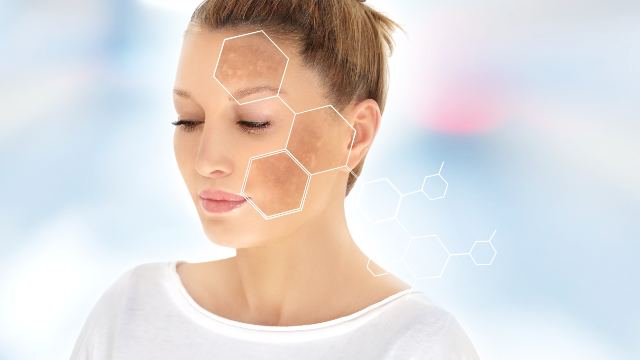
Medical Guide
Laser Toning for Melasma in Korea: Skin-Analysis Guide
How melasma laser toning in Korea works, why skin analysis comes first, what results are realistic, and why sun protection decides how long they last.
Schedule a ConsultationLaser Toning for Pigmentation and Melasma: What Skin Analysis Changes About Your Treatment Plan
Medically reviewed by Dr. Baik Seung Hyuk, M.D., Ph.D., FASCRS, Hospital Director
If you have been reading about melasma laser toning in Korea, you have probably noticed that the marketing tends to lead with devices and the medicine tends to lead with something far less glamorous: an assessment of your skin before anything is switched on. At Yonsei Mirae IFC Medical Center in Busan, laser toning for pigmentation and melasma sits inside the center's dermatology treatment services, and the sequence is deliberate — skin-type analysis and a detailed look at your skin condition come first, and the treatment plan follows from what that assessment shows. This guide explains what laser toning is, why the assessment matters more than the brand name on the machine, and what a realistic outcome looks like over months rather than days.
The Bottom Line
- Laser toning for pigmentation and melasma is a non-invasive laser treatment that targets excess melanin to improve the appearance of pigmentation, uneven skin tone and melasma.
- At Yonsei Mirae IFC Medical Center, skin-type analysis and a detailed skin-condition assessment — including the 3D JANUS II skin-analysis system — are carried out before a treatment plan is made, so settings are individualized rather than standardized.
- Improvement develops progressively and usually needs more than one session; pigmentation can return, especially where ultraviolet exposure continues.
- Downtime is generally limited, but temporary redness, warmth, dryness, irritation or a change in pigmentation can occur, and settings that are too aggressive raise the risk of post-inflammatory pigmentation.
- Strict sun protection and gentle skin care afterwards are part of the treatment itself, not an optional extra.
Why Melasma and Pigmentation Behave the Way They Do
What melasma actually is
Melasma shows up as brownish or gray-brown patches, usually symmetric, usually on the parts of the face that catch the most light — the cheeks, forehead, upper lip and jawline. The StatPearls clinical reference hosted by the National Center for Biotechnology Information describes it as an acquired pigmentary disorder of sun-exposed skin, with those characteristic centrofacial, malar and mandibular patterns.
The important thing to understand is what is happening underneath. The American Academy of Dermatology explains that in melasma the pigment-producing cells, the melanocytes, are overactive. They are not diseased and they are not going away. They are responding to triggers, and the Academy lists those triggers as sunlight, the hormonal shifts of pregnancy, certain medications including some oral contraceptives and anti-seizure drugs, stress, tanning beds and thyroid disease. That is why melasma is best thought of as a chronic, relapsing condition rather than a blemish to be erased. The Academy notes that melasma sometimes fades on its own when a trigger is removed — after a pregnancy ends, or after a causative medication is stopped — but that it can also persist for years.
Family history and background matter too. The Academy points to a study of 324 patients in which almost half had a blood relative with melasma, and identifies the highest-risk group as women between roughly 20 and 40 with medium to deeper skin tones, including people of Latin, Asian, Black and Native American heritage.
Not every dark patch is melasma. Sun spots, post-inflammatory marks left behind by acne, and other pigmentary conditions can look similar to the untrained eye and respond very differently to the same laser. The Academy notes that dermatologists may use a specialized light such as a Wood's lamp, or a dermatoscope, to judge how deep the pigment sits — and that depth is one of the things that determines whether treatment is likely to help.
Why ultraviolet and visible light sit at the center of it
The National Cancer Institute is direct about ultraviolet radiation: it comes from the sun, from sunlamps and from tanning beds, and it drives both premature skin aging and the damage that leads to skin cancer. The Institute also makes a point that people with pigmentation often underestimate — UV bounces off sand, water, snow, ice and pavement, passes through windows, and penetrates light clothing, with the strongest exposure roughly between 10 in the morning and 4 in the afternoon. Every one of those routes reaches a face that is being treated for melasma.
This is why the American Academy of Dermatology places sun protection at the foundation of any melasma plan rather than at the end of it. Sunlight prompts the skin to make more pigment, which darkens patches that are already there and recruits new ones. The Academy's guidance for melasma patients is a wide-brimmed hat, shade, and a broad-spectrum sunscreen of SPF 30 or higher applied through the day, and it specifically suggests formulations containing zinc oxide, titanium dioxide or iron oxide.
The U.S. Food and Drug Administration adds a detail that changes how you should read a bottle. According to the FDA, the SPF number describes protection against sunburn — the UVB portion of the spectrum — and it reflects the amount of ultraviolet exposure rather than a number of hours. Protection against UVA is a separate claim, carried by the words "broad spectrum." The FDA also requires products below SPF 15, or that are not broad spectrum, to carry a warning that they help prevent sunburn only and not skin cancer or early skin aging, and it notes that no sunscreen is waterproof — water-resistant products must state whether that resistance lasts 40 or 80 minutes. For a melasma patient, "broad spectrum, SPF 30 or higher, reapplied" is the practical translation.
Skin type and the risk of rebound pigmentation
Dermatology classifies skin by how it responds to sun using the Fitzpatrick scale, running from skin that always burns and never tans through to deeply pigmented skin that rarely burns. The higher the phototype, the more melanin is available to react — and the greater the chance that inflammation from any source, including a laser, produces post-inflammatory hyperpigmentation, which is a new dark mark created by the treatment meant to fade one.
The StatPearls melasma reference is unambiguous about this risk in darker phototypes, and it shapes the whole conservative philosophy behind laser toning. That same reference takes a deliberately cautious line on lasers in melasma generally: it positions rigorous, indefinite photoprotection and supervised topical regimens as the foundation, with laser treatment reserved for selected cases once those basics are optimized, precisely because aggressive settings or weak photoprotection invite both relapse and new pigmentation.
The American Academy of Dermatology's position is consistent with that. Reviewing the evidence, the Academy notes that some studies have found that adding a laser or light treatment improves results for patients who are already using topical medication and protecting their skin from the sun — an adjunct to a plan, in other words, rather than a plan on its own.
What Laser Toning Is, and What It Is Not
Laser toning describes a non-invasive, laser-based approach that delivers energy intended to break up and reduce excess melanin so that pigmentation, uneven tone and melasma look less prominent. It does not remove the skin's surface, and it is not a resurfacing procedure. The approved way to describe what it aims to do is modest and accurate: it helps improve the appearance of pigmentation and uneven skin tone.
Two things follow from the biology described above. First, because melanocytes stay reactive, laser toning manages an appearance rather than curing a condition. Second, because inflammation is the enemy, the standard approach is conservative — lower energy, more sessions, gradual change — rather than a single aggressive treatment. Patients sometimes read "multiple sessions" as a commercial arrangement. It is closer to the opposite: it is the technique that keeps the treatment from provoking the pigment it is meant to reduce.
It is also worth understanding, in general terms, why laser treatment is treated as a medical procedure rather than a beauty service. The FDA's guidance on laser products explains that laser light is a single-wavelength, focused and directional beam capable of very high intensity, and it sorts laser products into hazard classes, with the highest class — which includes medical lasers used on skin — presenting genuine hazard to skin and eyes from direct or reflected beams. That is the reason for eye shielding, controlled rooms and trained operators, and the reason settings are a clinical decision.
Why Skin Analysis Comes Before the Laser
At Yonsei Mirae IFC Medical Center, the assessment stage is where the individualization actually happens. The skin is examined to identify what kind of pigmentation is present and to determine an approach suited to it. Alongside the clinical examination, the center uses the 3D JANUS II skin-analysis system for skin-type and skin-condition analysis — a structured way of characterizing the skin so that the treatment method and the number of sessions can be planned around it rather than assumed.
What that assessment is trying to establish is straightforward:
- Whether the pigmentation is melasma, sun-induced spots, post-inflammatory marks from previous inflammation, or a mixture of these
- How your skin type is likely to respond to light-based treatment, and how prone it is to pigmenting after irritation
- What has already been tried, including previous procedures, and how the skin reacted
- Which medications you take, since some increase photosensitivity
- How much sun exposure your daily life actually involves
That last point is not a formality. A treatment plan built for someone who commutes underground and works indoors is not the same plan as one built for someone who spends afternoons outdoors, because the recurrence pressure is different.
The center's approved description of this work is deliberately plain: 3D JANUS II skin analysis, skin-type-based consultation, customized treatment planning, and individualized laser treatment based on skin condition. Those phrases describe a process, not a promise.
What a Session Involves
The procedure itself is undramatic, which is the point.
- Preparation. You are asked to disclose current medications, existing skin conditions, recent procedures and any history of pigmentation changes. Avoiding heavy sun exposure in the run-up to treatment is generally advised, because treating recently sun-exposed skin raises the risk of an unwanted reaction.
- On the day. The skin is cleansed and assessed, protective measures are applied, and the laser is delivered across the targeted areas using settings chosen for your skin condition rather than a default program.
- Comfort. Laser toning is generally performed without general anesthesia. Depending on the device and how sensitive your skin is, cooling or a topical numbing preparation may be considered.
- Afterwards. Gentle skin care and strict sun protection are recommended, and follow-up care is adjusted according to how your skin responds.
Recovery is generally limited. Temporary redness or sensitivity can occur, and how quickly it settles depends on treatment intensity and on your own skin.
Realistic Results, Honestly Stated
Pigmentation improvement develops progressively rather than immediately, and it may require multiple sessions. Results vary according to the type of pigmentation, the condition of the skin and how it responds — and pigmentation can recur, particularly where ultraviolet exposure continues.
That last clause deserves emphasis, because it is where most disappointment originates. The American Academy of Dermatology tells melasma patients that even with a well-followed plan, results typically take between three and twelve months to appear, and longer for melasma of long standing. It also acknowledges plainly that melasma can be stubborn and that some patients continue to see it. A treatment that improves the appearance of pigmentation while sun protection holds the line is doing what it is designed to do.
The FDA's general guidance on aesthetic devices makes a similar point from the regulatory side: aesthetic procedures may not produce the result a patient hoped for, effects may be temporary, and every device carries risk. It advises discussing candidacy and the provider's training and experience before going ahead. That is a reasonable standard to apply to any clinic, anywhere.
Risks, and Who Should Wait
Possible effects include temporary redness, warmth, dryness, irritation or changes in pigmentation. The risk that matters most is post-inflammatory pigmentation, and inappropriate laser settings increase it — which is the clinical argument for assessment-led, conservative treatment rather than an argument against laser toning as such.
Treatment may need to be postponed, or another option chosen, for people with:
- Active skin infection in or near the treatment area
- Significant skin irritation, inflammation or open wounds
- Recent heavy sun exposure or tanning
- Certain medical conditions that affect healing
- Use of photosensitizing medications, which should be discussed before any light-based treatment
Pregnancy and breastfeeding should always be raised at consultation, along with any history of abnormal pigmentation or scarring.
Sun Protection Is the Treatment
If you take one operational instruction from this article, make it this one. For pigmentation and melasma, daily broad-spectrum sun protection is not aftercare bolted onto a procedure — it is the part of the plan that determines whether the procedure holds. The American Academy of Dermatology frames sun protection as something that both helps fade melasma and helps keep it from returning, and pairs it with shade and a wide-brimmed hat rather than treating sunscreen as a complete answer on its own. The National Cancer Institute's reminder about reflected and window-transmitted ultraviolet explains why indoor days are not exempt.
Practical habits that support a laser toning course:
- Apply a broad-spectrum sunscreen of SPF 30 or higher every morning, and reapply through the day when you are outdoors
- Use shade and a wide-brimmed hat during the middle of the day
- Avoid tanning beds and sunlamps entirely
- Keep the treated skin's routine gentle — no aggressive scrubs, no harsh actives, no picking
- Tell the treating physician promptly if pigmentation appears to be darkening rather than settling
Practical Notes for Visitors to Busan
The address is 133 Jeonpo-daero in the Nam-gu district of Busan — inside IFC Mall, where the center spreads over three floors, the second up to the fourth. The BIFC subway station sits immediately alongside, so getting there does not require a car. Consultation hours run Monday to Friday from 8:00 AM to 6:00 PM and on Saturday mornings until 12:30 PM, Korean time; the center is closed on Sundays and public holidays.
Visitors from abroad are supported by the center's international medical service, which provides English and Chinese interpretation and can prepare records and physician notes in those languages — useful if you intend to continue care with a doctor at home. English-language support and online consultation are both available, so suitability can be discussed before a flight is booked. Licensing is straightforward: the clinic is licensed under Korea's Medical Service Act, and the country's Ministry of Health and Welfare has granted it standing as a Registered Medical Institution for Attracting Foreign Patients.
For a routine laser toning session, an extended medical stay is generally not required, though allowing several days gives room for the consultation, the session itself and an early follow-up if one is recommended. Costs depend on the treatment plan that follows your assessment, so confirm current pricing directly with the center when you arrange a consultation. If you would like a fuller picture of the center's structure and specialties before you book, its clinic introduction sets out how the six specialty areas fit together, and published patient reviews give a sense of how visits tend to run in practice.
Frequently Asked Questions
How many laser toning sessions will I need?
There is no fixed number, because the plan follows the assessment of your skin condition. Pigmentation improvement develops progressively rather than immediately, and multiple sessions are commonly required. The treating physician determines the interval and the number of sessions based on how your skin responds.
Does laser toning cure melasma?
No. Melasma is a chronic, relapsing condition in which pigment-producing cells stay reactive to triggers such as ultraviolet light and hormonal change. Laser toning aims to improve the appearance of pigmentation and uneven skin tone, and pigmentation can recur, particularly where sun exposure continues.
Is the treatment painful?
Laser toning is generally described as producing warmth, tingling or a light snapping sensation rather than significant pain. General anesthesia is not used. Depending on the device and your sensitivity, cooling or a topical numbing preparation may be considered.
How long is the recovery?
Downtime is generally limited. Temporary redness, warmth or mild sensitivity can occur and usually settles over a short period, though this varies with treatment intensity and individual skin response. Gentle skin care and strict sun protection are recommended throughout.
Can people with deeper skin tones have laser toning?
Deeper phototypes have more melanin available to react, which raises the risk of post-inflammatory hyperpigmentation — a concern emphasized in the StatPearls clinical reference on melasma. This is exactly why skin-type analysis precedes treatment and why conservative, individualized settings are the standard approach. Suitability is a clinical decision made at assessment.
What should I do between sessions?
Keep your routine gentle, avoid anything that irritates the treated skin, and protect it from sunlight every day with a broad-spectrum sunscreen of SPF 30 or higher, supported by shade and a hat. Report any darkening rather than waiting for the next scheduled visit.
Do I need to stay in Korea for a long time?
For a routine session without complications, an extended stay is generally not necessary. Many international patients allow several days so that consultation, treatment and an early follow-up can be fitted in comfortably. Confirm your schedule with the center before you travel.
This article is for general informational purposes and does not constitute individualized medical advice, and it is not a self-diagnosis tool. Screening options, test selection, and the meaning of any result can only be determined through consultation with a qualified physician.
More Articles
Continue reading our clinical guides.
Is a 3.0T MRI Health Screening Safe? Radiation, Contrast
What MRI screening safety really involves: no ionizing radiation, gadolinium contrast risks, implant disclosure, pregnancy advice and claustrophobia help.
Learn More
Low-Dose CT Lung Cancer Screening in Korea: Who Qualifies
Who should consider low-dose CT lung screening in Korea: age and smoking criteria from the USPSTF and ACS, trial evidence, risks, and follow-up planning.
Learn More

Combining a Health Checkup and GI Screening in Korea
How to combine a health checkup and colonoscopy in Korea on one trip: what the shared fast covers, how the day runs, and real limits of a combined visit.
Learn More