Busan IFC Mall (2F–4F) · 6,600㎡ One-Day Comprehensive Health Screening & Specialist Care · International Patient Concierge

Medical Guide
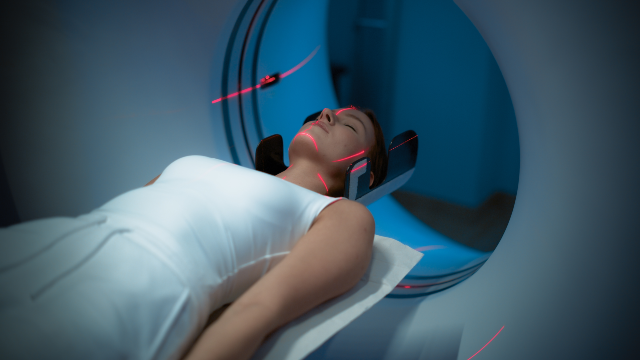
Is a 3.0T MRI Health Screening Safe? Radiation, Contrast
What MRI screening safety really involves: no ionizing radiation, gadolinium contrast risks, implant disclosure, pregnancy advice and claustrophobia help.
Schedule a ConsultationIs a 3.0T MRI Health Screening Safe? Radiation, Contrast and Claustrophobia
Medically reviewed by Dr. Seo Jeong-su, M.D., Ph.D., Board Certified Radiologist
The question "is MRI screening safe" is one of the most common things people ask before booking a checkup that includes magnetic resonance imaging, and it is usually three separate questions wearing one coat. People want to know whether the scan will irradiate them, whether the injection is risky, and whether they will be able to lie inside the machine at all. Those questions have different answers, and the honest ones are more reassuring in some places than in others. This guide takes them one at a time, using published guidance from U.S. regulators, imaging societies and the peer-reviewed literature.
The Bottom Line
- MRI does not use ionizing radiation. As the National Institute of Biomedical Imaging and Bioengineering states, magnetic resonance imaging differs from x-ray and computed tomography precisely because it does not rely on that kind of radiation.
- The genuine hazards of MRI come from the magnet, which is always on, and from what you bring into the room: implants, devices, metal fragments, and clothing or cosmetics containing metallic material.
- Gadolinium contrast is not used in every scan. When it is, the U.S. Food and Drug Administration has required class labeling about retention in the body and has concluded that the benefits of approved agents continue to outweigh the risks, with specific caution for people with impaired kidney function.
- Anxiety and claustrophobia are common enough to plan for rather than to be embarrassed by, and preparation, communication with the technologist and a call button resolve most cases.
- Nothing here makes MRI risk-free, and a normal screening result does not rule out disease. Screening narrows uncertainty; it does not eliminate it.
MRI and Radiation: The Short Answer
An MRI scanner produces images without x-rays. The U.S. Food and Drug Administration describes the mechanism on its MRI resource pages: the scanner uses strong magnetic fields and radio waves, and the signal comes mainly from protons in the fat and water molecules of the body. The National Institute of Biomedical Imaging and Bioengineering puts the contrast with other imaging plainly, noting that MRI scanners differ from computed tomography in that they do not use the damaging ionizing radiation of x-rays, and that this is one reason MRI is often the imaging method of choice when repeated imaging is needed.
RadiologyInfo.org, the patient resource published by the Radiological Society of North America together with the American College of Radiology, describes an MRI exam as generally causing no physical pain, with the electromagnetic fields producing no known tissue damage when applied correctly.
This matters for a screening checkup because not every test in a package works the same way. A low-dose CT scan, for example, does use ionizing radiation, even though the dose is substantially lower than a standard diagnostic CT. That is why a screening center gives procedure-specific precautions rather than a single blanket statement, and why radiation-related instructions are handled separately from the instructions for endoscopic examinations. Different tests carry different considerations, and lumping them together is how people end up either needlessly worried or insufficiently informed.
The Magnet Is the Real Safety Story
If MRI is not a radiation question, what is it? It is a metal question.
The National Institute of Biomedical Imaging and Bioengineering describes a magnetic field that extends beyond the machine and exerts powerful force on objects made of iron, some steels and other magnetizable materials, strong enough to fling a wheelchair across the room. RadiologyInfo.org explains the same hazard from the patient's side: ferromagnetic objects can move suddenly and with great force, which is why imaging facilities take such care about what enters the scanner room.
Implants and devices
The American College of Radiology, which publishes the ACR Manual on MR Safety and maintains a set of MR safety resources for imaging facilities, builds safe practice around formal screening and documentation. RadiologyInfo.org translates this into the specifics patients need. Items that must be disclosed before a scan include:
- Cardiac pacemakers and implantable cardioverter defibrillators
- Vascular clips and certain aneurysm clips
- External or implanted medication pumps, including insulin and pain pumps
- Cochlear implants and other hearing devices
- Neurostimulation systems, including deep brain stimulators
- Catheters with metallic components
- Bullets, shrapnel or other metallic fragments, particularly near the eye
The nuance that matters: many newer pacemakers, defibrillators, neurostimulators, cochlear implants and medication pumps are acceptable for MRI. RadiologyInfo.org is explicit that the technologist and radiologist must know the exact type and manufacturer so that the correct procedure is followed. Labeling is written for specific scanning conditions, including field strength, so a device cleared for one kind of scanner is not automatically appropriate for another. Bring the device card. It is the single most useful document you can carry to an imaging appointment abroad.
Metal you may not think of as metal
Beyond implants, a surprising list of ordinary items causes problems. RadiologyInfo.org notes that athletic clothing, socks and braces may contain metallic threads or metal-based antibacterial compounds that can heat up and burn the skin during a scan, which is why facilities ask patients to change into supplied clothing rather than wearing their own. Makeup, nail polish and some cosmetics can contain metallic particles. Tattoos and tattooed eyeliner carry a small chance of skin irritation. Dental fillings and braces are usually unaffected by the field but can distort images of the face and brain.
People whose work involves metal grinding or machining deserve a specific mention. A metallic fragment in or near the eye is a recognized hazard, and an x-ray is sometimes used beforehand to check.
Noise and other sensations
RadiologyInfo.org notes that the scanner makes loud tapping and knocking noises and that hearing protection is provided as standard. The U.S. Food and Drug Administration has also described transient sensations reported by some people around strong magnetic fields, including dizziness, mild nausea, headache or a metallic taste, associated with head movement in the field and resolving shortly after leaving the magnet.
Gadolinium Contrast: When It Is Used and What the Risks Are
Contrast is not part of every MRI. When it is used, the agent is a gadolinium-based contrast agent, given through a small intravenous line, usually in the arm. Its purpose is to change how tissues appear so that certain abnormalities stand out.
The kidney question
The most established risk is not a general one. RadiologyInfo.org points out that unlike the iodine-based contrast used in x-ray and CT, gadolinium agents rarely cause allergic reactions, but it advises anyone with a history of reaction to gadolinium, kidney disease, kidney failure, kidney transplant or liver disease to inform the radiology team before receiving contrast.
The condition behind that caution is nephrogenic systemic fibrosis, a rare and potentially serious fibrosing disorder linked to gadolinium exposure in people with severely impaired kidney function. The picture has changed considerably as newer agent classes came into use. A systematic review and meta-analysis published in the peer-reviewed literature and archived in PubMed Central examined the risk in patients with stage 4 or 5 chronic kidney disease who received a group II gadolinium-based contrast agent and found a pooled incidence of zero, with the upper bound of the confidence interval below 0.07 percent. The authors concluded that the diagnostic harm of withholding an indicated contrast-enhanced study may outweigh that residual risk in this group. Consensus statements developed jointly by the American College of Radiology and the National Kidney Foundation, published in the journal Radiology, address the same question for clinical practice.
None of this means kidney function is irrelevant. It means the conversation is a clinical one, informed by your kidney function and by which agent is being used, rather than a blanket prohibition.
Gadolinium retention
In 2017 the U.S. Food and Drug Administration issued a drug safety communication requiring a new class warning for all gadolinium-based contrast agents, after evidence that gadolinium can remain in body tissues, including the brain, for months to years after administration. The agency required manufacturers to conduct further human and animal studies and required that patients receive a Medication Guide before a gadolinium agent is given.
The agency's assessment is worth quoting in shape rather than in words: retention has not been directly linked to adverse health effects in people with normal kidney function, and the FDA concluded that the benefit of the approved agents continues to outweigh the potential risks. It also advised extra consideration for groups who may be at higher risk of retention, including people expected to need many scans over a lifetime, pregnant women, children and people with inflammatory conditions, and recommended avoiding repeat gadolinium-enhanced studies where they are not needed.
The practical takeaway for someone booking a screening checkup is a question, not an anxiety: ask whether contrast is planned, and if so, what it is for.
Reactions and aftercare
Allergic-type reactions to gadolinium are uncommon but not impossible. Mild, temporary sensations such as coolness at the injection site are more typical. Standard aftercare is simple: drink plenty of fluids after a contrast study, and review the findings with the medical team. RadiologyInfo.org addresses breastfeeding separately, noting that radiologists consider it safe to continue breastfeeding after contrast, while some parents choose to pump beforehand out of caution.
Pregnancy
If you are pregnant or think you might be, say so during screening. RadiologyInfo.org states that there is generally no known risk from MRI in pregnancy, that a facility may nonetheless postpone a non-urgent exam, and that most centers avoid contrast agents in pregnant patients out of an abundance of caution. It also notes that MRI is usually safer for the fetus than x-ray or CT imaging. The National Institute of Biomedical Imaging and Bioengineering likewise advises caution particularly in the first trimester.
Separately, health checkups in general may be restricted for children, for pregnant women and for people with certain physical or mental conditions, so this belongs in the conversation at the reservation stage rather than on the morning of the scan.
Claustrophobia, Anxiety and Staying Still
This is the concern people are most reluctant to raise and the one that most often determines whether a scan succeeds.
It is common. RadiologyInfo.org estimates that roughly one in twenty people may need a mild sedative to stay calm during an MRI. Published research shows a wide range depending on the population studied: studies archived in PubMed Central report anxiety-related reactions across a broad range of patients, with a small percentage unable to complete the examination, and one study of patients after cardiac surgery found that a meaningful minority could not finish the scan because of anxiety in the enclosed space. When a scan is abandoned partway, the clinical information is lost, which is the real cost.
What helps, according to RadiologyInfo.org and the wider literature:
- Knowing in advance what the machine looks like, how long the scan runs and what noises to expect
- Hearing protection, and in many centers music or another distraction
- A call button, so you can communicate with the technologist at any moment
- The presence of a relative or friend in the room where the facility permits it
- A mild sedative where appropriate, discussed and arranged in advance rather than improvised
RadiologyInfo.org's own summary is encouraging: when patients are properly prepared and know what to expect, it is almost always possible to complete the examination. Telling the booking team about claustrophobia is not an admission of weakness. It is a scheduling instruction.
The Pre-Checkup Questionnaire Is the Safety Step
Every safeguard described above depends on one thing: accurate disclosure before the scan.
At Yonsei Mirae IFC Medical Center in Busan, South Korea, screening for a 3.0T MRI begins with a review of the pre-checkup questionnaire to confirm that a magnetic field examination is appropriate for you, followed by selection of the scanning protocol and same-day physician reporting. Preparation involves removing all metallic accessories, changing into non-metallic examination clothing and completing a magnetic safety screening questionnaire. Patients are asked to review pre-checkup guidelines in advance, including fasting instructions where contrast or clear organ visualization is required, and questionnaires can be completed online before arrival.
The center also states who may not be suitable for a high-field magnetic scan: people with non-MR-compatible metallic implants, cardiac pacemakers or severe claustrophobia, and, for imaging more broadly, people with severe contrast dye allergies, who may need an alternative method. Those are precisely the disclosures the questionnaire exists to capture. Procedure-specific precautions are given for radiation exposure and for endoscopic examinations as well, because a screening package combines tests with different safety profiles.
The center is a licensed Korean medical clinic under the Medical Service Act and a Registered Medical Institution for Attracting Foreign Patients certified by Korea's Ministry of Health and Welfare, and imaging is read by specialists including Dr. Seo Jeong-su, a Board Certified Radiologist who served as a professor at Ewha Womans University College of Medicine and as a visiting fellow at MD Anderson Cancer Center in the United States. International patients work with a foreign-patient coordinator, with English and Chinese interpretation and reports, notes and records available in English and Chinese. If you have a device, an allergy history or a history of anxiety in enclosed spaces, raise it when you book your consultation rather than on the day. More about the center is available on its about us page.
For context on what the visit itself feels like, the MRI is one station in a one-day, one-stop system; the scan runs about 30 to 45 minutes, requires no anesthesia for standard diagnostic imaging, and carries no downtime afterward.
What a Safe Scan Still Cannot Do
Safety and certainty are different things. A well-conducted MRI with no adverse event is not the same as a clean bill of health. Imaging has limits of resolution, covers only the anatomy included in the protocol, and can produce both findings that turn out to be harmless and, occasionally, findings that are missed. RadiologyInfo.org frames the decision honestly in both directions, noting that there are risks in not getting an indicated scan as well, including delayed diagnosis or misdiagnosis.
The right expectation for a screening MRI is that it contributes one substantial piece of information to a broader picture that also includes your history, your laboratory results and a physician's judgment. At Yonsei Mirae IFC Medical Center, initial findings are available the same day, and where an abnormal finding needs more attention, a One-Step referral system connects patients to the relevant department or to a higher-level general hospital, with follow-up management.
Frequently Asked Questions
Does an MRI expose me to radiation?
No. Magnetic resonance imaging uses a strong magnetic field and radio waves rather than ionizing radiation, which is how the National Institute of Biomedical Imaging and Bioengineering distinguishes it from x-ray and computed tomography. Other tests in a screening package may involve radiation, such as CT, so ask about each test individually rather than assuming they are equivalent.
Will I definitely receive contrast dye?
No. Many MRI examinations are performed without contrast, and whether a gadolinium-based agent is used depends on the clinical question. If contrast is planned, ask what it adds and tell the team about any kidney disease, liver disease or previous reaction to contrast before the scan.
Is gadolinium contrast dangerous?
The U.S. Food and Drug Administration requires class labeling about gadolinium remaining in the body after a scan and has concluded that the benefits of approved agents continue to outweigh the risks. The main established serious risk, nephrogenic systemic fibrosis, concerns people with severely impaired kidney function, and peer-reviewed research suggests the risk with newer agent classes is very low. Discuss your kidney function with the medical team beforehand.
What if I have a pacemaker, stent or metal implant?
Disclose it, and bring the device card or manufacturer documentation. Many modern implants can be scanned under specific conditions, but the imaging team must know the exact make and model, and labeling is written for particular scanning conditions. Some devices will mean choosing a different imaging method instead.
I am claustrophobic. Can I still have an MRI?
Usually, yes, with preparation. Hearing protection, a call button, knowing the expected scan duration in advance and, where appropriate, a mild sedative arranged beforehand are the standard approaches. Tell the booking team about it early so the appointment can be planned around it rather than interrupted by it.
Can I have an MRI if I am pregnant or breastfeeding?
Tell the team during screening. RadiologyInfo.org indicates there is generally no known risk from MRI in pregnancy, though a non-urgent exam may be postponed and contrast agents are usually avoided. Breastfeeding is generally considered compatible with contrast, though some parents choose to pump beforehand as a precaution.
Does a normal MRI result mean I am healthy?
No. A normal result is reassuring within the limits of what the scan covered and what the technique can resolve, and it does not rule out disease elsewhere or disease below the threshold of detection. Results are most meaningful when a physician interprets them alongside your history, examination and other test findings.
This article is for general informational purposes and does not constitute individualized medical advice, and it is not a self-diagnosis tool. Screening options, test selection, and the meaning of any result can only be determined through consultation with a qualified physician.
More Articles
Continue reading our clinical guides.
Is a 3.0T MRI Health Screening Safe? Radiation, Contrast
What MRI screening safety really involves: no ionizing radiation, gadolinium contrast risks, implant disclosure, pregnancy advice and claustrophobia help.
Learn More
Low-Dose CT Lung Cancer Screening in Korea: Who Qualifies
Who should consider low-dose CT lung screening in Korea: age and smoking criteria from the USPSTF and ACS, trial evidence, risks, and follow-up planning.
Learn More

Combining a Health Checkup and GI Screening in Korea
How to combine a health checkup and colonoscopy in Korea on one trip: what the shared fast covers, how the day runs, and real limits of a combined visit.
Learn More