Busan IFC Mall (2F–4F) · 6,600㎡ One-Day Comprehensive Health Screening & Specialist Care · International Patient Concierge

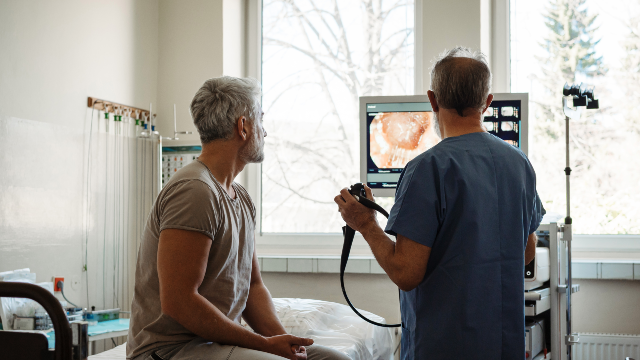
Medical Guide
Comprehensive Health Checkup in Busan: What's Included
What a one-day comprehensive health checkup in Busan, South Korea includes: the tests, the imaging equipment, the tiers, and why US patients choose it.
Schedule a ConsultationComprehensive Health Checkup in Busan, South Korea: What's Included and Why US Patients Choose It
Medically reviewed by Dr. Baik Seung Hyuk, M.D., Ph.D., FASCRS, Hospital Director
If you are weighing a comprehensive health checkup in Korea, the first practical question is usually this: what is actually included, and can it really be finished in one visit? At Yonsei Mirae IFC Medical Center, a health screening in Busan, South Korea is organized as a one-day, one-stop program, and a comprehensive checkup generally takes about 3.5 to 4 hours from arrival through the review of results. This guide walks through what those programs cover, the diagnostic equipment behind them, how the facility is laid out, and why a full body checkup in Korea for Americans has become a common addition to a trip that was already planned.
The Bottom Line
- A comprehensive checkup at Yonsei Mirae IFC Medical Center is designed as a one-day, one-stop visit of roughly 3.5 to 4 hours, with results that can be reviewed the same day.
- Programs are tiered Basic, Silver, Gold, Premium and Platinum, and higher tiers can add MRI, MDCT, cardiac ultrasound and sedated colonoscopy.
- The center spans approximately 6,600 square meters across three floors, with male/female-separated checkup zones and a separate VIP patient route.
- Approximately 50,000 checkups are performed at the center each year, across six specialty areas and 20 services.
- International patients receive dedicated coordination, English interpretation, and reports, doctor's notes and medical records prepared in English.
Why a Structured Checkup Is Worth Planning
Preventive screening only helps when the right tests are matched to the right person. The World Health Organization reports that noncommunicable conditions — cardiovascular disease, cancers, chronic respiratory disease and diabetes — account for the large majority of deaths worldwide, and lists detection, screening and treatment among the core parts of any response to them. That is the logic behind a structured checkup: many of the conditions that shorten life are silent for years and are easiest to act on when they are found early.
Major US guideline bodies have moved in the same direction. The US Preventive Services Task Force recommends colorectal cancer screening for adults beginning at age 45 and continuing through 75, using options that include colonoscopy and stool-based tests. The same Task Force recommends screening mammography every other year for women aged 40 through 74. For people with a substantial smoking history, it recommends yearly low-dose CT of the chest for adults aged 50 to 80 who have a 20 pack-year history and either still smoke or quit within the past 15 years.
Screening is not without trade-offs, and an honest guide has to say so. The National Cancer Institute points out that screening sometimes identifies slow-growing cancers that would never have caused symptoms — a phenomenon clinicians call overdiagnosis — and that false-positive results commonly lead to further testing, added procedures and anxiety. A good screening program is therefore one where a physician helps you decide which tests fit your age, family history and risk profile, rather than one where every available test is simply ordered.
Organized screening is also deeply embedded in Korean medical practice. A cohort profile published in the International Journal of Epidemiology describes the Korean National Health Insurance Service health screening cohort, assembled from a random sample of several hundred thousand people who took part in the country's routine screening program, and used widely for research into chronic disease. Screening at scale is ordinary infrastructure in Korea, not a niche service.
What "One-Day, One-Stop" Actually Means
At Yonsei Mirae IFC Medical Center, a comprehensive checkup is built so that registration, consultation, testing, diagnostic evaluation and results review happen in a single sequence rather than across several separate appointments. The patient-facing path is straightforward:
- Make a reservation and receive your preparation materials in advance.
- Follow the pre-checkup instructions, including fasting requirements.
- Arrive at the center and complete the questionnaire and consent documents.
- Move through the tests included in the program you selected.
- Receive interpretation of the results and follow-up guidance.
A comprehensive checkup takes approximately 3.5 to 4 hours. A national health insurance checkup runs about 1.5 to 4 hours depending on which tests are involved. The center states that its one-day, one-stop premium checkup allows results to be checked the same day, which is the single feature international patients tend to value most, because it removes the need to schedule a second trip or wait weeks for a report to arrive.
If you want to hold a date around your travel plans, the center's booking and consultation page is the direct channel for scheduling and for asking questions before you fly.
Inside a 6,600-Square-Meter Screening Facility
Scale matters in screening, because the bottleneck in a comprehensive checkup is almost never the individual test — it is the walking, waiting and re-registering between tests. Yonsei Mirae IFC Medical Center occupies approximately 6,600 square meters on the second, third and fourth floors of IFC Mall at 133 Jeonpo-daero in Busan's Nam-gu district, adjacent to the BIFC subway station. That footprint is what makes a genuinely one-stop route possible: imaging, endoscopy, laboratory collection and consultation rooms sit within the same continuous space, so a patient moves along a planned circuit instead of traveling between departments.
The floor plan is also divided in ways that matter to comfort and privacy:
- Separate checkup zones for male and female patients, so gowned patients are not sharing waiting areas and corridors across the whole visit.
- A distinct VIP patient route for those who prefer a more private flow through the same clinical program.
- Consultation space that is set apart from testing space, so the results conversation is not held in a corridor.
For a visitor flying in from the United States, those layout decisions translate into fewer hours on site and less of the fragmented, department-to-department experience that many patients describe at home.
What Approximately 50,000 Checkups a Year Means
Across all of its programs, the center performs approximately 50,000 checkups annually. Clinic-wide throughput at that level is worth understanding for what it implies operationally rather than as a marketing number:
- Scheduling and patient routing are built as a repeatable process, which is why a comprehensive program can be compressed into a single morning.
- Laboratory and imaging workflows run continuously during screening hours rather than being assembled per patient, which supports same-day result review.
- Staff across the six specialty areas work with the same protocols daily, which is what standardization in a screening center is for.
Volume is not a measure of quality on its own, and it should not be read as one. It is, however, a reasonable indicator that the one-day model is the center's routine mode of operation rather than an exception made for a handful of patients.
The Six Specialty Areas and 20 Services
The center is staffed by nine medical professionals across six specialty areas covering 20 services. Knowing the full list helps you see what can be folded into a checkup and what would be arranged as a separate consultation:
- Health Checkup / Screening — the Life-Cycle Checkup Program, the Precision Specialized Checkup and the Special Precision Checkup.
- Gastroenterology Treatment — sedation gastroscopy and colonoscopy; same-day colon polyp removal; diagnosis of liver, pancreas and biliary disease.
- Breast & Thyroid Care — AI-assisted 3D mammography screening; breast and thyroid ultrasound; breast and thyroid biopsy.
- Diagnostic Imaging — 3.0T MRI imaging; low-dose CT; carotid, cardiac and abdominal ultrasound.
- Family Medicine Care — personalized nutritional IV therapy; adult vaccination; a fatigue recovery clinic.
- Dermatology Treatment — pigmentation and melasma laser toning; laser skin lifting; anti-aging injectables; medical skincare.
The Life-Cycle Checkup Program is organized by age and life stage — for example, packages aimed at couples before marriage or at senior adults. The Precision Specialized Checkup narrows the focus toward a particular concern or risk area. The Special Precision Checkup combines a wider set of examinations in one visit for people who want the broadest assessment available.
The Equipment Behind the Tests
A checkup is only as informative as the instruments used to perform it. The center's published equipment list includes:
- A 3.0T MRI scanner for high-resolution soft-tissue imaging.
- A 128-channel MDCT scanner, used for low-dose CT among other studies.
- Olympus 290-series high-definition endoscopy systems (CLV-290/CV-290, GIF-H290, CF-HQ290L), together with CO₂ colonoscopy equipment for patient comfort and COOLENDO-E scope-cleaning equipment.
- Hologic Selenia Dimensions AI-assisted 3D mammography for breast cancer screening.
- High-resolution ultrasound, including the Aplio 300 system, for carotid, cardiac, abdominal, breast and thyroid studies.
- Digital X-ray imaging.
- Laboratory analyzers: the ATELLICA immunology analyzer, the AU680 biochemistry analyzer and the XN1000 hematology analyzer.
- Bone-density testing, cardiovascular pulse-wave analysis and EEG.
Bone density deserves a note, because patients often skip it. The National Institute of Arthritis and Musculoskeletal and Skin Diseases describes dual-energy X-ray absorptiometry as a quick, minimally uncomfortable and noninvasive scan, and notes that measurement at the hip and spine is the most reliable way to diagnose osteoporosis and estimate fracture risk. Osteoporosis produces no symptoms until a bone breaks, which is exactly the profile of a condition worth catching during a routine checkup.
How the Tiers Change What Is Included
Screening programs at the center run through five tiers — Basic, Silver, Gold, Premium and Platinum — and the practical difference between them is scope. Higher tiers can bring in MRI, MDCT, cardiac ultrasound and sedated colonoscopy alongside the laboratory work, imaging and physical assessment that form the foundation of every program. Corporate and group checkups are offered as well, and national health insurance checkups are accepted.
Most routine screening requires no anesthesia. Sedation applies specifically to endoscopic examinations, and whether it is used depends on the procedure and your medical circumstances. That single choice is what most often changes a checkup day from a straightforward morning into one that needs a recovery window and a companion.
International Patient Support and Follow-Up
American patients consistently raise the same set of concerns: clear clinical communication in English, understanding why a given test is recommended, avoiding unnecessary testing, and knowing what happens if something abnormal turns up thousands of miles from home.
The center operates a dedicated international medical center with a foreign-patient coordinator and interpretation in English and Chinese. Examination reports, doctor's notes and medical records can be prepared in English, which matters when you want your physician at home to read the findings. English-speaking assistance is available from the consultation through recovery.
Aftercare is structured rather than improvised. Result consultations can be held by phone. When a finding is abnormal, the center uses a One-Step referral system that connects patients to the relevant department or to a higher-level general hospital, along with prescription and treatment, health-information services and step-by-step follow-up management. Yonsei Mirae IFC Medical Center was founded in 2021, operates as a licensed Korean medical clinic under the Medical Service Act, and is a Registered Medical Institution for Attracting Foreign Patients certified by Korea's Ministry of Health and Welfare. You can read more on the center's about us page, and patient accounts are collected on its customer reviews page.
Preparing for Your Visit
Preparation depends on the program you select, but the general guidance is consistent:
- Avoid strenuous exercise, overwork and alcohol in the days before your checkup.
- Fast after 9 PM on the night before.
- Expect additional preparation for procedures such as colonoscopy, including bowel preparation instructions.
- Tell the medical team about pregnancy or possible pregnancy, current medications, and any recent procedures, since some examinations may need to be modified or rescheduled.
- Bring previous medical records or laboratory results if you want them considered alongside the new findings.
Health screening hours are Monday through Friday, 7:30 AM to 4:30 PM, and Saturday, 7:30 AM to 12:30 PM, Korean Standard Time (UTC+9). Consultation runs Monday through Friday, 8:00 AM to 6:00 PM, and Saturday, 8:00 AM to 12:30 PM. The center is closed Sundays and public holidays. Checkups may be restricted for children, pregnant women, and people with certain physical or mental conditions.
Frequently Asked Questions
How long does a comprehensive health checkup take?
A comprehensive checkup at the center generally takes about 3.5 to 4 hours. A national health insurance checkup takes roughly 1.5 to 4 hours depending on which tests are included. Additional detailed examinations can extend the visit.
Can everything really be completed in one day?
Yes, for most screening programs. The center's one-day, one-stop model is designed so that consultation, testing and results review happen in a single visit, and it states that checkup results can be reviewed the same day. If a finding requires further evaluation, additional appointments may be needed.
Is a health checkup painful?
A standard checkup is generally not painful. Blood collection and endoscopy can cause temporary discomfort, and abdominal and prostate ultrasound are described as minimally uncomfortable. Your experience depends mainly on which examinations are in your program and whether sedation is used for endoscopy.
Will an English-speaking doctor be available?
English-language support and online consultation are both available. The international medical center provides interpretation, and English-speaking assistance is offered from the consultation through recovery. Reports, doctor's notes and medical records can be prepared in English.
What happens if the checkup finds something serious?
The center provides a One-Step referral system that connects patients with the relevant department or with a higher-level general hospital. Follow-up can include prescription and treatment, health-information services, and step-by-step follow-up management. Results can also be discussed by phone after you return home.
Who should not have a comprehensive checkup?
Checkups may be restricted for children, pregnant women, and people with certain physical or mental conditions. Anyone who is pregnant or may be pregnant should change the examination date, because some tests cannot be performed. People with active symptoms that need urgent evaluation should seek medical care rather than waiting for a routine screening appointment.
How soon can I fly home after the checkup?
After routine, noninvasive testing, most people can travel once they feel well. If sedation, endoscopy or another invasive examination was performed, the medical team should give you individualized guidance on timing. Building a buffer day into your itinerary is sensible if endoscopy is part of your program.
This article is for general informational purposes and does not constitute individualized medical advice, and it is not a self-diagnosis tool. Screening options, test selection, and the meaning of any result can only be determined through consultation with a qualified physician.
More Articles
Continue reading our clinical guides.
Is a 3.0T MRI Health Screening Safe? Radiation, Contrast
What MRI screening safety really involves: no ionizing radiation, gadolinium contrast risks, implant disclosure, pregnancy advice and claustrophobia help.
Learn More
Low-Dose CT Lung Cancer Screening in Korea: Who Qualifies
Who should consider low-dose CT lung screening in Korea: age and smoking criteria from the USPSTF and ACS, trial evidence, risks, and follow-up planning.
Learn More

Combining a Health Checkup and GI Screening in Korea
How to combine a health checkup and colonoscopy in Korea on one trip: what the shared fast covers, how the day runs, and real limits of a combined visit.
Learn More