Busan IFC Mall (2F–4F) · 6,600㎡ One-Day Comprehensive Health Screening & Specialist Care · International Patient Concierge

Medical Guide
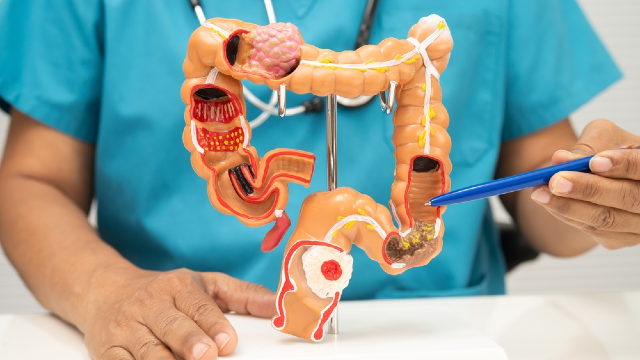
Colonoscopy Bowel Prep While Traveling: A Field Guide
How to plan colonoscopy bowel prep while traveling: split-dose timing across time zones, low-residue meals abroad, hydration, hotel setup and medications.
Schedule a ConsultationPreparing for a Colonoscopy While Traveling: Bowel Prep for International Patients
Medically reviewed by Dr. Kang Moo-jin, Internal Medicine Specialist, Gastrointestinal Endoscopy Specialist
Colonoscopy prep while traveling is a different exercise from the same task at home, and the difference is not medical so much as logistical. The chemistry of bowel cleansing does not change when you cross the Pacific. What changes is everything around it: the kitchen you cannot use, the bathroom you are sharing, the body clock that thinks 2 a.m. is lunchtime, and the eleven hours in a pressurized cabin that left you dehydrated before the preparation even started. This guide is written for patients who are booking a colonoscopy at Yonsei Mirae IFC Medical Center in Busan, South Korea, and who will be doing their bowel preparation in a hotel room rather than at home.
One point governs everything that follows. Yonsei Mirae IFC Medical Center issues its own preparation instructions for the program you select, and those instructions are the ones you follow. The dietary window, the solution you are given, the hours at which you drink it and the cut-off for clear liquids are set by the medical team according to your appointment time and your health history. Everything below is context that helps you plan the trip around those instructions — it is not a substitute for them.
Why Bowel Preparation Exists at All
A colonoscopy is a direct visual examination. The National Institute of Diabetes and Digestive and Kidney Diseases, part of the U.S. National Institutes of Health, describes colonoscopy as a procedure in which a flexible, lighted instrument is passed through the rectum so that the doctor can inspect the lining of the large intestine, and it notes that the bowel has to be emptied beforehand for the examination to be reliable. That is the whole logic of preparation. Residue left on the mucosa hides exactly what the examination is looking for.
The stakes are not abstract. The National Cancer Institute explains that most colorectal cancers begin as an abnormal growth in the lining of the colon or rectum, and that raised growths called polyps are common in adults over 50 while only certain types are likely to progress. The institute also notes that during colonoscopy, abnormal growths found anywhere in the colon and rectum can be removed. A flat, small lesion sitting behind a smear of retained stool is a lesion that does not get removed. The U.S. Preventive Services Task Force recommends colorectal cancer screening for adults aged 45 through 75, using options that include colonoscopy — a recommendation that only pays off if the examination itself is adequate.
At Yonsei Mirae IFC Medical Center, colonoscopy is performed with Olympus 290-series high-definition endoscopy equipment, including the CF-HQ290L colonoscope, and CO2 colonoscopy equipment is used to reduce the bloating patients often feel afterward. Optical resolution helps enormously, but it cannot see through what preparation failed to remove. Good equipment and good preparation are not alternatives to each other.
The Split-Dose Regimen and Why It Was Adopted
If your instructions ask you to drink half of the preparation the evening before and the other half early on the morning of the examination, that is not an arbitrary inconvenience. It reflects a substantial body of evidence.
A meta-analysis by Martel and colleagues, published in the journal Gastroenterology in 2015 under the title "Split-Dose Preparations Are Superior to Day-Before Bowel Cleansing Regimens," pooled the available trials comparing the two approaches and found in favor of splitting the dose. The reasoning is physiological: the colon continues to secrete fluid and move material overnight, so a bowel emptied entirely on the previous evening is no longer entirely empty by mid-morning. A second dose taken a few hours before the procedure clears what accumulated during the night, particularly in the right side of the colon, which is the hardest region to see well and the region where flat lesions are easiest to miss.
The American Society for Gastrointestinal Endoscopy provides patient-facing material on bowel preparation that makes the same practical point in plainer terms: the preparation is the part of the process the patient controls, and following the schedule as written is what makes the examination worth having. The American College of Gastroenterology's patient material on colonoscopy is similarly direct about the relationship between preparation quality and what the examination can find.
What a Split Dose Means When You Are Jet-Lagged
Here is where travel changes the shape of the problem. Suppose your colonoscopy is scheduled for 8:00 a.m. Korea Standard Time and your instructions call for the second dose roughly four to five hours before. That puts you awake and drinking at around 3:00 or 4:00 in the morning in Busan. If you flew in from the U.S. East Coast two days earlier, your circadian clock may still be running thirteen hours behind — which means your body reads 3:00 a.m. Busan time as mid-afternoon of the previous day.
That cuts both ways, and the direction depends on how your particular body handles the shift:
- In the first two or three days after an eastward long-haul flight, many travelers are already waking involuntarily in the small hours. If that is you, an early-morning second dose is easier to comply with than it would be at home.
- If instead you have been fighting to stay awake through the Korean afternoon and collapsing at 7:00 p.m., a 3:00 a.m. alarm lands in what your body considers deep night, and you should set two alarms rather than one.
- Either way, do not plan to "sleep through" the second dose and take it later. The interval between the last dose and the examination is part of the prescription, not a suggestion, and shortening or lengthening it changes the quality of the result.
The practical move is to stop trying to conquer jet lag on the night before the procedure. That night is not going to be restful regardless. Aim instead to arrive in Korea with at least two full days before the examination, use daylight and meal timing to nudge your clock in the first day or two, and then accept that the final night is a working night.
Planning the Low-Residue Days Around Restaurant Eating
Most colonoscopy instructions ask for a low-residue or low-fiber diet for a period before the examination, followed by clear liquids only for a defined window. At home this is mildly annoying. Abroad it collides with the reason many people travel in the first place.
Busan is a seafood city, and a traveler's instinct on arrival is to go find the food. The instinct is correct — just not during your preparation window. Build the trip so that the eating happens first and the preparation happens last. A screening appointment placed toward the end of a stay, rather than on the second morning, solves most of this problem by itself.
During the low-residue window, the categories that generally cause trouble are the ones that leave undigested material behind:
- Raw vegetables, salads and skins
- Whole grains, brown rice, multigrain bread and bran
- Nuts, seeds and anything containing them, including many Korean side dishes topped with sesame
- Dried fruit, and fresh fruit with skin or seeds
- Legumes, including beans and the red-bean paste common in Korean desserts
- Tough or fibrous cuts of meat
The categories that are usually easier are refined and soft: white rice, plain noodles, clear broth, well-cooked skinless chicken or white fish, eggs, plain congee. Korean cuisine actually offers a good low-residue option in the form of plain rice porridge, widely available and unthreatening to a stomach that has been on airplane food for a day.
Two travel-specific cautions are worth naming. First, the standard banchan spread that accompanies most Korean meals is mostly vegetable-based and seed-topped, so a dish that is itself low-residue arrives surrounded by things that are not; you can simply leave them. Second, some preparation instructions restrict red, purple and blue liquids because the color can be mistaken for blood during the examination — which quietly rules out several things a tourist might otherwise drink, including red-hued fruit juices and certain sports drinks. Read your instruction sheet for the specific color rule that applies to you and shop accordingly.
Ask the clinic in advance, in writing, exactly when the low-residue window begins and when clear liquids start. Both are program-dependent, and the answer determines which day of your trip is still available for a real meal. The clinic's international patient team can confirm this when your appointment is scheduled, and an English-language answer in your inbox is more useful at 11:00 p.m. in a hotel than a conversation you half-remember.
Hydration and Electrolytes on Top of Long-Haul Dehydration
Cabin air is dry, and most people step off a trans-Pacific flight with less body water than they started with. Bowel preparation then removes a further large volume of fluid, along with sodium and potassium, over a few hours. Stacking the second on top of the first is the single most common reason travelers feel genuinely awful during preparation rather than merely inconvenienced.
Counter it deliberately:
- Start rehydrating from the moment you land, not from the moment preparation begins. Two days of ordinary, unhurried fluid intake does more than a frantic evening.
- Drink the preparation solution on the schedule given, and drink the additional clear fluids your instructions specify alongside it. The extra fluid is part of the regimen, not an optional extra.
- Include clear fluids that carry some salt and sugar rather than plain water alone — clear broth is the simplest option and is easy to buy in any Korean convenience store. Confirm permitted options and any color restriction against your instruction sheet first.
- Chill the solution and drink it through a straw if the taste is difficult; cold blunts flavor, and a straw keeps it off the front of the tongue.
- If you take medication that affects fluid or salt balance, such as a diuretic, that belongs in the medication conversation described below rather than in a decision you make alone in a hotel room.
If you are on a fluid-restricted regimen for a heart or kidney condition, none of the above is generic advice you can apply yourself. Tell both your own physician and the clinic, and let them set the volume.
What a Hotel Room Needs to Make the Night Survivable
This is the part no clinical guideline covers, and the part patients remember most vividly.
- A private bathroom, non-negotiable. A shared-bathroom guesthouse, a hostel or a capsule hotel is the wrong choice for preparation night, however good it is for the rest of the trip. Confirm the room type rather than assuming.
- A room you can stay in until late morning. Check-out at 11:00 a.m. with an 8:00 a.m. appointment is workable; check-out at 10:00 a.m. with a delayed appointment is not. Ask for a late check-out when you book, or book the extra night.
- Proximity. The center sits on floors two through four of IFC Mall at 133 Jeonpo-daero in Nam-gu, Busan, adjacent to the BIFC subway station. Staying within a short ride of that address removes a long, uncomfortable morning commute from the schedule.
- Supplies bought the day before. Soft toilet paper or wet wipes, a barrier ointment, lip balm, and your permitted clear fluids. Korean convenience stores are excellent and ubiquitous, but you do not want to be walking to one at 4:00 a.m.
- Warmth. Drinking a large volume of chilled solution lowers your comfort noticeably. A hoodie and socks are a small thing that makes a real difference.
- Something to do. Downloaded shows, an e-book, anything that does not require concentration. The hours pass better occupied.
- A charged phone with the clinic's number saved, plus your interpreter contact if you have one. English- and Chinese-language support is available to international patients through the center's international medical service, and the point of saving the number is that you never have to look it up while unwell.
One more practical note: plan your travel to the appointment for a time that is not Busan's morning rush. Screening hours at the center begin at 7:30 a.m. on weekdays, and an early slot means you finish the preparation, travel a short distance and are done, rather than spending an extra two hours waiting.
Timing the Preparation Against a Time-Zone Shift, Not a Home Routine
The mistake that causes the most trouble is mental arithmetic done in the wrong time zone. Patients write their preparation schedule in their heads using home hours, then try to convert it on the night. Do it the other way around.
- Write the entire schedule in Korea Standard Time (UTC+9) only. Every clock you will look at during preparation — your phone, the hotel, the clinic — will be showing KST.
- Set your phone to Korean time the moment you board the outbound flight, and leave it there. This also helps the circadian shift.
- Write the actual times on paper and leave the paper on the bathroom counter: when the low-residue diet starts, when clear liquids start, when dose one is taken, when dose two is taken, when all fluids stop, when you leave for the clinic.
- Set alarms for the two dose times and label them. An unlabeled 3:40 a.m. alarm in an unfamiliar room gets dismissed on reflex.
- Build in a buffer day. If you arrive in Busan the day before a colonoscopy, a delayed flight, a missed connection or lost luggage containing your medication turns into a canceled appointment. Two clear days between landing and the examination absorbs almost every ordinary travel failure.
The center's screening hours run Monday through Friday from 7:30 a.m. to 4:30 p.m. and Saturday from 7:30 a.m. to 12:30 p.m., and it is closed on Sundays and public holidays. Korean public holidays, particularly the Seollal and Chuseok periods, move every year on the lunar calendar and can close a clinic for several consecutive days. Check the calendar against your dates before you buy tickets.
Medications: The Conversation That Has to Happen Before You Fly
Yonsei Mirae IFC Medical Center asks patients to inform it about the medications they take, with particular attention to anticoagulants, and to follow the bowel-preparation instructions they are given. For an international patient this is not a form to fill in on arrival. It is a conversation that has to start weeks earlier, because it involves two physicians in two countries.
Anticoagulants and antiplatelet drugs reduce the blood's ability to clot. That is their purpose, and for many people it is a purpose that protects against stroke, a clot in the leg or lung, or a problem with a mechanical heart valve. During a colonoscopy, the same property matters in the opposite direction, because if a polyp is found and removed, the raw site left behind has to seal. The professional literature treats this as a balancing decision rather than a rule. The American Society for Gastrointestinal Endoscopy's Standards of Practice Committee published guidance in the journal Gastrointestinal Endoscopy in 2016 titled "The management of antithrombotic agents for patients undergoing GI endoscopy," and the American College of Gastroenterology together with the Canadian Association of Gastroenterology published a clinical practice guideline in the American Journal of Gastroenterology in 2022 on managing anticoagulants and antiplatelets around endoscopic procedures. Both exist precisely because the answer depends on the individual patient, the drug and the procedure.
What this means for you in practical terms:
- Never change, pause or stop an anticoagulant or antiplatelet medication on your own. The decision belongs to the physician who prescribed it, made together with the team performing the procedure. Stopping a blood thinner without that discussion can be more dangerous than the procedure it was meant to accommodate.
- Start the conversation early. Contact the clinic well before departure with a full list of what you take, including doses, and tell your prescribing physician at home that you are planning a colonoscopy abroad and on what date. Both need to know, and they need time.
- Bring the medication itself, in its original labeled packaging, in your carry-on rather than checked luggage, along with a copy of the prescription. Generic names differ between countries; the box is the fastest way to remove ambiguity.
- List everything, not just prescriptions. Aspirin taken by habit, fish oil, and other over-the-counter supplements belong on the list. So do diabetes medications, which frequently need adjustment during a fasting and clear-liquid window, and iron supplements, which many instructions ask patients to stop in advance because iron can leave a residue that obscures the view.
- Ask for the answer in writing. A written instruction from the clinic, in English, is the document you follow at 5:00 a.m. in a hotel room. The center prepares examination reports, doctor's notes and records for international patients in English, and the same principle should apply to your preparation instructions.
A Travel-Adapted Preparation Timeline
Treat the following as a planning skeleton to hang your actual instructions on. Your instruction sheet overrides any line of it.
- Four to six weeks out. Book the appointment and give the clinic your medication list and relevant medical history. Raise anticoagulants, antiplatelets, diabetes medication and any heart, lung, kidney or liver condition now. Ask what the preparation involves and when the dietary window starts.
- Two to four weeks out. Confirm the plan for your medications with your prescribing physician at home, and make sure the clinic has that plan. Book accommodation with a private bathroom near the IFC Mall area and request a late check-out. Confirm any interpretation support you want.
- One week out. Get your written preparation instructions and read them fully. Convert every time on them to Korea Standard Time. Ask about anything ambiguous while you can still get an answer during Korean business hours.
- Arrival day and the day after. Rehydrate, eat normally within your instruction window, get daylight, and let your body clock begin moving. Buy your supplies and permitted clear fluids.
- The low-residue window. Switch your eating as instructed. This is the day for rice porridge and plain noodles, not for a seafood market.
- The clear-liquid window and dose one. Stay in. Stay warm. Keep drinking the additional fluids your instructions specify.
- Overnight and dose two. Two labeled alarms. Take the dose exactly on the schedule you were given, then stop all fluids at the time stated.
- Procedure morning. Short journey, arrive at the time given. If sedation is used, you will rest in a monitored recovery area afterward, and driving is off the table for the day.
If a polyp is found during the examination, Yonsei Mirae IFC Medical Center is able to remove suitable polyps during the same session through its same-day, one-stop approach, which spares you a second appointment and a second preparation. That possibility is worth knowing about in advance, because it changes what your afternoon and the following days should look like — a topic worth discussing with the medical team when you book. You can reach the center through its main clinic site or arrange your appointment and preparation questions through the contact page.
The Bottom Line
- Bowel cleansing is required before colonoscopy, and the quality of that cleansing determines how much of your colon the endoscopist can actually see.
- Tell the clinic about every medication you take, and flag anticoagulants and antiplatelet drugs early, so that the plan can be worked out with your prescribing physician at home before you fly.
- Most modern regimens are split into two doses, with the second taken in the hours before the procedure; across a time-zone shift that second dose often lands in the middle of a jet-lagged night, so plan the sleep around it rather than the other way around.
- The low-residue days fall while you are eating in restaurants, which means choosing your meals deliberately instead of hoping the menu cooperates.
- Long-haul flights leave most travelers mildly dehydrated, and bowel preparation removes more fluid and salt on top of that, so hydration planning starts before the preparation does.
Frequently Asked Questions
How many days before the colonoscopy should I arrive in Korea?
Two full days before the examination is a sensible minimum, and three is more comfortable. That buffer absorbs a delayed flight or lost luggage, gives your body clock time to begin adjusting, and leaves the dietary window intact. It also means the preparation night is not also your first night in an unfamiliar bed.
Can I take my blood thinner as usual before the procedure?
That is not a question anyone should answer for you in a general article, and you should not change the medication yourself. Contact Yonsei Mirae IFC Medical Center well before you fly with the name and dose of what you take, and speak to the physician who prescribed it at home. The two need to agree on a plan, in writing, before your appointment.
What if the second dose of preparation falls in the middle of the night?
That is common with a morning appointment, and it is expected rather than a sign that something has gone wrong. Set two labeled alarms, keep the solution and your permitted fluids beside the bed, and take the dose at the time you were given. Do not delay it to get more sleep, because the interval before the procedure is part of what makes the preparation work.
Can I eat Korean food during the preparation days?
Before the dietary window opens, yes, within whatever your instructions say. Once the low-residue window begins, plain rice porridge, white rice, clear broth and plain noodles fit comfortably within Korean menus, while raw vegetables, sesame-topped side dishes, red-bean desserts and multigrain rice generally do not. The safest approach is to plan your memorable meals for the earlier part of the trip.
Is bowel preparation different at a Korean clinic?
The underlying principle is the same everywhere: the colon has to be empty for the examination to be reliable. Specific solutions, volumes and timings vary between clinics and between programs, which is why the instruction sheet you receive from the center for your selected program is the one to follow rather than a version found online or one you remember from a previous procedure elsewhere.
What should I do if I cannot finish the preparation solution?
Contact the clinic rather than deciding alone. Nausea part-way through is not unusual, and slowing the pace, chilling the solution or pausing briefly may be enough. The medical team needs to know if a meaningful amount was not taken, because an incomplete preparation can mean an incomplete examination.
Will language be a barrier during preparation?
Yonsei Mirae IFC Medical Center provides English and Chinese support to international patients through a dedicated international service, and preparation instructions can be supplied in English. Request the written version in advance and save the clinic's contact details on your phone before the preparation night begins.
How soon after the colonoscopy can I fly home?
That depends on what happened during the examination. After a straightforward diagnostic colonoscopy with sedation, the main consideration is recovering fully from the sedation before traveling. If a polyp was removed, the answer changes substantially, and the timing should be confirmed with the doctor who performed the procedure before you book a flight.
This article is for general informational purposes and does not constitute individualized medical advice, and it is not a self-diagnosis tool. Screening options, test selection, and the meaning of any result can only be determined through consultation with a qualified physician.
More Articles
Continue reading our clinical guides.
Is a 3.0T MRI Health Screening Safe? Radiation, Contrast
What MRI screening safety really involves: no ionizing radiation, gadolinium contrast risks, implant disclosure, pregnancy advice and claustrophobia help.
Learn More
Low-Dose CT Lung Cancer Screening in Korea: Who Qualifies
Who should consider low-dose CT lung screening in Korea: age and smoking criteria from the USPSTF and ACS, trial evidence, risks, and follow-up planning.
Learn More
Combining a Health Checkup and GI Screening in Korea
How to combine a health checkup and colonoscopy in Korea on one trip: what the shared fast covers, how the day runs, and real limits of a combined visit.
Learn More