Busan IFC Mall (2F–4F) · 6,600㎡ One-Day Comprehensive Health Screening & Specialist Care · International Patient Concierge

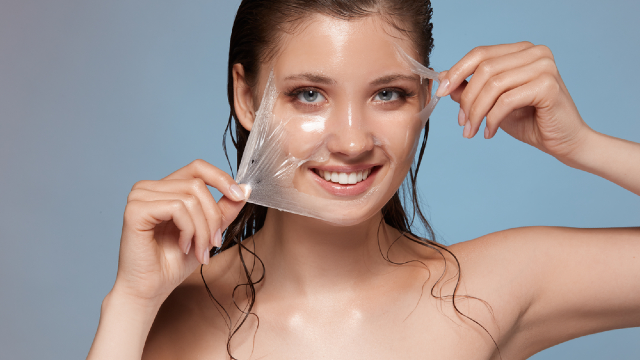
Medical Guide
Chemical Peels in a Korean Medical Skincare Program
What a Korean medical skincare program in Busan includes, how chemical peel depth decides downtime and risk, and which other treatments sit alongside it.
Schedule a ConsultationChemical Peels and Regenerative Skincare: What a Korean Medical Skincare Program Actually Includes
Medically reviewed by Dr. Baik Seung Hyuk, M.D., Ph.D., FASCRS, Hospital Director
A chemical peel is the treatment most people picture when they hear the phrase medical skincare, and it is a useful place to start, because a peel makes the central trade-off of aesthetic dermatology unusually easy to see. Anyone researching a chemical peel in Korea quickly discovers that clinics rarely sell a peel on its own. At Yonsei Mirae IFC Medical Center in Busan, Medical Skincare is offered as a physician-led program built around your skin rather than as a menu item, and a peel is one of several routes the clinician may take. This guide uses peel depth as the organizing idea — what each depth reaches, what it can realistically improve, and what it takes from you in downtime and risk — and then places the program's other options next to it so you can see how a plan gets assembled.
The Bottom Line
- Medical Skincare at the center is a personalized, physician-led program; the route chosen may be professional skincare, a peel, light-based therapy, radiofrequency or regenerative treatment, and it is picked after the skin has been looked at rather than settled in advance.
- Peels are used for certain kinds of acne, for discoloration, for roughness, for fine lines and for skin that looks weathered by sun; depth is what sets the ceiling on how much change is possible.
- Depth also decides how much recovery time a peel takes. The American Academy of Dermatology reports roughly 1 to 7 days of recovery for superficial peels, 7 to 14 days for medium peels and 14 to 21 days for deep peels — figures that describe peels specifically and should not be applied to every treatment in the program.
- Peels are not risk-free: redness, scaling, temporary hyperpigmentation or hypopigmentation, infection or scarring are all possible, and the risk profile rises with depth.
- Assessment comes first. Consultation at the center is built on an evaluation of your skin type, supported by the 3D JANUS II analysis system, and what that evaluation shows is what decides the method used and how many sessions are scheduled.
What "Medical Skincare" Means Here
The phrase gets used loosely in marketing, so it is worth pinning down what it means clinically at this center. Medical Skincare is described as a physician-led, personalized skin-management program tailored to your skin condition, your concerns and what you actually need treated. It may combine professional skincare products with medically supervised technologies or treatments, and its purpose is to address specific concerns rather than to deliver a fixed sequence of steps to everyone who walks in.
The concerns it is built around are ordinary ones: acne, the marks acne leaves behind, uneven pigmentation, skin changes caused by years of sun, enlarged pores, fine lines and general texture. Those are the same problems dermatologists treat everywhere, which is why the program is best understood as clinical management with an aesthetic goal rather than as a spa service delivered in a clinical building.
Adults and, depending on the specific treatment, adolescents with clinically assessed concerns of that kind may be candidates. Suitability is decided per modality, not for the program as a whole. Timing may have to move, or the method change, where there is an active infection of the skin, marked inflammation, skin disease that is not under control, or a recent stretch of heavy sun or tanning. The same applies to certain drugs, including those that raise sensitivity to light, to pregnancy in the case of some light-based and laser work, and to any history of scars healing abnormally.
Peel Depth: The Idea That Explains Everything Else
A chemical peel applies a solution that removes skin in a controlled way so that what regrows is smoother and more even. Everything that matters about a peel — what it can fix, how long you look like you had something done, and what can go wrong — follows from one variable: how deep the solution goes.
Superficial peels
A superficial peel works on the outermost layer of the skin. It is the lightest intervention in the category, and the one most often used in a series rather than as a single event. Because it does not reach far, the change it makes is gradual: a smoother surface, a little more evenness in tone, some improvement in the look of mild discoloration and rough texture. The American Academy of Dermatology places recovery after a superficial peel at roughly one to seven days. For a traveler, that is the version that fits most comfortably into a short trip.
The honest framing is that a superficial peel is maintenance-grade. It is well suited to someone whose concern is dullness, mild unevenness or early texture change, and it is often the safer starting point when skin has a tendency to pigment after irritation.
Medium peels
A medium peel reaches deeper, into the upper part of the dermis, and it asks more of both the skin and your schedule. The greater depth allows it to do more for discoloration, for rough sun-damaged texture and for fine lines. The Academy reports recovery of roughly seven to fourteen days for this depth. Redness, swelling, visible scaling and crusting during that period are not complications; they are the treatment doing what it does.
That two-week figure is the reason a medium peel is a poor fit for the last two days of a vacation. If the calendar is fixed, the calendar should choose the depth.
Deep peels
A deep peel reaches further still and is correspondingly more demanding. It is the version capable of the largest change in deeply sun-damaged skin and more established lines, and it is also the version with the longest recovery and the most substantial risk profile. The Academy's reported recovery range for deep peels is roughly fourteen to twenty-one days. Treatment at this depth is a considered medical decision made after assessment, not something to arrange casually while abroad.
Reading the ladder correctly
Three rules follow from the depth ladder, and they apply regardless of country or clinic:
- More depth buys more change, and it buys it with recovery time.
- More depth raises the risk of pigment disturbance, infection and scarring rather than leaving those risks unchanged.
- A series of lighter treatments and a single deeper treatment are not interchangeable; they suit different concerns, different skin types and different schedules.
What Peels Can Realistically Improve
The stated range is specific: certain types of acne, discoloration, rough skin, fine lines and a weathered, sun-worn look. Every qualifier in that list earns its place. Certain types of acne, not acne in general. Improvement, not removal. Results vary between patients, and multiple sessions are common for lighter depths.
Acne scarring deserves a specific note, because it is one of the most common reasons people look into peels in the first place. A peer-reviewed review of acne scar pathogenesis and treatment archived in PubMed Central describes chemical peels among the resurfacing approaches used for scarring, and sets out the general pattern that lighter, repeated treatment produces gradual improvement while more aggressive resurfacing achieves more in one pass at the cost of longer healing and a greater chance of pigment disturbance, infection or scarring. That is the same trade-off the depth ladder describes, confirmed from the scarring literature.
Sun damage deserves a note too, for a different reason. According to the National Cancer Institute, ultraviolet exposure — whether from daylight, a sunlamp or a tanning bed — both ages skin early and drives the damage behind skin cancer, and that exposure arrives indirectly as well, bouncing off pavement, water, sand and snow and coming through glass. What a peel addresses is the visible residue of that history. The process itself carries on regardless, which is the reason daily protection belongs inside the treatment plan instead of being appended to it.
What Depth Adds to the Risk
The center's own statement of peel risks is short and worth reading literally: peels may cause redness, scaling, temporary hyperpigmentation or hypopigmentation, infection or scarring. Hyperpigmentation means a darkening of treated skin; hypopigmentation means a lightening of it. Both are possible, and both are more likely when treatment is deeper than the skin can comfortably tolerate.
Skin tone changes the calculation. Skin with more melanin available to react has more capacity to respond to inflammation with new pigment, so a conservative approach and a full history of how your skin has behaved after previous procedures matter more, not less, in deeper phototypes. This is a consultation topic, and bringing it up yourself is reasonable.
Writing on the safety of cosmetic procedures, the American Academy of Dermatology makes a point that covers every treatment named in this article: these procedures can look far simpler than they are, and delivering them safely depends on understanding skin and the structures under it, with fewer complications when the person holding the instrument is medically trained. Regulators land in the same place. The U.S. Food and Drug Administration's advice on aesthetic devices is to settle two questions before consenting — whether you are the right candidate, and what qualifies the person performing the procedure.
The Other Options in the Same Program
A peel is one route. The program's step list names several others, and which one is selected depends entirely on the diagnosis.
- Laser or light therapy. Light-based treatment is selected for particular targets, such as pigment or texture. Its risk profile is different from a peel's: the recognized effects run from short-lived redness and swelling through stinging, blistering, crusting and bruising to changes in pigment, infection and, uncommonly, scarring. The FDA classifies medical lasers used on skin among the highest-hazard laser products, which is why eye protection, a controlled room and trained operation are standard rather than optional.
- Regenerative treatment. One of the treatment routes the program may take, selected according to the assessed concern rather than offered as a default.
- Radiofrequency. Radiofrequency appears as one option within the Medical Skincare step list, heating tissue to prompt collagen remodeling rather than removing surface skin. The American Academy of Dermatology places non-invasive tightening of this kind in the category of modest change, and is explicit that surgical lifting remains the approach that produces the most dramatic result when laxity is significant.
- Professional skincare. Physician-directed products and in-office skincare treatment, used on their own for lower-intensity goals or alongside a procedure to prepare and settle the skin.
Combinations are individualized. They are planned around a specific diagnosis rather than packaged as a standard course for everyone, and the reason is straightforward: two people with acne marks may need different things depending on skin type, pigmentation history and how much recovery time they can accept.
How the Plan Is Built
The sequence the center describes is deliberately assessment-first. A skin consultation opens it, skin analysis follows, and the main concern is then diagnosed before any modality is selected. Consultation is organized around skin type, and the 3D JANUS II system is used to characterize the condition of the skin — a diagnostic analysis tool, not a treatment device and not a laser. What comes out of it determines which method is used and how many visits are planned.
Once a modality is chosen, the visit runs through cleansing and preparation, the treatment itself, a soothing or skin-care step where appropriate, and personalized aftercare instructions, with follow-up used to adjust the plan as the skin responds.
A useful consultation covers more than the thing you dislike in the mirror. Expect to discuss:
- Your main concern and what result would count as worthwhile
- Your skin type and how it has reacted to previous treatments
- Every medication you take, including anything that increases photosensitivity
- Allergies, and whether your skin has ever scarred oddly or changed color after a procedure
- How much sun exposure your normal life involves
- How much recovery time you can genuinely accommodate
That last item is not small talk. It is frequently the constraint that decides depth.
Preparation, Aftercare and the Part That Is Yours
Preparation depends on the treatment selected and should follow the individualized instructions you are given. In general terms it may include avoiding heavy sun exposure and tanning, pausing or modifying irritating skincare products, following a prescribed pre-treatment regimen, and disclosing all medications and previous procedures.
Aftercare is where a good outcome is protected or lost:
- Use gentle cleansing and moisturizer exactly as directed
- Do not pick, scratch or exfoliate treated skin, however tempting flaking becomes
- Protect the skin from sunlight and use sunscreen consistently
- Follow any treatment-specific medication or wound-care instructions
- Attend the follow-up, and report anything that seems to be moving in the wrong direction rather than waiting
Sunscreen labels repay a moment of attention. The FDA explains that SPF measures only how well a product guards against sunburn, and that the figure tracks accumulated ultraviolet exposure rather than clock time; coverage of UVA is a separate claim, signaled by the phrase "broad spectrum." The agency also states that waterproof sunscreen does not exist, and that a water-resistant product has to declare how many minutes its resistance survives. For skin that has recently been resurfaced, the working rule is broad spectrum, applied again through the day.
Results keep their own schedule. A few treatments change how skin looks and feels straight away; acne, pigment and collagen change more slowly, over weeks or across a course of visits.
If You Are Traveling to Busan
You will find the center inside IFC Mall in the Nam-gu district, spread across three floors at 133 Jeonpo-daero, with BIFC station at the door. Weekday consultation runs 8:00 AM to 6:00 PM Korean time, Saturdays finish at 12:30 PM, and the doors stay shut on Sundays and public holidays. Korea licenses the clinic under its Medical Service Act, and the country's health ministry lists it as a Registered Medical Institution for Attracting Foreign Patients.
Patients arriving from overseas are supported in English, and online consultation is available, so candidacy and realistic expectations can be discussed before flights are booked. That conversation is worth having early for this program in particular, because the answer may be that the depth you had in mind does not fit the days you have.
How long to stay depends entirely on what is selected. Lower-downtime treatments may be completed comfortably during a short visit, while anything that produces significant redness, swelling or peeling — or that needs several sessions — requires more time. The center's one-day, one-stop service model does not mean every skin concern can be finished in a single appointment, and it is better to hear that before arriving than after. What you pay depends on the plan your assessment produces, so ask about current figures at the point where you book an appointment. Readers who want to understand how the center's departments fit together before committing will find that laid out on its background page.
Frequently Asked Questions
How do I know which peel depth is right for me?
You do not decide it alone, and you should be skeptical of any process that lets you. Depth is matched to the diagnosis, your skin type, your pigmentation history and the recovery time you can accept. A superficial peel repeated in a series and a single deeper peel address different problems rather than offering fast and slow versions of one result.
How long will I look like I have had something done?
It depends on depth. The American Academy of Dermatology reports approximately one to seven days of recovery for superficial peels, seven to fourteen days for medium peels and fourteen to twenty-one days for deep peels. Those figures describe chemical peels and should not be assumed to apply to the other treatments in a medical skincare program.
What are the actual risks of a peel?
Redness, scaling, temporary darkening or lightening of the treated skin, infection and scarring are all possible, and the likelihood rises with depth. Individual risk depends on your skin type and history, which is why assessment precedes treatment and why previous reactions to procedures are worth mentioning without being asked.
Is a peel better than a laser for my skin?
Neither is universally better; they are different tools for different targets. Light-based treatment is selected for particular concerns and carries its own profile of redness, swelling, crusting and pigment change, while peels work by controlled removal of skin. The selection belongs in a clinical assessment, and combinations are individualized rather than standard.
Can everything be done in one visit?
Sometimes, and sometimes not. Whether the work is done in one appointment or spread over a course depends on what is diagnosed and which method is chosen. Plan your trip around the possibility of more than one appointment, and confirm the expected schedule before traveling.
Who should postpone treatment?
Anyone with an active skin infection, significant inflammation, open wounds, or recent excessive sun exposure or tanning, as well as people taking certain medications, should discuss timing before booking. Pregnancy and breastfeeding, allergies, earlier cosmetic work, and any past episode of odd scarring or color change after treatment all belong in that conversation.
Does a peel protect my skin from further sun damage?
No. A peel can improve the appearance of skin that has been damaged by years of sun, but it does nothing to prevent further damage. The National Cancer Institute notes that ultraviolet light reaches you indirectly, reflecting from surfaces and passing through glass, so daily broad-spectrum protection is the part of the plan that keeps a result from being undone.
This article is for general informational purposes and does not constitute individualized medical advice, and it is not a self-diagnosis tool. Screening options, test selection, and the meaning of any result can only be determined through consultation with a qualified physician.
More Articles
Continue reading our clinical guides.
Is a 3.0T MRI Health Screening Safe? Radiation, Contrast
What MRI screening safety really involves: no ionizing radiation, gadolinium contrast risks, implant disclosure, pregnancy advice and claustrophobia help.
Learn More
Low-Dose CT Lung Cancer Screening in Korea: Who Qualifies
Who should consider low-dose CT lung screening in Korea: age and smoking criteria from the USPSTF and ACS, trial evidence, risks, and follow-up planning.
Learn More

Combining a Health Checkup and GI Screening in Korea
How to combine a health checkup and colonoscopy in Korea on one trip: what the shared fast covers, how the day runs, and real limits of a combined visit.
Learn More