Busan IFC Mall (2F–4F) · 6,600㎡ One-Day Comprehensive Health Screening & Specialist Care · International Patient Concierge

Specialty Department
Diagnostic Imaging
Diagnostic imaging in Busan at Yonsei Mirae IFC Medical Center — how MRI, CT and ultrasound are chosen between, the safety screening each requires, and how a one-day imaging visit is organised.
Schedule a ConsultationDiagnostic Imaging
Medically reviewed by Dr. Seo Jeong-su, board-certified radiologist and diagnostic radiology specialist at Yonsei Mirae IFC Medical Center
Diagnostic imaging in Busan at Yonsei Mirae IFC Medical Center covers non-invasive tests that produce images of the body's internal structures, to support early detection, to assess how a condition is progressing, and to guide intervention. The department spans MRI, CT and ultrasound, including low-dose chest CT. This page covers the department as a whole: how a modality is chosen, what safety screening each one requires, and how the imaging visit is organised.
What Is the Diagnostic Imaging Service?
Diagnostic imaging is a set of non-invasive examinations that make the inside of the body visible. The clinic's service is organised around choosing between them rather than around performing one of them — the useful question is not which scanner is best, but which scanner answers the question being asked.
- The equipment comprises a 3.0T MRI, a 128-channel MDCT scanner, AI-assisted breast cancer diagnostic imaging, high-definition ultrasound, digital X-ray and Olympus 290 high-resolution endoscopy.
- A one-to-one consultation determines which imaging modalities are appropriate, followed by the structured checkup steps and a same-day physician evaluation.
- Most imaging examinations are minimally uncomfortable and non-invasive, and require no sedation unless they are paired with an endoscopic examination.
- The clinic states that test results are made available on the same day through its streamlined diagnostic process.
- The facility is a duplex centre of approximately 6,600 square metres with separated movement routes for male, female and private patients, and an integrated one-day, one-stop diagnostic system.
What brings international patients to an imaging department abroad is usually a combination of three things the clinic names: access to a comprehensive checkup rather than a single test, results on the same day, and the prospect of identifying a condition that has not yet announced itself. The clinic describes the benefits of its imaging as clear visualisation of internal organs, greater diagnostic accuracy, early detection of small lesions and fast delivery of findings — claims about what the equipment and the workflow are designed to do, and worth reading as that rather than as an outcome promise.
Choosing between modalities turns mostly on two properties: what a technique sees well, and what it costs the patient in radiation. The National Institute of Biomedical Imaging and Bioengineering describes MRI as a non-invasive technique that images soft tissue — brain, spinal cord, nerves, muscles, ligaments and tendons — more clearly than x-ray or CT and without ionising radiation, which makes it the modality of choice when repeated imaging is needed. That is the argument for MRI where soft tissue is the question; it is not an argument for MRI everywhere, since CT remains better suited to the chest and to bone.
Who Performs Diagnostic Imaging at Yonsei Mirae IFC Medical Center
| - | - |
|---|---|
| Dr. Baik Seung Hyuk | Dr. Seo Jeong-su |
Yonsei Mirae IFC Medical Center documents this service as being overseen by the physician named above rather than documenting that one individual personally performs every appointment, so the member of the clinical team you see on the day is determined by scheduling. Two physicians are documented for this department: Dr. Seo Jeong-su and Dr. Baik Seung Hyuk. Dr. Seo Jeong-su is a board-certified radiologist and diagnostic radiology specialist who was formerly a professor at Ewha Womans University College of Medicine, a clinical professor in the department of health medicine at Samsung Seoul Hospital, and a visiting fellow at MD Anderson Cancer Center. Dr. Baik Seung Hyuk, who oversees the general screening team, is a board-certified colorectal surgeon holding M.D. and Ph.D. degrees and an International Fellow of the American Society of Colon and Rectal Surgeons. Imaging is a two-part discipline — acquiring the images and interpreting them — and the interpretation is what the radiologist's specialty exists for.
Imaging Options and How One Is Chosen
Each modality has a domain in which it is the right instrument and a domain in which it is the wrong one.
| Modality | How it works | Strongest for | Radiation |
|---|---|---|---|
| 3.0T MRI | Strong magnetic field and radio waves | Soft tissue, brain, nerves, blood vessels, joints and spine | None |
| 128-channel MDCT | X-rays acquired as cross-sections | Chest and lung assessment, bone, rapid whole-region imaging | Yes, dose-dependent |
| Low-dose chest CT | The same technology at a reduced dose protocol | Lung nodules and early lung disease | Yes, substantially reduced |
| High-definition ultrasound | High-frequency sound waves, real time | Carotid arteries, heart, abdominal organs, thyroid, breast | None |
| Digital X-ray | A single projection image | A fast structural overview | Yes, low |
Three services sit under this department, each with its own page. 3.0T MRI imaging is the radiation-free modality for soft tissue and neurovascular assessment. Low-dose CT is the reduced-radiation chest examination used for lung screening. Carotid, cardiac and abdominal ultrasoundcovers vascular flow, cardiac structure and the abdominal organs. The clinic also notes that a broader alternative to comprehensive multi-modality imaging is a conventional laboratory work-up or a standard single scan, which has a correspondingly narrower scope.
Ultrasound's boundaries are worth naming at the point of choosing, because they are physical rather than technical. RadiologyInfo.org, published by the Radiological Society of North America and the American College of Radiology, describes abdominal ultrasound as imaging the kidneys, liver, gallbladder, bile ducts, pancreas, spleen and abdominal aorta without ionising radiation, with an added Doppler study able to show blockages or reduced blood flow — though sound waves are disrupted by bowel gas and cannot penetrate bone. No amount of equipment quality changes those last two facts, which is why a negative ultrasound sometimes leads to a CT.
Who Is a Good Candidate for Diagnostic Imaging?
- Individuals seeking routine health screening with imaging included.
- People seeking early detection of disease before symptoms have developed.
- People who need detailed evaluation of specific symptoms affecting internal organs or tissues.
- Individuals with specific contraindications — unmanaged medical metal implants for high-field magnetic scans, or severe contrast dye allergies — may need an alternative diagnostic method.
- Pregnancy is a reason to discuss any radiation-based examination before it is scheduled rather than on the day.
What to Expect: Procedure, Recovery, and Results Timeline
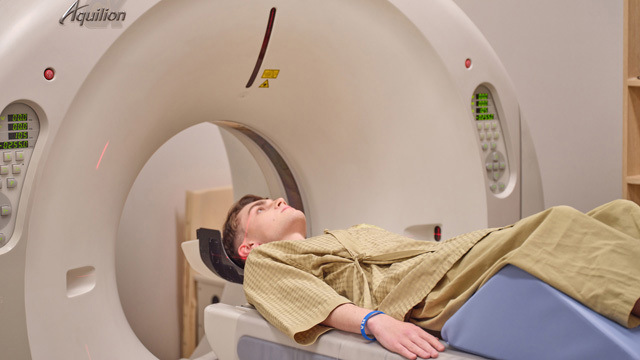
Preparation includes reviewing the pre-checkup guidelines, following fasting instructions where contrast or organ visualisation requires them, and completing the online questionnaires in advance. On the day, patients register, change into the examination clothing, go to a designated private examination room, are positioned on the equipment and complete the scan. Most imaging is minimally uncomfortable and requires no sedation unless it is combined with an endoscopic examination. Minor risks are limited to temporary discomfort from positioning, or rare allergic reactions where contrast media is used. There is no downtime: normal daily activity can resume immediately after the imaging session. Aftercare is correspondingly simple — stay hydrated after a contrast study, and attend the same-day follow-up consultation to review the findings. Examinations are typically completed within a single day visit using the one-stop system, and the clinic states that results are made available the same day.
| Stage | What to expect |
|---|---|
| Before | Pre-checkup guidelines reviewed; fasting where contrast or organ imaging requires it; questionnaires completed in advance |
| Arrival | Registration, change into examination clothing, escorted to a designated private examination room |
| During | Positioning on the equipment, then the scan; minimally uncomfortable and non-invasive in most cases |
| Sedation | Not required unless imaging is paired with an endoscopic examination |
| Risks | Temporary positioning discomfort; rare allergic reaction where contrast is used |
| Recovery | None; immediate return to normal activity |
| Aftercare | Hydration after a contrast study; same-day consultation to review the findings |
| Results | Made available the same day through the streamlined diagnostic process |
The same-day element is what most changes the shape of an imaging visit. In the ordinary sequence, a scan and its interpretation are separated by days and often by institutions; here the physician evaluation is scheduled into the same visit, which is what makes a single-day imaging appointment possible at all.
Combining Imaging with Other Examinations
Imaging is most often ordered as part of something larger, and the clinic documents which programmes it attaches to.
- Diagnostic imaging is combined with specialised checkups — cardiovascular, brain, breast, thyroid and digestive endoscopy programmes.
- Within the one-day system, several imaging examinations can be completed in the same visit rather than across separate appointments.
- MRI, CT and ultrasound are used together where a question needs more than one kind of look — soft tissue from one, bone and chest from another, blood flow from a third.
- Where imaging is paired with a gastrointestinal endoscopy, sedation for that examination governs the day's planning rather than the imaging.
- Imaging findings are read alongside the laboratory results from the same visit rather than in isolation, which is what a combined checkup is for.
The counterpart to combining is knowing when not to. Adding a modality because it is available rather than because it answers something is how an imaging visit turns into a collection of results with no question behind them — and every additional examination brings its own preparation, its own small risks and its own chance of an incidental finding that has to be explained and followed.
Safety, Precision, and Clinic Standards

Safety in imaging is modality-specific, and the screening that precedes each examination is where most of it happens. For MRI the constraint is magnetic: patients with non-MR-compatible metallic implants or cardiac pacemakers may be unsuitable, and a safety screening questionnaire is completed before the scan. For CT and X-ray the constraint is radiation dose, which is why the low-dose protocol exists and why pregnancy must be disclosed. For contrast studies the constraint is allergy, which is why contrast media reactions are listed among the risks. Ultrasound has no radiation constraint at all. The equipment is documented as a 3.0T MRI, a 128-channel MDCT scanner, high-definition ultrasound and digital X-ray, within a facility that uses separated movement routes and automated tracking to manage the flow of a multi-examination visit. Yonsei Mirae IFC Medical Center operates as a licensed Korean medical clinic under the Medical Service Act.
The facility itself is part of how the department works rather than a detail of decor. It is a duplex centre of approximately 6,600 square metres, with separated movement routes for male, female and private patients, and an automated RFID tracking system that follows a patient's progress through a multi-examination visit. In a department where one person may pass through three modalities and a consultation in a morning, the sequencing is what makes the day possible; a scanner that is idle because the previous patient has not arrived is the ordinary failure mode of multi-modality imaging.
One caution about how imaging claims are worded, including on this page. Higher resolution means a scan resolves smaller structures; it does not by itself mean better health outcomes, and no imaging examination is a guarantee against a finding being missed. What a good imaging service offers is the right modality for the question, competent interpretation, and a route from an abnormal image to the next step.
The clinic describes a One-Step model in which a finding can be routed the same day to an in-house department, or fast-tracked to a partner tertiary hospital.
The International Medical Center at Yonsei Mirae IFC Medical Center provides English-language support for international patients, and the clinic states that this assistance runs from consultation through recovery.
The Bottom Line
- The department spans MRI, CT, ultrasound and X-ray, and its work begins with choosing which of them answers the question.
- MRI is the radiation-free choice for soft tissue; CT is the chest and bone modality; ultrasound is real-time, radiation-free and limited by gas and bone.
- Imaging examinations are minimally uncomfortable and need no sedation unless combined with endoscopy, and there is no recovery period.
- Safety screening is modality-specific: metal and implants for MRI, radiation and pregnancy for CT and X-ray, allergy for contrast.
- Examinations and the physician evaluation are scheduled into a single day, with results made available the same day.
Frequently Asked Questions**How is it decided which scan I need?**Through a one-to-one consultation before the imaging, which determines the appropriate modalities for the question being asked. The choice turns on what each technique sees well — soft tissue, chest, bone, blood flow — and on whether radiation is a consideration for that patient.**Are the scans painful?**Most diagnostic imaging is comfort-focused and non-invasive. The discomfort patients report is usually about position — holding still, lying in a particular way — rather than about the scan itself. No sedation is required unless the imaging is paired with an endoscopic examination.**Which examinations involve radiation?**CT and X-ray do; MRI and ultrasound do not. This is the single most useful distinction to hold when discussing imaging options, and it is why low-dose protocols exist for CT and why MRI is preferred where repeated imaging is expected.**What do I need to do beforehand?**Review the pre-checkup guidelines, follow the fasting instructions where contrast or organ visualisation requires them, and complete the online questionnaires in advance. For an MRI, the safety screening questionnaire about metal and implants is the part that matters most.**Can I have imaging if I have a metal implant?**It depends on the implant and the modality. Unmanaged medical metal implants are a contraindication for high-field magnetic scans specifically, and an alternative method may be needed. Disclose all implants and devices during the safety screening rather than at the scanner.**How long will the whole visit take?**Examinations are typically completed within a single day visit using the one-stop system. How long depends on how many examinations are included; each modality has its own duration, and the same-day physician evaluation is scheduled into the visit as well.**When will I get the results?**The clinic states that results are made available the same day through its streamlined diagnostic process, with a same-day follow-up consultation to review the findings. Any further evaluation that a finding prompts is arranged separately.Is there anything to do afterwards?
Very little. There is no downtime and normal activity resumes immediately. After a contrast study, stay hydrated. The substantive aftercare is the consultation where the findings are explained and any follow-up is decided.
Book a Consultation at Yonsei Mirae IFC Medical Center

Which scan you need is worth settling with a physician rather than choosing from a list, particularly where implants, pregnancy or a contrast allergy are involved. Enquiries and appointments go through the clinic's enquiry and booking page, or by telephone on . The imaging department, its equipment and the facility are described further on the clinic's About Us page.
Yonsei Mirae IFC Medical Center is located on the second, third and fourth floors of IFC Mall, 133 Jeonpo-daero, Nam-gu, Busan, South Korea. Health screening runs Monday to Friday from 7:30 AM to 4:30 PM and Saturday from 7:30 AM to 12:30 PM, Korean Standard Time. Consultations run Monday to Friday from 8:00 AM to 6:00 PM and Saturday from 8:00 AM to 12:30 PM. The clinic is closed on Sundays and public holidays.
Disclaimer
This page is provided for informational purposes only and does not constitute medical advice, diagnosis or treatment. Whether any test or procedure described here is appropriate for you depends on your own medical history and can only be decided in consultation with a qualified physician.
Sources & Further Reading
- Magnetic Resonance Imaging (MRI) — National Institute of Biomedical Imaging and Bioengineering, U.S. National Institutes of Health
- Abdominal Ultrasound — Radiological Society of North America and American College of Radiology
Related Medical Services
Diagnostic examinations and clinical procedures performed across our six specialist departments.
Life-Cycle Checkup Program
The Life-Cycle Checkup Program is a set of age- and life-stage-specific screening packages — pre-marital couples and senior citizens are the two examples the clinic names — designed so that the examinations a person...
Learn More

Fatigue Recovery Clinic
The Fatigue Recovery Clinic at Yonsei Mirae IFC Medical Center provides a structured medical assessment for persistent tiredness or low energy. Fatigue evaluation in Busan here means examining the possible contributing...
Learn More
Upper GI Series
An upper GI series uses swallowed contrast and X-ray imaging to assess structural and functional abnormalities of the oesophagus, stomach and duodenum. The clinic describes it as an indirect examination, in contrast to...
Learn More