Busan IFC Mall (2F–4F) · 6,600㎡ One-Day Comprehensive Health Screening & Specialist Care · International Patient Concierge


Specialty Department
Dermatology Treatment
Dermatology in Busan at Yonsei Mirae IFC Medical Center — assessment-led skin treatment, the laser and injectable services offered, realistic expectations and what the clinic does not document.
Schedule a ConsultationDermatology Treatment

Medically reviewed by the clinical team of the Dermatology and Anti-Aging Center at Yonsei Mirae IFC Medical Center
Dermatology in Busan at Yonsei Mirae IFC Medical Center means assessing a skin concern and then selecting the appropriate medical, procedural or topical treatment for it. The department covers pigmentation and melasma, skin laxity, anti-aging injectables and physician-led skincare. This page describes how a dermatology consultation works here, what the four services are, and — because it is relevant to anyone deciding whether to book — what the clinic's own documentation establishes and what it leaves open.
What Is Dermatology Treatment at This Clinic?
Dermatology treatment begins with assessment rather than with a procedure. The clinician evaluates the skin concern, discusses the suitable treatment options, and performs the selected treatment if it is appropriate, with follow-up arranged to assess the response.
- The process starts with a medical consultation and examination, followed by assessment of symptoms and medical history; additional diagnostic testing is recommended where clinically necessary.
- The concerns patients present with are the common ones — acne, pigmentation, signs of aging, scars and hair concerns.
- Treatment may be medical, procedural or topical, and which it is depends on the diagnosis rather than on a preference expressed at booking.
- Anaesthesia depends on the treatment: many routine dermatologic treatments need little or none, while procedures likely to cause discomfort can use local or topical pain control.
- Follow-up is part of the service rather than an optional extra, because most dermatologic results develop over sessions rather than within one.
Where a specific condition is concerned, the case for assessment-led treatment is easy to illustrate. The American Academy of Dermatology states that there is no single best treatment for melasma: the most effective approach usually combines sun protection with topical medication and sometimes a procedure, with laser or light treatment acting as an adjunct to that plan rather than a standalone cure. A clinic that led with the laser rather than with the plan would be doing the second half of the work without the first.
Who Performs Dermatology Treatment at Yonsei Mirae IFC Medical Center
The clinic has not yet confirmed a specialty-level physician for dermatology, so this page names no individual doctor. Care is provided by the clinical team of the Dermatology and Anti-Aging Center, and the doctor documented for each individual treatment is named on that treatment's own page. In practice that means Dr. Baik Seung Hyuk is the physician documented for each of the four dermatology services — pigmentation and melasma laser toning, laser skin lifting, anti-aging injectables and medical skincare — and the gap is at the level of the department rather than of the treatments.
Dr. Baik Seung Hyuk, who oversees the general screening team, is a board-certified colorectal surgeon holding M.D. and Ph.D. degrees and an International Fellow of the American Society of Colon and Rectal Surgeons. That is his documented specialty, and it is not dermatology. Patients for whom the treating physician's dermatological training is a deciding factor should ask about it directly before booking; it is a reasonable question and this page cannot answer it.
Dermatology Services Available
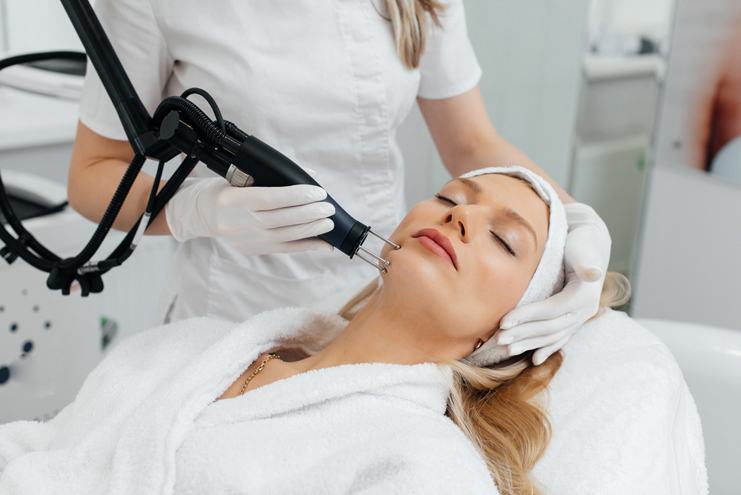
Four services sit under this department, each with its own page.
| Service | What it addresses | Type |
|---|---|---|
| Pigmentation & Melasma Laser Toning | Pigmentation, uneven skin tone and melasma | Laser, non-invasive |
| Laser Skin Lifting | Mild to moderate skin laxity and reduced firmness | Laser, non-surgical |
| Anti-Aging Injectables | Wrinkles, fine lines and loss of facial volume | Injectable, minimally invasive |
| Medical Skincare | Acne, post-acne marks, pigmentation, pores, texture | Physician-led programme |
Depending on the condition, the alternatives to any of these include prescription medication, topical therapy, injectable treatment, energy-based procedures or surgical approaches — and the selection depends on the diagnosis and on patient factors rather than on which device a clinic happens to own. The clinic's skin-regeneration centre also lists regenerative injections and radiofrequency lifting alongside its laser services, and describes combination treatments as individualised rather than offered as a standard package.
Pigmentation and melasma laser toningis a non-invasive laser treatment aimed at excess melanin, intended to improve the appearance of pigmentation, uneven tone and melasma. Improvement develops progressively over sessions rather than immediately, and pigmentation can recur with continued sun exposure.Laser skin liftingapplies laser energy at depth to prompt the skin's own collagen response, aiming at firmness and elasticity without an incision. Its territory is mild to moderate laxity; substantial sagging is a different problem with different answers.Anti-aging injectablesaddress wrinkles, fine lines and loss of facial volume through small quantities of an injectable placed at planned points. Effects are temporary by design and depend strongly on the product, the area, the dose and the individual.Medical skincareis the physician-led programme: a personalised plan combining professional skincare products with medically supervised treatments, directed at acne, post-acne marks, pigmentation, pores, photoaging and texture. It is the service most likely to be a course rather than an appointment.
The assessment tool the clinic names is a 3D JANUS II skin-analysis system, used for skin-type assessment and individualised consultation, with the treatment method and number of sessions planned on the basis of that analysis.
Who Is a Good Candidate for Dermatology Treatment?

- People with diagnosed or suspected skin, hair or nail concerns who want professional evaluation and treatment.
- People seeking treatment for acne, pigmentation, signs of aging or scarring.
- People who want an assessment before committing to a procedure rather than the other way round.
- Treatment may need to be postponed or modified for people with active infections.
- Treatment may need to be postponed or modified for people with certain uncontrolled medical conditions.
- Treatment may need to be postponed or modified for people with allergies to the proposed treatment.
What to Expect: Procedure, Recovery, and Results Timeline
Provide your medical history, current medications, allergies and any previous dermatologic treatments; specific preparation instructions depend on which treatment is selected. The consultation evaluates the skin concern and discusses the suitable options, and the treatment is performed if it is appropriate at that visit. Recovery varies considerably by treatment type — topical, injectable, device-based or surgical — with some treatments involving little downtime and others requiring several days or longer. Possible effects vary by treatment and can include temporary redness, swelling, irritation, dryness, pigmentation changes or infection; the procedure-specific risks are explained during the consultation. Aftercare follows the clinician's instructions on cleansing, medications, sun protection and activity restriction, avoiding irritation of the treated area, and attending the recommended follow-up visits. Results depend on the condition and the method: some improvements appear quickly, others require several sessions, and maintenance may be necessary for ongoing concerns.
| Stage | What to expect |
|---|---|
| Bring | Medical history, current medications, allergies, previous dermatologic treatments |
| Consultation | The concern is evaluated, options discussed, suitability determined |
| Treatment | Performed at that visit where appropriate, with settings selected for the individual |
| Anaesthesia | Little or none for many treatments; topical or local pain control where needed |
| Downtime | Varies widely by treatment type — hours for some, days or longer for others |
| Common effects | Temporary redness, swelling, irritation, dryness; pigmentation change or infection possible |
| Aftercare | Cleansing, medication, sun protection and activity instructions; avoid irritating the area |
| Results | Some quickly, some over several sessions; maintenance may be needed |
Two practicalities follow from that variability, and both affect a trip rather than a treatment. The first is that downtime cannot be predicted from the service name alone: a low-intensity treatment may leave nothing visible by the evening, while a more intensive laser or peel can produce redness, scaling or crusting for several days. The second is that a treatment performed late in a stay leaves no room for the follow-up visit that assesses the response — and for a course of treatments, no room for the second session at all. Both are worth raising at the consultation, before the date is fixed rather than after.
The expectation worth setting at the start is that dermatology results are cumulative and conditional. Very little in this department produces its full effect in one session, and almost nothing produces a permanent one: pigmentation can recur with continued sun exposure, skin continues to age after a lifting treatment, and injectable results are temporary by design. A plan that includes maintenance is not an upsell; it is what the treatments actually require.
Combining Dermatology Treatments
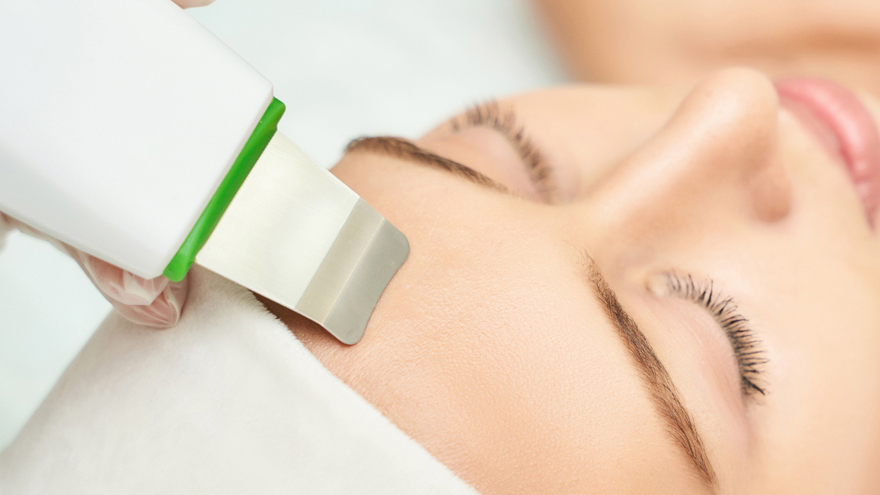
The clinic describes customised combination treatments rather than standard packages, and the distinction matters more here than in most departments.
- Laser therapy, regenerative injections and radiofrequency lifting are listed together within the clinic's skin-regeneration centre, and can be combined within one plan.
- A pigmentation plan typically combines a procedure with topical treatment and sun protection rather than relying on the procedure alone.
- Medical skincare is frequently the framework into which a device-based treatment is placed, rather than an alternative to it.
- The clinic states explicitly that combinations should be individualised rather than presented as a standard package for every patient.
That last point is worth taking at face value. A combination arrived at by assessment is a treatment plan; a combination offered as a package is a price list, and the two are easy to confuse when both arrive in the same conversation.
Two practical questions come up at almost every dermatology consultation, and it is worth knowing the shape of the answers in advance. The first is how many sessions a concern will take: the clinic plans the treatment method and the number of sessions from the skin analysis rather than quoting a standard course, so the answer is individual and is given after the assessment rather than before it. The second is what the treatment will cost in downtime — and since that depends on the modality and its intensity rather than on the concern being treated, two patients with the same complaint can leave with very different plans for the week afterwards.
Neither question has a useful answer on a website, which is the argument for treating the consultation as the service rather than as the step before it.
Safety, Precision, and Clinic Standards

The risks in dermatology are mostly to the skin itself and mostly temporary — redness, swelling, irritation, dryness — but two deserve particular attention because they are neither. Pigmentation change is a real possible outcome of light-based treatment, and it can go in either direction. Infection is possible wherever the skin barrier is broken or inflamed. Both are the reason active infection and uncontrolled skin conditions are grounds to postpone rather than proceed. Yonsei Mirae IFC Medical Center operates as a licensed Korean medical clinic under the Medical Service Act.
Candidacy for light-based treatment is not universal, and the limits are specific. The American Society for Dermatologic Surgery notes that laser resurfacing carries potential complications including scarring, pigmentation change, infection and prolonged swelling, and that patients with active acne or very dark skin are usually not good candidates, so candidacy must be assessed by history and examination beforehand. For an international audience that last point matters: skin type is a clinical variable in laser treatment, not a cosmetic one, and an assessment that does not consider it is not an assessment.
There is one further gap to state plainly. The clinic's documentation for the dermatology department as a whole does not record its equipment inventory or its specific clinical techniques, beyond the 3D JANUS II analysis system and the devices named on the individual service pages. What it does document is the assessment process and the aftercare. A patient choosing a device-based treatment is entitled to know which device, at what settings, in whose hands — and those questions belong at the consultation.
The clinic describes a One-Step model in which a finding can be routed the same day to an in-house department, or fast-tracked to a partner tertiary hospital.
The International Medical Center at Yonsei Mirae IFC Medical Center provides English-language support for international patients, and the clinic states that this assistance runs from consultation through recovery.
The Bottom Line
- Dermatology here is assessment-led: consultation and examination first, then a medical, procedural or topical treatment chosen for the diagnosis.
- The four services are pigmentation and melasma laser toning, laser skin lifting, anti-aging injectables and physician-led medical skincare.
- Results are cumulative and conditional — several sessions, maintenance, and recurrence where the cause persists.
- Active infection, uncontrolled medical conditions and allergy to a proposed treatment are grounds to postpone.
- Skin type affects candidacy for laser treatment, which is a clinical assessment rather than a formality.
Frequently Asked Questions**What happens at a first dermatology appointment?**A medical consultation and examination, followed by assessment of your symptoms and medical history. The clinician evaluates the concern, discusses the suitable options and performs the selected treatment if that is appropriate. Additional diagnostic testing is arranged where it is clinically necessary.**Which skin concerns does the department treat?**The documented range covers acne, pigmentation, signs of aging, scars and hair concerns. The four named services address pigmentation and melasma, skin laxity, wrinkles and volume loss, and general skin quality through a physician-led skincare programme.**Will I need more than one session?**Usually. Some improvements appear quickly, but many require several sessions, and maintenance may be necessary for ongoing concerns. This is a property of the treatments rather than a scheduling preference, and it is worth factoring into a trip.**Does dermatology treatment hurt?**It depends on the treatment. Many routine dermatologic treatments require little or no anaesthesia. Procedures that would otherwise be uncomfortable can use topical or local pain control, which is discussed before the treatment rather than during it.**What are the risks?**The common effects are temporary: redness, swelling, irritation and dryness. Pigmentation changes and infection are the less common but more significant risks, and the procedure-specific risks are explained during the consultation for whichever treatment is proposed.**When would treatment be postponed?**For an active skin infection, for certain uncontrolled medical conditions, and where there is an allergy to the proposed treatment. These are the clinic's documented grounds for postponing or modifying treatment rather than proceeding.**How is my skin actually assessed?**The clinic uses a 3D JANUS II skin-analysis system for skin-type and skin-condition assessment, with the treatment method and the number of sessions planned from that analysis alongside the consultation itself.Who will treat me?
The clinic has not confirmed a specialty-level dermatology physician, so no individual is named at department level. Each of the four services documents Dr. Baik Seung Hyuk as its physician. If the treating clinician's dermatological training matters to you, ask before booking.
Book a Consultation at Yonsei Mirae IFC Medical Center
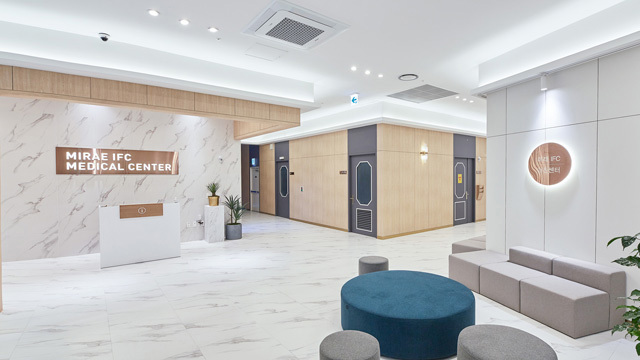
A dermatology consultation is worth booking before deciding which treatment you want, since the assessment is what makes the choice a clinical one. Enquiries and appointments go through the clinic's enquiry and booking page, or by telephone on . The Dermatology and Anti-Aging Center is described further on the clinic's About Us page.
Yonsei Mirae IFC Medical Center is located on the second, third and fourth floors of IFC Mall, 133 Jeonpo-daero, Nam-gu, Busan, South Korea. Health screening runs Monday to Friday from 7:30 AM to 4:30 PM and Saturday from 7:30 AM to 12:30 PM, Korean Standard Time. Consultations run Monday to Friday from 8:00 AM to 6:00 PM and Saturday from 8:00 AM to 12:30 PM. The clinic is closed on Sundays and public holidays.
Disclaimer
This page is provided for informational purposes only and does not constitute medical advice, diagnosis or treatment. Whether any test or procedure described here is appropriate for you depends on your own medical history and can only be decided in consultation with a qualified physician.
Sources & Further Reading
- Melasma: Diagnosis and treatment — American Academy of Dermatology
- Laser Resurfacing — American Society for Dermatologic Surgery
Related Medical Services
Diagnostic examinations and clinical procedures performed across our six specialist departments.

Life-Cycle Checkup Program
The Life-Cycle Checkup Program is a set of age- and life-stage-specific screening packages — pre-marital couples and senior citizens are the two examples the clinic names — designed so that the examinations a person...
Learn More

Fatigue Recovery Clinic
The Fatigue Recovery Clinic at Yonsei Mirae IFC Medical Center provides a structured medical assessment for persistent tiredness or low energy. Fatigue evaluation in Busan here means examining the possible contributing...
Learn More

Upper GI Series
An upper GI series uses swallowed contrast and X-ray imaging to assess structural and functional abnormalities of the oesophagus, stomach and duodenum. The clinic describes it as an indirect examination, in contrast to...
Learn More