Busan IFC Mall (2F–4F) · 6,600㎡ One-Day Comprehensive Health Screening & Specialist Care · International Patient Concierge
Specialty Department
Breast & Thyroid Care
Breast screening and thyroid screening in Busan at Yonsei Mirae IFC Medical Center — how mammography, breast and thyroid ultrasound and thyroid-function testing are combined, and what each one shows.
Schedule a ConsultationBreast & Thyroid Care
Medically reviewed by Dr. Kim Seung-il, breast and thyroid specialist and lead of the Breast & Thyroid Center at Yonsei Mirae IFC Medical Center
Breast screening in Busan and thyroid screening are brought together in one programme at Yonsei Mirae IFC Medical Center, because the two examinations share both equipment and a rationale: each can find something before there is anything to feel. Breast evaluation may include mammography and breast ultrasound; thyroid evaluation may include thyroid ultrasound and thyroid-function blood tests. This page explains what each examination shows, why they are used together, and where their limits lie.
What Is Comprehensive Breast and Thyroid Care?
Breast & Thyroid Care is a diagnostic and screening programme designed to evaluate breast and thyroid health and to detect certain abnormalities at an early stage. It is built from complementary examinations rather than from a single test, because the breast and the thyroid each need more than one kind of look.
- Breast evaluation may include mammography and breast ultrasound; the clinic states explicitly that the two detect different findings and that complementary testing is most effective.
- Mammography is described as particularly useful for suspicious calcifications, masses and asymmetry; ultrasound as particularly useful for dense breasts, tissue imbalance and masses.
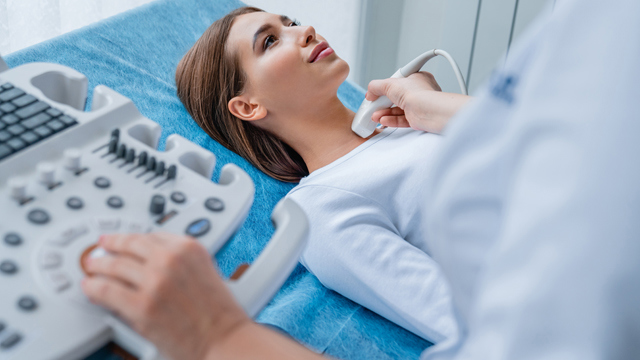
- Thyroid evaluation may include thyroid ultrasound, which assesses the gland's shape and size and the character of any nodule, alongside TSH, Free T4 and T3 blood testing.
- Thyroid ultrasound can distinguish a solid nodule from a cystic one and can track whether a nodule changes size during follow-up.
- Anatomy and function are separate questions: ultrasound answers the first, thyroid-function blood tests answer the second, and neither substitutes for the other.
The reason to screen at all is that both conditions can be silent early on. Breast and thyroid abnormalities are frequently asymptomatic in their early stages, while imaging can identify a suspicious finding before anything becomes noticeable — which is the case for screening rather than waiting for a symptom. For international patients there is a practical argument alongside the clinical one: combining breast and thyroid evaluation with broader health screening means one visit instead of several, and the clinic organises it that way.
The dense-breast pathway is where this complementarity matters most, and it comes with a documented caveat. The National Cancer Institute notes that breast ultrasound may be offered in addition to mammography for people with dense breasts, but that it is not known whether this supplemental screening leads to better health outcomes. Supplemental ultrasound is a reasonable and widely used step; it is not a proven improvement in outcome, and it is worth understanding it as the former rather than the latter.
Breast and Thyroid Examination Options
Four examinations make up the programme, and each answers a different question.
| Examination | What it uses | What it is particularly good for |
|---|---|---|
| Mammography | X-rays, with breast compression | Suspicious calcifications, masses and asymmetry |
| Breast ultrasound | High-frequency sound waves, no radiation | Dense breast tissue, tissue imbalance, characterising masses |
| Thyroid ultrasound | High-frequency sound waves, no radiation | Gland shape and size, nodule character, solid versus cystic, change over time |
| Thyroid-function blood tests | TSH, Free T4 and T3 | How the gland is working, as distinct from how it looks |
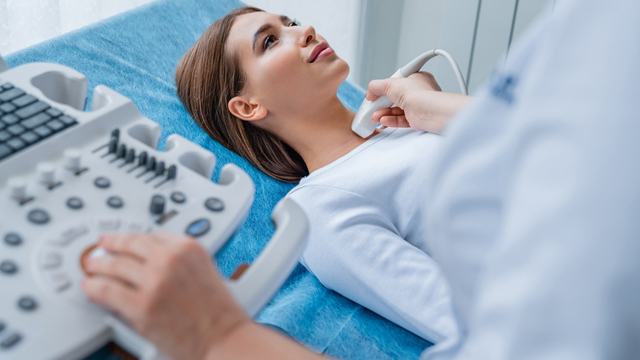
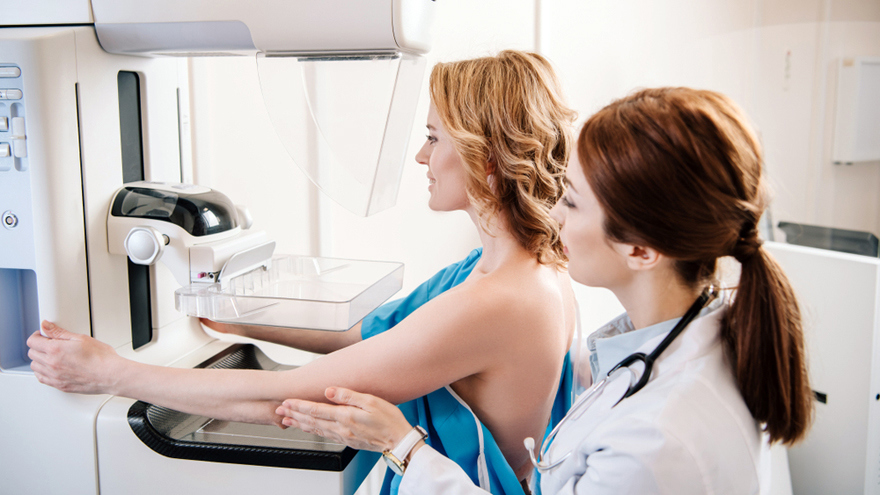
The equipment behind them is documented. The mammography system is a Hologic Selenia Dimensions with AI-assisted computer-aided breast imaging, 13.6-million-pixel high-definition imaging, approximately 1.2 mGy radiation exposure, automatic adjustment of the radiation dose and an ergonomic FAST Paddle. The ultrasound systems listed are the GE S8, the Aplio 500 and the Aplio 300. The clinic also has a 3.0T MRI, which can provide detailed soft-tissue imaging including of the breast.
The clinic describes its Hologic Selenia Dimensions mammography system as FDA-approved equipment and states that its AI-based computer-assisted diagnosis is approved by the Ministry of Food and Drug Safety.
Three services sit under this department, and they form a sequence rather than a menu.
AI-assisted 3D mammography screeningis the X-ray examination of the breast, used to identify masses, asymmetry and calcifications. It is the examination most often performed first in a breast screening pathway, and the one whose limits in dense tissue create the case for the next.Breast and thyroid ultrasoundis the radiation-free examination that complements it, using high-frequency sound waves to produce real-time images. For the breast it is particularly useful where tissue is dense or where a mass needs characterising; for the thyroid it is the primary imaging examination, assessing the gland and any nodule within it.Breast and thyroid biopsyis where imaging ends and tissue diagnosis begins. Where a lesion's imaging characteristics warrant it, a sample is taken and examined by pathology — the only way to establish whether a lesion is benign or malignant when imaging cannot.
Each has its own page. The sequence is the point: imaging narrows the question, and only a minority of screening examinations lead to the next step at all.
Who Is a Good Candidate for Breast and Thyroid Care?
- Adults seeking routine health screening, with breast and thyroid evaluation included within it.
- Women undergoing breast cancer screening.
- People with dense breast tissue who may benefit from supplemental ultrasound.
- People with a breast lump, breast asymmetry or another breast concern.
- People requiring thyroid evaluation because of a thyroid nodule, abnormal thyroid function, symptoms or screening needs.
- Mammography should generally be postponed or individually assessed during pregnancy, and the clinic states that it is not performed during breastfeeding — breast ultrasound can be used instead.
What to Expect: Procedure, Recovery, and Results Timeline
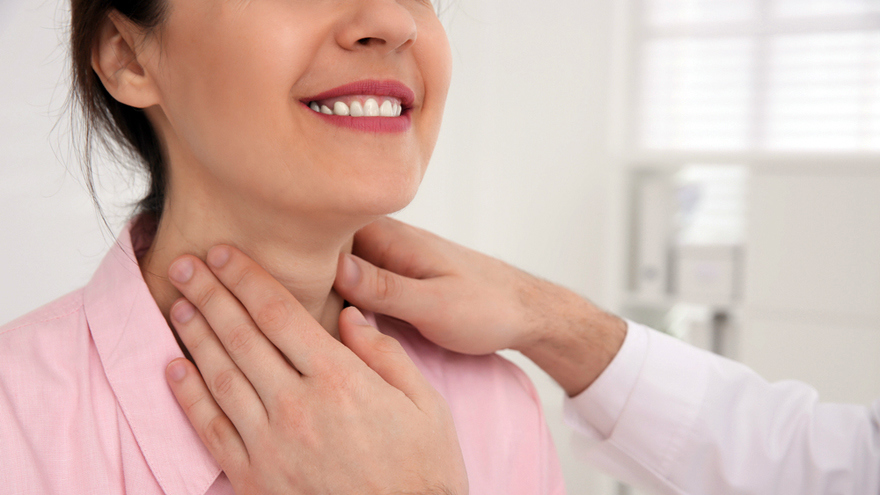
The process begins with medical history and current-condition information, and the appropriate examinations are then selected. No anaesthesia is normally required for mammography, breast ultrasound, thyroid ultrasound or thyroid-function blood testing. Mammography can cause temporary pressure or discomfort because the breast is compressed to obtain the images; ultrasound is generally minimally uncomfortable, though probe pressure over a tender area can be uncomfortable. Fasting is not required when only thyroid, breast, carotid or lower-abdominal ultrasound is being performed. No meaningful recovery period is generally required after any of these examinations, and patients can normally resume activity immediately unless a further procedure follows. Examination findings and imaging are combined when the comprehensive results are compiled, and follow-up can include prescription, treatment or referral to a tertiary institution where necessary.
| Stage | What to expect |
|---|---|
| Before | Medical history and current condition reviewed; examinations selected accordingly |
| Preparation | No fasting for breast, thyroid, carotid or lower-abdominal ultrasound alone |
| Mammography | Temporary pressure or discomfort from compression; no anaesthesia |
| Ultrasound | Generally minimally uncomfortable; mild discomfort possible from probe pressure over a tender area |
| Recovery | None required; normal activity can resume immediately |
| Same-day results | The premium one-day checkup allows health-check results to be checked on the same day |
| Formal report | The clinic's general checkup process states the result sheet is normally received about two weeks after the examination |
| Follow-up | Repeat imaging, further work-up, treatment or tertiary referral where findings require it |
Aftercare for routine breast and thyroid imaging is minimal, because nothing invasive has happened: there is no wound, no sedation and no restriction on activity. What the examination does leave behind is a result to act on. Patients are expected to review the imaging and laboratory findings with the medical team and to follow whatever is recommended — repeat imaging at an interval, an additional diagnostic work-up, treatment, or referral. A screening examination whose result is never discussed has done only half its work, and that half is the easier one.
Those last two rows are worth reading together, because they are not in conflict: the imaging findings themselves are produced during the examination and can be discussed the same day within the premium checkup, while the formal written report follows the clinic's standard reporting timetable. Patients planning travel around a result should ask which of the two they will have before leaving.
Combining Breast and Thyroid Assessment with Other Screening
The programme is designed to sit inside broader screening rather than beside it.
- Breast and thyroid assessment can be combined with the clinic's wider health-screening packages.
- Breast screening can be combined with mammography, breast ultrasound, cervical screening and HPV testing, blood tests and other imaging, depending on the package.
- Thyroid evaluation combines thyroid ultrasound with TSH, Free T4 and T3 testing, so structure and function are assessed together.
- Mammography and breast ultrasound are the strongest documented pairing, particularly where breast density limits what the mammogram can show.
- The 3.0T MRI is available within the same facility and can provide detailed soft-tissue imaging, including of the breast, where that is clinically indicated.
- Where a combination is chosen, the findings from each examination are read together when the comprehensive result is compiled rather than reported separately.
Safety, Precision, and Clinic Standards

Mammography involves a low dose of ionising radiation, and the clinic emphasises minimising that exposure: its equipment is documented at approximately 1.2 mGy with automatic adjustment of the optimal dose. Temporary breast compression discomfort is the other documented effect, and the ergonomic FAST Paddle is part of the equipment specification for that reason. Ultrasound uses no ionising radiation at all, so there is no radiation exposure from a breast or thyroid ultrasound. Abnormal findings can lead to additional medical evaluation or follow-up rather than being reported and left. Yonsei Mirae IFC Medical Center operates as a licensed Korean medical clinic under the Medical Service Act.
The precision question worth asking about breast screening is not only about the equipment. The National Cancer Institute reports that digital breast tomosynthesis combined with standard mammography finds more tumours than standard mammography alone, while noting that it is not yet established whether this reduces breast cancer deaths. Finding more is not automatically the same as helping more, which is why a screening result is a starting point for a conversation with a physician rather than a verdict on its own.
For the thyroid, the division of labour between the tests is equally well established. The National Institute of Diabetes and Digestive and Kidney Diseases describes thyroid ultrasound as the imaging test most often used to examine thyroid nodules, helping indicate whether a nodule is more likely to be cancerous, and as the test used to guide the needle during fine needle aspiration biopsy. Ultrasound characterises; it does not by itself diagnose.
The clinic describes a One-Step model in which a finding can be routed the same day to an in-house department, or fast-tracked to a partner tertiary hospital.
The International Medical Center at Yonsei Mirae IFC Medical Center provides English-language support for international patients, and the clinic states that this assistance runs from consultation through recovery.
The Bottom Line
- Breast and thyroid care here is a set of complementary examinations, not one test: mammography with breast ultrasound, and thyroid ultrasound with thyroid-function blood testing.
- Mammography is strongest for calcifications, masses and asymmetry; ultrasound for dense tissue and for characterising what mammography cannot resolve.
- None of the four routine examinations needs anaesthesia or a recovery period, and ultrasound involves no radiation at all.
- Mammography is not performed during breastfeeding, and should be individually assessed in pregnancy; ultrasound is the alternative.
- Imaging findings arise during the examination, while the formal result sheet follows the clinic's standard reporting timetable of about two weeks.
Frequently Asked Questions**Why do I need both a mammogram and an ultrasound?**Because they show different things. The clinic states directly that the two examinations detect different findings and that complementary testing is most effective. Mammography is particularly useful for calcifications and asymmetry; ultrasound is particularly useful where breast tissue is dense.**Does mammography hurt?**It can be uncomfortable. The breast is compressed between plates to obtain diagnostic images, which produces temporary pressure or tenderness. The clinic's equipment includes an ergonomic FAST Paddle intended for that part of the examination. The discomfort is brief and does not usually need treatment.**How much radiation is involved?**Mammography uses a low dose of ionising radiation, documented by the clinic at approximately 1.2 mGy, with the system automatically adjusting to the optimal dose. Breast and thyroid ultrasound use sound waves rather than radiation, so they involve no exposure at all.**Can I have a mammogram while breastfeeding?**No. The clinic states that mammography is not performed during breastfeeding. Breast ultrasound can be used instead, and it is also the examination used where mammography would need individual assessment, such as during pregnancy.**Do I need to fast?**Not for the ultrasound examinations. The clinic states that fasting is not required when only thyroid, breast, carotid or lower-abdominal ultrasound is being performed. If the ultrasound sits inside a wider checkup, that programme's own fasting instructions apply.**What does thyroid ultrasound actually assess?**The shape and size of the gland and the characteristics of any nodule — including whether it is solid or cystic, and whether its size has changed since a previous examination. It is an anatomical assessment, which is why thyroid-function blood tests are done alongside it.**When will I have my results?**Imaging findings are produced during the examination, and the premium one-day checkup allows health-check results to be checked on the same day. The clinic's general examination process states that the formal result sheet is normally received about two weeks afterwards.What happens if something abnormal is found?
Abnormal findings lead to additional medical evaluation or follow-up. Depending on what is found, that can mean repeat imaging, further diagnostic work-up, prescription or treatment, or referral to a tertiary institution.
Book a Consultation at Yonsei Mirae IFC Medical Center
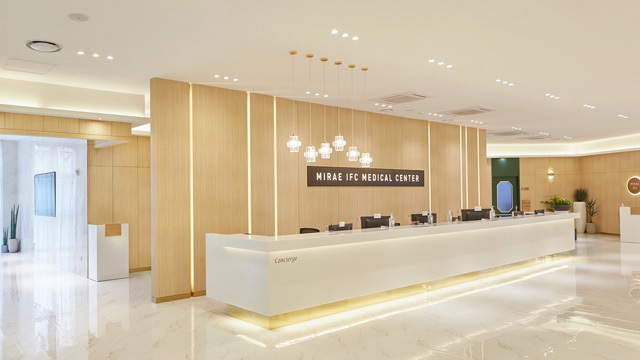
Breast density, a palpable lump and a thyroid nodule each point to a different combination of examinations, so it is worth describing the reason for screening when booking. Enquiries and appointments go through the clinic's enquiry and booking page, or by telephone on . The Breast & Thyroid Center and the clinic's imaging equipment are described further on the clinic's About Us page.
Yonsei Mirae IFC Medical Center is located on the second, third and fourth floors of IFC Mall, 133 Jeonpo-daero, Nam-gu, Busan, South Korea. Health screening runs Monday to Friday from 7:30 AM to 4:30 PM and Saturday from 7:30 AM to 12:30 PM, Korean Standard Time. Consultations run Monday to Friday from 8:00 AM to 6:00 PM and Saturday from 8:00 AM to 12:30 PM. The clinic is closed on Sundays and public holidays.
Disclaimer
This page is provided for informational purposes only and does not constitute medical advice, diagnosis or treatment. Whether any test or procedure described here is appropriate for you depends on your own medical history and can only be decided in consultation with a qualified physician.
Sources & Further Reading
- Screening for Breast Cancer — National Cancer Institute, U.S. National Institutes of Health
- Mammograms — National Cancer Institute, U.S. National Institutes of Health
- Thyroid Tests — National Institute of Diabetes and Digestive and Kidney Diseases, U.S. National Institutes of Health
Related Medical Services
Diagnostic examinations and clinical procedures performed across our six specialist departments.
Life-Cycle Checkup Program
The Life-Cycle Checkup Program is a set of age- and life-stage-specific screening packages — pre-marital couples and senior citizens are the two examples the clinic names — designed so that the examinations a person...
Learn More

Fatigue Recovery Clinic
The Fatigue Recovery Clinic at Yonsei Mirae IFC Medical Center provides a structured medical assessment for persistent tiredness or low energy. Fatigue evaluation in Busan here means examining the possible contributing...
Learn More
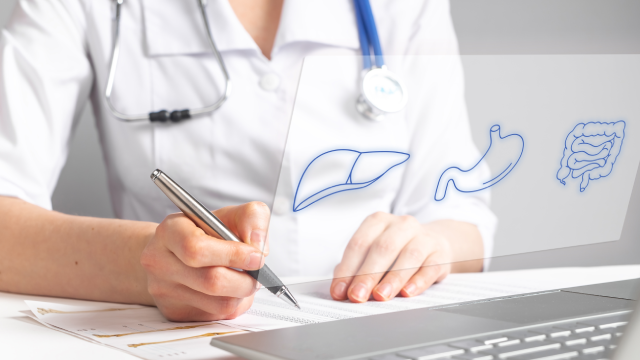
Upper GI Series
An upper GI series uses swallowed contrast and X-ray imaging to assess structural and functional abnormalities of the oesophagus, stomach and duodenum. The clinic describes it as an indirect examination, in contrast to...
Learn More