Busan IFC Mall (2F–4F) · 6,600㎡ One-Day Comprehensive Health Screening & Specialist Care · International Patient Concierge


Health Checkup / Screening · Consultation for Pricing
Special Precision Checkup
A special precision checkup is a comprehensive screening programme that combines multiple examinations to assess overall health and identify potential abnormalities at an early stage
Schedule a ConsultationSpecial Precision Checkup

Medically reviewed by Dr. Baik Seung Hyuk, M.D., Ph.D., FASCRS, Hospital Director and Medical Director of Yonsei Mirae IFC Medical Center
A special precision checkup is a comprehensive screening programme that combines multiple examinations to assess overall health and identify potential abnormalities at an early stage. At Yonsei Mirae IFC Medical Center this is the broadest of the centre's premium health screening programmes in Korea: multi-organ in scope, customized to the individual, and built to continue past the report into whatever the findings require. This page sets out what the programme combines, how it is tailored, and what happens after the examinations are finished.
What Is the Special Precision Checkup?
The Special Precision Checkup is a comprehensive, customized screening programme that brings several examinations together in one assessment of overall health, with the aim of identifying potential abnormalities early. Where a focused programme narrows onto a single area, this one is defined by breadth across organ systems combined with depth of equipment, and by follow-up that extends beyond diagnosis.
- The clinic provides customized and specialized health checkups designed to support early detection and treatment.
- Its premium checkup environment includes a 3.0T MRI, a 128-channel MDCT scanner, high-resolution ultrasound, digital X-ray and Olympus 290 high-definition endoscopy.
- Higher-tier packages may include more extensive examinations than the standard programme.
- Examinations are customized according to individual factors, and the clinic describes managing a checkup by age group, underlying disease and genetic factors.
- Follow-up is documented as step-by-step: prescription and treatment where needed, linkage to a tertiary-care institution, and health-information services based on the examination results.
Breadth is exactly where screening most needs a sense of proportion. The World Health Organization's short guide to screening programmes puts the purpose of screening plainly: to find, among people who seem well, the ones whose risk of a given condition is raised, so treatment can start sooner. Its warning is equally plain. Screening and health checks have been expanding faster than the evidence supporting them, and what such programmes cost, what quality assurance they demand and what damage they can do all tend to be underestimated. A comprehensive programme is worth choosing on the strength of a person's own risk profile, not on the number of examinations it contains.
Who Performs the Special Precision Checkup at Yonsei Mirae IFC Medical Center
Yonsei Mirae IFC Medical Center documents this service as being overseen by the physician named above rather than documenting that one individual personally performs every appointment, so the member of the clinical team you see on the day is determined by scheduling. The screening team documented for this department comprises Dr. Baik Seung Hyuk, Dr. Park Kwang-hyuk, Dr. Kang Moo-jin, Dr. Bae Jae Kyoung, Dr. Lee Yun-taek, Dr. Seo Jeong-su, Dr. Hwang Yeonhee, Dr. Ju Su Hwan and Dr. Kim So-ra, each of whom lists health checkups within their consultation scope. A multi-organ programme is the case where that whole range is engaged at once rather than in part: imaging is read by Dr. Seo Jeong-su, a board-certified radiologist; endoscopic examinations fall to Dr. Park Kwang-hyuk, a board-certified gastroenterology specialist, and Dr. Kang Moo-jin, a gastrointestinal endoscopy specialist; women's health examinations to Dr. Hwang Yeonhee, an obstetrics and gynaecology specialist; and general and preventive assessment to the family medicine and preventive medicine specialists on the team. Dr. Baik Seung Hyuk, who oversees the general screening team, is a board-certified colorectal surgeon holding M.D. and Ph.D. degrees and an International Fellow of the American Society of Colon and Rectal Surgeons. The clinic states that examinations are carried out by professional medical staff.
Special Precision Checkup Options and Types Available

The programme is graded, and the grade determines how extensive the examination set is. Within any grade, the examinations are then customized to the individual.
| Element | What the clinic documents |
|---|---|
| Standard comprehensive programme | Multiple examinations combined to assess overall health and identify potential abnormalities early |
| Higher-tier packages | May include more extensive examinations than the standard programme |
| Customization factors | Age group, underlying disease and genetic factors are used to shape the programme |
| Imaging depth | 3.0T MRI, 128-channel MDCT, high-resolution ultrasound and digital X-ray |
| Endoscopic depth | Olympus 290 high-definition endoscopy |
| Specialized additions | Specialized examinations including imaging and cancer screening, added within the customized programme |
Alternatives include routine preventive health screening, age- and risk-based screening programmes, or a targeted evaluation of one specific symptom or disease risk. Which of these is appropriate depends on the patient's health needs rather than on which programme is largest.
Who Is a Good Candidate for a Special Precision Checkup?
- Adults seeking comprehensive preventive health screening with an appropriately selected programme.
- Adults with relevant risk factors, a family history of certain diseases, existing health concerns, or age-related screening needs.
- Adults seeking a detailed health assessment across more than one organ system in a single organised visit.
- International patients who want to evaluate multiple health risks in one visit, particularly where access to advanced diagnostic imaging and specialized screening matters.
- People with an acute illness, or with medical circumstances that could interfere with particular examinations, may need to postpone or modify some tests.
- Patients should tell the medical team about pregnancy, significant medical conditions, medications or recent procedures, as some examinations may need to be modified or postponed.
- Suitability depends on which examinations the programme includes and on the patient's health status, so it is judged examination by examination rather than for the programme as a whole.
- Where one test has to be modified or deferred, the remaining examinations in the programme are generally unaffected.
What to Expect: Procedure, Recovery, and Results Timeline
A checkup is reserved through the clinic's online form or by telephone. Preparation depends on which examinations are included: some blood tests require fasting, and endoscopy commonly requires its own fasting and bowel-preparation instructions, which are issued individually. Routine blood tests and imaging generally require no anaesthesia, while sedation may be used for certain endoscopic examinations depending on the procedure and the clinical protocol. Most routine screening examinations are non-invasive and cause little or no discomfort, though blood collection and endoscopy can cause temporary discomfort. A comprehensive checkup generally involves several hours of examinations within one visit, and the duration varies with the package selected and any additional tests. The clinic promotes a one-day, one-stop premium checkup system and states that results can be checked on the same day, although some laboratory, pathology or specialized examinations take longer. Most routine non-invasive examinations require little or no recovery; where blood collection, endoscopy, sedation or another invasive examination is included, temporary rest or activity restrictions may apply. Further visits may be required if an abnormal finding needs additional evaluation.
| Stage | What to expect |
|---|---|
| Reservation | Booked through the clinic's online form or by telephone |
| Preparation | Individualised; fasting for some blood tests, and fasting plus bowel preparation where endoscopy is included |
| Anaesthesia | None for routine blood tests and imaging; sedation possible for certain endoscopic examinations |
| Duration | Several hours of examinations within one visit, varying by package and additional tests |
| Results | Same-day checking under the one-day, one-stop system; laboratory, pathology and specialized examinations can take longer |
| Recovery | Little or none after non-invasive examinations; temporary rest or activity restrictions after sedation or an invasive test |
| Further visits | Arranged where an abnormal finding requires additional evaluation |
Travel deserves planning at this scale. Many checkups can be completed in a single day, particularly where the examinations are organised through the one-day programme, but international patients should allow additional time if further testing, consultation or follow-up evaluation becomes necessary. For routine non-invasive screening, patients can generally travel after the examination once they feel well; where sedation, endoscopy or another procedure has been performed, travel timing should follow the medical advice given rather than the original itinerary.
Combining Examinations Within One Special Precision Checkup
Combination is the defining feature of this programme rather than an option added to it, and the clinic documents combining multiple examinations within a customized checkup.
- Imaging examinations are combined with laboratory and endoscopic examinations inside a single programme.
- Specialized examinations, including cancer screening, are added within the customized programme rather than booked separately.
- Higher-tier packages extend the combination further, with more examinations than the standard programme.
- Where sedation is used for an endoscopic examination, the remaining examinations in the combination are scheduled around it.
Safety, Precision, and Clinic Standards
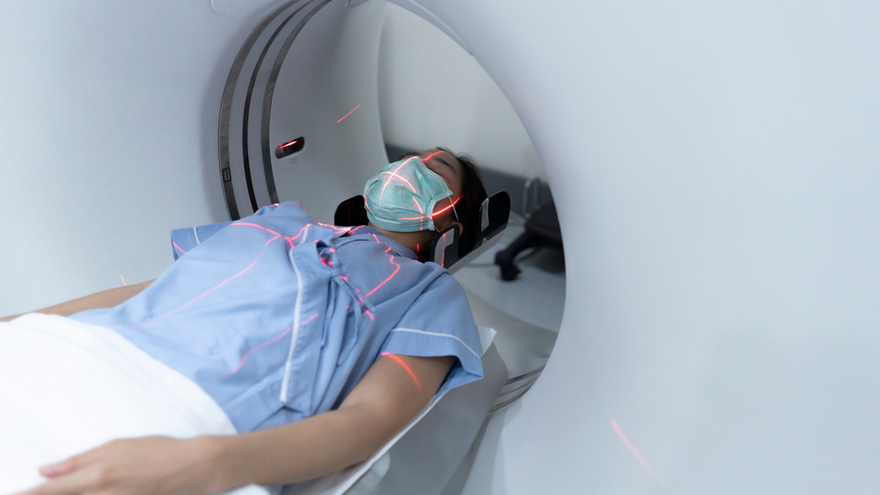
Risk varies according to which examinations are performed. Routine blood tests and non-invasive imaging generally carry limited risk. Examinations involving radiation, contrast agents, endoscopy or sedation may carry additional risks, and patients are asked to review the risks of any additional examination with the medical team. The clinic documents its risk management for this programme as selecting examinations according to the patient's health status and reviewing abnormal findings for further evaluation, supported by professional medical staff, advanced imaging and diagnostic equipment, customized checkup management, and follow-up services including treatment and tertiary-care institution linkage where needed. Possible temporary effects include discomfort from blood collection, mild bruising, dizziness, and temporary gastrointestinal discomfort after certain procedures. For the endoscopic part of a programme, the centre documents dedicated equipment for cleaning its scopes, and CO₂ equipment intended to make colonoscopy a more comfortable examination. Yonsei Mirae IFC Medical Center operates as a licensed Korean medical clinic under the Medical Service Act.
There is a further consideration that grows with the size of a programme. The National Cancer Institute's patient overview of screening names overdiagnosis among the recognised harms of screening: disease detected that would never have gone on to cause symptoms, and which is nonetheless investigated and sometimes treated. It lists three others alongside it — results that read positive when nothing is wrong and trigger invasive follow-up and anxiety, results that read negative when something is wrong and so delay care, and injury caused by a screening procedure itself. The more tests a programme runs, the more chances there are for a result that is abnormal without being important, which is why a comprehensive programme should still be assembled against a person's actual risk factors and why abnormal findings are reviewed before any further step is taken.
Follow-up is where a comprehensive programme either earns its breadth or fails to. The clinic states that it provides step-by-step follow-up services including prescription and treatment, linkage to a tertiary-care institution, and health-information services based on the examination results. Screening produces findings that need acting on, and the value of examining many systems at once depends on a route existing for whatever any one of them turns up.
The International Medical Center at Yonsei Mirae IFC Medical Center provides English-language support for international patients, and the clinic states that this assistance runs from consultation through recovery.
The Bottom Line
- The Special Precision Checkup is the broadest of the centre's programmes: multiple examinations combined across organ systems in one assessment.
- Programmes are customized by age group, underlying disease and genetic factors, and higher-tier packages carry more extensive examinations.
- The documented equipment is a 3.0T MRI, a 128-channel MDCT scanner, high-resolution ultrasound, digital X-ray and Olympus 290 high-definition endoscopy.
- A comprehensive checkup takes several hours in one visit; same-day result checking applies to the one-day system, while pathology and specialized tests take longer.
- Follow-up is documented as step-by-step — prescription and treatment, tertiary-care linkage, and health-information services based on the findings.
Frequently Asked Questions
**How is this different from the centre's other precision screening?**This programme is defined by breadth: multiple examinations combined across organ systems in a single assessment, customized by age group, underlying disease and genetic factors. A focused precision programme instead concentrates testing on one area. Both use the same equipment; they differ in how widely that equipment is applied.**How long does a comprehensive checkup take?**It generally involves several hours of examinations within one visit, and the duration varies according to the package selected and any additional tests included. The clinic describes its overall checkup programme as a one-day, one-stop premium checkup, which is what allows a wide examination set to fit into one attendance.**How do I book, and what preparation is involved?**Reservations are made through the clinic's online form or by telephone. Preparation is issued individually and depends on what the programme contains: some blood tests require fasting, and endoscopy commonly requires specific fasting and bowel-preparation instructions.**Will I need sedation?**Most routine health screening examinations require no anaesthesia. Where an examination such as endoscopy requires sedation or anaesthesia, the method depends on the specific test and on the patient's medical circumstances, and it is discussed before the examination rather than decided on the day.**When will the results be ready?**Some screening results can be reviewed on the same day, and the clinic states that its one-day, one-stop system enables checkup results to be checked the same day. Laboratory tests, pathology and other specialized examinations may take longer, so timing varies by examination.**What happens if something abnormal is found?**The clinic documents step-by-step follow-up: prescription and treatment where appropriate, linkage to a tertiary-care institution, and health-information services based on the results. Further visits may be required if an abnormal finding needs additional evaluation.**Should I mention my medications and medical history?**Yes, before the programme is finalised. Patients should tell the medical team about pregnancy, significant medical conditions, medications or recent procedures, because some examinations may need to be modified or postponed on the strength of that information.Is English-language support available throughout?
Yes, throughout. The centre documents an English-speaking team and the option of consulting online, which matters for a programme this wide because the examination set is settled in advance. Its International Medical Center is the department responsible for foreign patients, medical tourists included.
Book a Consultation at Yonsei Mirae IFC Medical Center
Whether a special precision health screening programme in Busan is the right scale for your risk profile is worth settling in conversation before booking. Enquiries and appointments go through the clinic's enquiry and booking page, or by telephone on . Further detail on the facility, its diagnostic equipment and the screening team is on the clinic's About Us page.
Yonsei Mirae IFC Medical Center is located on the second, third and fourth floors of IFC Mall, 133 Jeonpo-daero, Nam-gu, Busan, South Korea. Health screening runs Monday to Friday from 7:30 AM to 4:30 PM and Saturday from 7:30 AM to 12:30 PM, Korean Standard Time. Consultations run Monday to Friday from 8:00 AM to 6:00 PM and Saturday from 8:00 AM to 12:30 PM. The clinic is closed on Sundays and public holidays.
Disclaimer
This page is provided for informational purposes only and does not constitute medical advice, diagnosis or treatment. Whether any test or procedure described here is appropriate for you depends on your own medical history and can only be decided in consultation with a qualified physician.
Sources & Further Reading
- Screening programmes: a short guide — World Health Organization, Regional Office for Europe
- Cancer Screening Overview (PDQ) — Patient Version — National Cancer Institute, U.S. National Institutes of Health
Related Medical Services
Explore additional diagnostic examinations and specialist treatments available at Yonsei Mirae IFC Medical Center.

Life-Cycle Checkup Program
The Life-Cycle Checkup Program is a set of age- and life-stage-specific screening packages — pre-marital couples and senior citizens are the two examples the clinic names — designed so that the examinations a person...
Learn More

Fatigue Recovery Clinic
The Fatigue Recovery Clinic at Yonsei Mirae IFC Medical Center provides a structured medical assessment for persistent tiredness or low energy. Fatigue evaluation in Busan here means examining the possible contributing...
Learn More

Upper GI Series
An upper GI series uses swallowed contrast and X-ray imaging to assess structural and functional abnormalities of the oesophagus, stomach and duodenum. The clinic describes it as an indirect examination, in contrast to...
Learn More