Busan IFC Mall (2F–4F) · 6,600㎡ One-Day Comprehensive Health Screening & Specialist Care · International Patient Concierge


Gastroenterology Treatment · Consultation for Pricing
Same-Day Colon Polyp Removal
Same-day colon polyp removal is the endoscopic removal of a colon polyp during the colonoscopy that found it, where the polyp is suitable for that. The colonoscopy identifies the polyp, the polyp is removed through the...
Schedule a ConsultationSame-Day Colon Polyp Removal

Medically reviewed by Dr. Baik Seung Hyuk, M.D., Ph.D., FASCRS, Hospital Director and Medical Director of Yonsei Mirae IFC Medical Center
Same-day colon polyp removal means that a polyp found during a colonoscopy can be taken out during that same examination, so that diagnosis and treatment happen in one visit rather than two. Colon polypectomy in Busan is offered at Yonsei Mirae IFC Medical Center through a one-stop system, and the practical consequence for an international patient is that a screening colonoscopy may end as a therapeutic procedure. That changes the preparation, the risk profile and — most of all — the fortnight afterwards. This page covers all three.
What Is Same-Day Colon Polyp Removal?
Same-day colon polyp removal is the endoscopic removal of a colon polyp during the colonoscopy that found it, where the polyp is suitable for that. The colonoscopy identifies the polyp, the polyp is removed through the endoscope, and diagnosis and treatment are completed in the same visit.
- Suitability is judged during the examination: the polyp is assessed before removal, and not every polyp is appropriate for same-day endoscopic removal.
- The clinic uses high-definition endoscopy equipment for the colonoscopy, and lists DOCTANZ 150, an electrosurgical device used for cutting and coagulation during polypectomy.
- Biopsy and follow-up observation may be used instead of or alongside removal when that is the appropriate course.
- Removing an appropriate polyp during the colonoscopy provides immediate treatment, avoids an additional visit, and can help prevent some polyps progressing towards colorectal cancer.
- Where the removed tissue is sent for histological examination, the final pathology result follows later.
- The clinic's stated benefits for the service are immediate treatment, fewer additional visits and a reduced burden on the patient, which is what the one-stop framing amounts to in practice.
It helps to see where this sits in the wider picture of bowel screening. The National Cancer Institute's patient guide to colorectal cancer screening lists five test types used to screen for colorectal cancer — faecal occult blood testing, sigmoidoscopy, colonoscopy, virtual colonoscopy and DNA stool testing — each with its own balance of benefits and harms.Only one of them can remove what it finds in the same sitting, and that is the specific advantage at stake here; it is also why colonoscopy carries procedural risks the stool-based tests do not.
Who Performs Same-Day Colon Polyp Removal at Yonsei Mirae IFC Medical Center
Yonsei Mirae IFC Medical Center documents this service as being overseen by the physician named above rather than documenting that one individual personally performs every appointment, so the member of the clinical team you see on the day is determined by scheduling. Dr. Baik Seung Hyuk, who oversees the general screening team, is a board-certified colorectal surgeon holding M.D. and Ph.D. degrees and an International Fellow of the American Society of Colon and Rectal Surgeons. His documented subspecialty expertise is in colorectal surgery, including colorectal cancer surgery and advanced colorectal surgical oncology, and he was formerly director of the Colorectal Cancer Center at Yonsei University College of Medicine's Severance Hospital. He is a vice-president of the Korean Society of Coloproctology. For a service whose whole question is what to do about a colonic polyp, that is the relevant specialty — the decision to remove, to biopsy, or to observe is a colorectal one.
Polyp Removal Options and Types Available
What happens to a polyp found during colonoscopy is a decision made in the moment, and there is more than one answer.
| Course | What it involves | When it applies |
|---|---|---|
| Same-day endoscopic removal | The polyp is removed through the endoscope during the colonoscopy that found it | The polyp's characteristics and the patient's condition both make it suitable |
| Biopsy | A tissue sample is taken rather than the whole polyp removed | Where sampling is what the appearance calls for |
| Follow-up observation | The polyp is documented and reviewed later rather than removed now | Where removal is not the appropriate immediate step |
| Deferred removal | Removal arranged as a separate procedure | Where size, number or the patient's condition makes same-day removal unsuitable |
Suitability depends on the polyp and on the patient's medical condition, and the clinic's documentation is explicit that removal follows assessment rather than being automatic. Time varies accordingly: the duration depends on the number, size, location and removal technique of the polyps, and removing a small number of polyps may add only limited time to the colonoscopy.
Who Is a Good Candidate for Same-Day Colon Polyp Removal?
- Patients whose colonoscopy identifies polyps that are suitable for endoscopic removal.
- Patients who would prefer to avoid the additional visit that a separately scheduled removal requires.
- Suitability depends on the polyp's characteristics and on the patient's condition, and is judged during the examination.
- Patients who are pregnant or may be pregnant should postpone the procedure.
- Patients taking anticoagulant or antithrombotic medication must tell the doctor beforehand, because of bleeding risk.
- International patients should allow additional time where multiple, large or higher-risk polyps may require further evaluation or treatment.
What to Expect: Procedure, Recovery, and Results Timeline
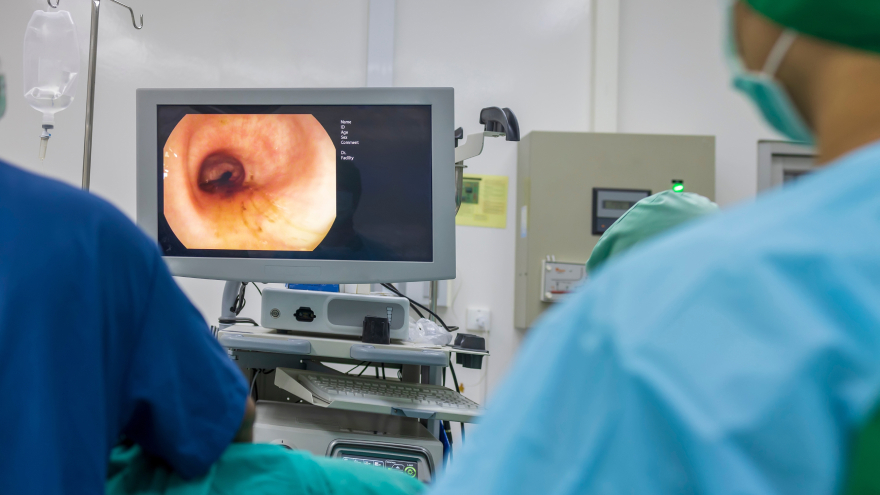
Bowel cleansing is required before the colonoscopy, and the prescribed bowel-preparation instructions should be followed exactly. Patients should inform the clinic about their medications, and particularly about anticoagulants. During the examination the polyp is identified, assessed, and — where suitable — removed endoscopically, with diagnosis and treatment completed in the same visit. The procedure can be performed during a sedated colonoscopy to reduce anxiety and discomfort, and CO₂ insufflation is used to minimise abdominal bloating and discomfort afterwards. Recovery is generally short after an uncomplicated endoscopic polyp removal, though it varies with the extent of what was removed. Temporary abdominal bloating, gas, mild cramping or minor discomfort may follow, and small amounts of bleeding can occur after some polypectomies. The polyp itself is identified and removed during the colonoscopy; if the tissue is sent for histological examination, the final pathology result requires additional processing time.
The part that catches people out is the fortnight afterwards. The clinic recommends restricting strenuous activity, travel and similar activities for about two weeks after a polypectomy, and specifically advises avoiding smoking, alcohol, spicy foods, strenuous exercise, heavy work, sauna or bathhouse use, and long-distance travel over that period. For an international patient, long-distance travel is the constraint that matters: a colonoscopy booked late in a trip can produce a treatment whose aftercare outlasts the trip.
| Stage | What to expect |
|---|---|
| Before | Bowel cleansing per the clinic's instructions; disclose all medications, anticoagulants especially |
| During | The polyp is identified, assessed and removed endoscopically where suitable |
| Comfort | Can be performed under sedation; CO₂ insufflation used to reduce bloating afterwards |
| Immediately after | Short recovery for an uncomplicated removal; bloating, gas or mild cramping possible |
| Pathology | Additional processing time where the tissue is sent for histological examination |
| For about two weeks | No smoking, alcohol, spicy food, strenuous exercise, heavy work, sauna or bathhouse, or long-distance travel |
| Watch for | Bleeding or abdominal pain — follow the medical team's instructions on diet, activity and monitoring |
Travel timing after a polyp removal should be confirmed with the treating doctor rather than assumed, since the appropriate interval depends on the size and number of polyps removed and on the risk of delayed bleeding.
Where the histology comes back needing more than a follow-up appointment, the clinic describes a One-Step model in which a finding can be routed the same day to an in-house department, or fast-tracked to a partner tertiary hospital. A polypectomy is one of the places in this clinic's work where that route is most likely to be needed, because the removal itself answers the immediate question and the tissue answers the larger one — and the two answers arrive days apart. Patients who have returned home by then can reach the clinic by telephone to discuss a result, which is worth knowing before leaving.
Safety, Precision, and Clinic Standards
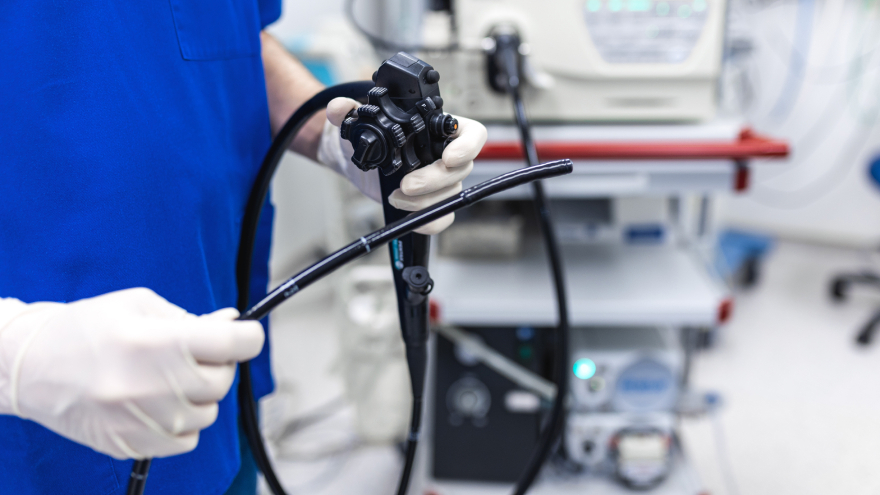
The two risks that matter here are named plainly in the clinic's documentation: bleeding, and — less commonly — perforation of the colon. Risk varies with the polyp's size, location and number, and with the removal technique used. Significant or persistent bleeding requires medical attention. The clinic documents four risk-reduction measures: high-resolution Olympus 290 endoscopy equipment, individualised sedation management, vital-sign monitoring, and systematic endoscope cleaning and disinfection; polyps are assessed during colonoscopy before any removal is attempted. Endoscope reprocessing follows Korean Society of Gastrointestinal Endoscopy standards, using dedicated automated cleaning equipment.
The published figures put the scale of this in context. The National Institute of Diabetes and Digestive and Kidney Diseases reports that in screening colonoscopies perforation occurred in about 3 per 10,000 procedures and bleeding in about 15 per 10,000, most often in older people and in those who had polyps removed.That last clause is the relevant one: a colonoscopy that becomes a polypectomy sits at the higher end of that already small range, which is precisely why the aftercare instructions are specific and why anticoagulant use must be disclosed in advance.
The International Medical Center at Yonsei Mirae IFC Medical Center provides English-language support for international patients, and the clinic states that this assistance runs from consultation through recovery.
The Bottom Line
- A polyp found during colonoscopy can be removed in the same examination where it is suitable, completing diagnosis and treatment in one visit.
- Suitability is assessed during the examination and depends on the polyp's characteristics and the patient's condition — removal is not automatic.
- Anticoagulant and antithrombotic medication must be disclosed beforehand, because bleeding is the principal risk.
- Recovery from an uncomplicated removal is short, but the clinic advises about two weeks without strenuous activity, alcohol, sauna use or long-distance travel.
- The polyp is dealt with on the day; if tissue goes for histology, the final result comes later.
Frequently Asked Questions
**Will my polyp definitely be removed on the day?**Not necessarily. Polyps are assessed during the colonoscopy, and suitability for same-day endoscopic removal depends on the polyp's characteristics and on your medical condition. Biopsy or follow-up observation may be the appropriate course instead, and larger or higher-risk polyps may need separate evaluation.**How much longer does the removal make the appointment?**It depends on the number, size, location and removal technique of the polyps. Removing a small number of polyps may add only limited time to the colonoscopy, while multiple or larger polyps take longer and may change what follow-up is needed.**Does it hurt?**The procedure can be carried out during a sedated colonoscopy, which is used to reduce anxiety and discomfort. CO₂ insufflation helps minimise the abdominal bloating and discomfort that can follow. Temporary bloating, gas or mild cramping afterwards are the common effects.**What should I avoid afterwards, and for how long?**For about two weeks the clinic advises avoiding smoking, alcohol, spicy foods, strenuous exercise, heavy work, sauna or bathhouse use and long-distance travel. Follow the medical team's specific instructions on diet, activity and medication for your own case.**I take a blood thinner. Does that rule this out?**It does not automatically, but the doctor must know before the procedure. Anticoagulant and antithrombotic medications raise the risk of bleeding after a polypectomy, and that information changes how — and whether — a removal is approached on the day.**What are the serious risks?**Bleeding is the main one, and perforation of the colon is the less common but more serious one. The risk varies with polyp size, location, number and removal technique. Significant or persistent bleeding after the procedure needs medical attention rather than waiting.**When do I get the pathology result?**The polyp is identified and removed during the colonoscopy itself. If the removed tissue is sent for histological examination, the final pathology result requires additional processing time and follows separately from the procedure.When can I fly home?
The appropriate interval depends on the size and number of polyps removed and on the risk of delayed bleeding, and the clinic's general aftercare advice includes avoiding long-distance travel for about two weeks.
Book a Consultation at Yonsei Mirae IFC Medical Center
If a colonoscopy is being planned during a trip, it is worth asking about polyp removal before the date is fixed rather than afterwards. Enquiries and appointments go through the clinic's enquiry and booking page, or by telephone on . The colorectal and endoscopy team is described further on the clinic's About Us page.
Yonsei Mirae IFC Medical Center is located on the second, third and fourth floors of IFC Mall, 133 Jeonpo-daero, Nam-gu, Busan, South Korea. Health screening runs Monday to Friday from 7:30 AM to 4:30 PM and Saturday from 7:30 AM to 12:30 PM, Korean Standard Time. Consultations run Monday to Friday from 8:00 AM to 6:00 PM and Saturday from 8:00 AM to 12:30 PM. The clinic is closed on Sundays and public holidays.
Disclaimer
This page is provided for informational purposes only and does not constitute medical advice, diagnosis or treatment. Whether any test or procedure described here is appropriate for you depends on your own medical history and can only be decided in consultation with a qualified physician.
Sources & Further Reading
- Colorectal Cancer Screening (PDQ) — Patient Version — National Cancer Institute, U.S. National Institutes of Health
- Colonoscopy — National Institute of Diabetes and Digestive and Kidney Diseases, U.S. National Institutes of Health
Related Medical Services
Explore additional diagnostic examinations and specialist treatments available at Yonsei Mirae IFC Medical Center.

Life-Cycle Checkup Program
The Life-Cycle Checkup Program is a set of age- and life-stage-specific screening packages — pre-marital couples and senior citizens are the two examples the clinic names — designed so that the examinations a person...
Learn More

Fatigue Recovery Clinic
The Fatigue Recovery Clinic at Yonsei Mirae IFC Medical Center provides a structured medical assessment for persistent tiredness or low energy. Fatigue evaluation in Busan here means examining the possible contributing...
Learn More
Upper GI Series
An upper GI series uses swallowed contrast and X-ray imaging to assess structural and functional abnormalities of the oesophagus, stomach and duodenum. The clinic describes it as an indirect examination, in contrast to...
Learn More