Busan IFC Mall (2F–4F) · 6,600㎡ One-Day Comprehensive Health Screening & Specialist Care · International Patient Concierge

Dermatology Treatment · Consultation for Pricing
Pigmentation & Melasma Laser Toning
Laser toning delivers laser energy to pigmented areas at settings chosen for the individual's skin, targeting excess melanin without breaking the skin surface.
Schedule a ConsultationPigmentation & Melasma Laser Toning
Medically reviewed by Dr. Baik Seung Hyuk, M.D., Ph.D., FASCRS, Hospital Director and Medical Director of Yonsei Mirae IFC Medical Center
Melasma laser treatment in Busan and pigmentation laser toning at Yonsei Mirae IFC Medical Center are non-invasive laser treatments that target excess melanin, with the aim of improving the appearance of pigmentation, uneven skin tone and melasma. Two things about this treatment are worth knowing before booking it: improvement develops across sessions rather than within one, and the laser is one component of a pigmentation plan rather than the plan itself. This page explains both, along with the risks specific to treating pigment with light.
What Is Pigmentation and Melasma Laser Toning?
Laser toning delivers laser energy to pigmented areas at settings chosen for the individual's skin, targeting excess melanin without breaking the skin surface. It is a treatment for the appearance of pigmentation rather than a cure for the tendency to produce it.
- The treatment targets unwanted pigmentation, uneven skin tone, sun spots and melasma.
- Treatment is planned from a skin-type analysis and a detailed assessment of the skin's condition, with the frequency and method set individually.
- The clinic states that advanced laser equipment is used, and specifically names a 3D Janus II system for individualised skin-type consultation and management.
- Sessions commonly take around 15 to 30 minutes, depending on the treatment area and the laser settings; consultation and preparation add to that.
- Improvement develops progressively rather than immediately, and melasma in particular usually requires a course of treatment.
The place of a laser within melasma treatment is documented clearly, and it is not the centre. The American Academy of Dermatology states that there is no single best treatment for melasma: the most effective approach usually combines sun protection with topical medication and sometimes a procedure, with laser or light treatment acting as an adjunct to that plan rather than a standalone cure. A course of laser toning without sun protection and topical treatment alongside it is working against itself.
Who Performs Laser Toning at Yonsei Mirae IFC Medical Center
Yonsei Mirae IFC Medical Center documents this service as being overseen by the physician named above rather than documenting that one individual personally performs every appointment, so the member of the clinical team you see on the day is determined by scheduling. Dr. Baik Seung Hyuk, who oversees the general screening team, is a board-certified colorectal surgeon holding M.D. and Ph.D. degrees and an International Fellow of the American Society of Colon and Rectal Surgeons. For a treatment where the setting selected for a given skin type is the difference between improvement and injury, the training of the person choosing that setting is a fair question to ask at the consultation.
Treatment Options for Pigmentation
Laser toning is one route among several, and which is appropriate depends on what kind of pigmentation is being treated.
| Option | What it is | Where it fits |
|---|---|---|
| Laser toning | Repeated low-energy laser sessions targeting melanin | The clinic's documented service for pigmentation and melasma |
| Topical pigment-control treatment | Prescribed or professional topical agents | A core component of a melasma plan rather than an alternative |
| Chemical peel | Controlled exfoliation | An alternative or adjunct depending on diagnosis |
| IPL | Intense pulsed light | An alternative light-based option for some pigmentation types |
| Other pigment-targeting lasers | Different wavelengths and delivery | Selected according to pigmentation depth and skin type |
| Combination approaches | Two or more of the above together | Common, and usually the most effective route for melasma |
Identifying the pigmentation type is what decides between them, which is why a consultation precedes treatment. Sun spots, post-inflammatory pigmentation and melasma behave differently under light, and the last of the three is the most temperamental.
Who Is a Good Candidate for Laser Toning?
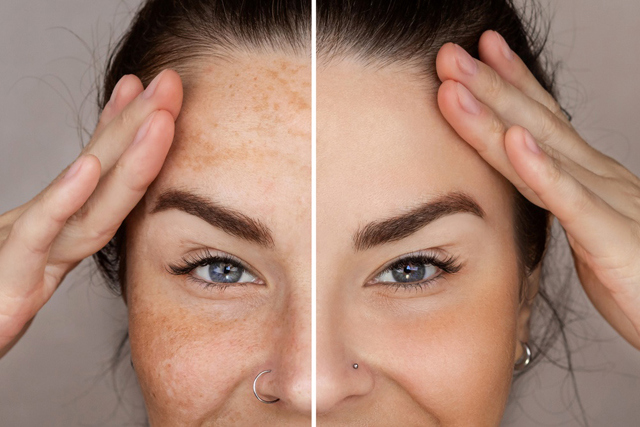
- Adults with unwanted pigmentation, uneven skin tone, sun spots or melasma who have been assessed as appropriate for laser treatment.
- People who understand that improvement develops over a course rather than in a single session.
- People willing to maintain strict sun protection afterwards, without which results are undermined.
- Patients with active skin infections, significant skin irritation or open wounds should postpone treatment.
- Patients with recent excessive sun exposure should postpone treatment.
- Pregnant patients, and those using photosensitising medications, should discuss suitability before proceeding.
What to Expect: Procedure, Recovery, and Results Timeline
Disclose current medications, skin conditions, recent procedures and any history of pigmentation changes, and avoid excessive sun exposure before treatment. At the session the skin is cleansed and assessed, protective measures are applied, and the laser is delivered over the targeted areas at settings selected for the skin's condition. General anaesthesia is not used; cooling or topical numbing may be considered depending on the device and individual sensitivity. The sensation is usually described as mild warmth, tingling or a snapping feeling rather than significant pain. A session commonly runs 15 to 30 minutes. Downtime is generally limited, though temporary redness, warmth, dryness, mild swelling or sensitivity can occur, and the skin usually settles over several days. Pigmentation may temporarily appear darker before gradually fading. Gentle skin care and strict sun protection are recommended afterwards, with follow-up care adjusted to how the skin responds.
| Stage | What to expect |
|---|---|
| Before | Disclose medications, skin conditions, recent procedures, pigmentation history; avoid sun exposure |
| During | Skin cleansed and assessed, protection applied, laser delivered at individualised settings |
| Sensation | Mild warmth, tingling or a snapping feeling; topical numbing or cooling if needed |
| Duration | Around 15–30 minutes per session, plus consultation and preparation |
| Immediately after | Temporary redness, warmth, dryness or sensitivity; limited downtime |
| Over days | Skin settles; pigment may darken temporarily before fading |
| Aftercare | Gentle skin care and strict sun protection, adjusted to the skin's response |
| Results | Progressive over several sessions; melasma typically needs a course |
For an international patient, a routine session does not require an extended stay, though several days allows for the consultation, the treatment and an early follow-up. The more significant planning question is the course: a single session during a trip is a start rather than a treatment, and what happens to the skin afterwards depends heavily on sun exposure during and after travel.
Combining Laser Toning with Other Treatments
Because a laser is an adjunct within a pigmentation plan rather than the plan itself, what it is combined with matters as much as the laser settings.
- Topical pigment-control treatment alongside a laser course is the standard pairing for melasma rather than an optional addition.
- Sun protection is the third element of that plan, and the one a clinic cannot administer on the patient's behalf.
- Chemical peels, IPL and other pigment-targeting lasers may be combined or substituted according to the pigmentation type identified at assessment.
- Within the clinic's own services, laser toning sits alongside the physician-led medical skincare programme, which is the natural framework for the topical component.
- The clinic states that combinations should be individualised rather than presented as a standard package.
A useful question at the consultation is therefore not only which laser, but what the rest of the plan is. If the answer is only the laser, the plan is incomplete by the standard the dermatology literature sets.
Pigmentation type is what the consultation is actually establishing, and it is worth understanding why that matters so much here. Sun spots sit superficially and respond relatively predictably. Post-inflammatory pigmentation follows an injury or an inflammatory episode and often fades with time and protection alone. Melasma is the difficult one: it is influenced by hormonal and ultraviolet factors that a laser does not address, it recurs, and it is the type most prone to worsening under inappropriate settings. A treatment plan that does not distinguish between them is treating a colour rather than a condition.
Safety, Precision, and Clinic Standards
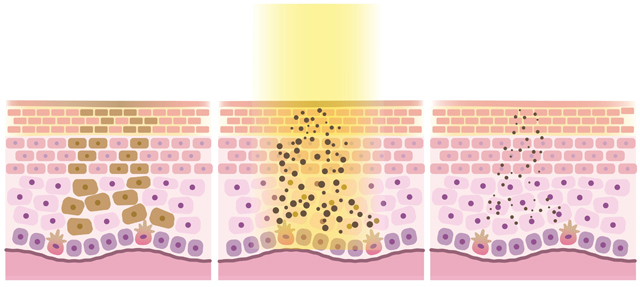
The risks here are specific and worth reading carefully, because two of them run opposite to the treatment's purpose. Possible effects include prolonged redness, burns, changes in pigmentation, irritation and — in susceptible skin types — worsening of the pigmentation being treated. Inappropriate laser settings increase the risk of post-inflammatory pigmentation, which is pigment produced in response to the treatment itself. Melasma can also recur, because it is driven by factors including ultraviolet exposure that a laser does not change. The clinic describes its approach as precise, systematic diagnosis with advanced equipment and individualised care; the practical expression of that is the skin-type analysis that determines the settings. Yonsei Mirae IFC Medical Center operates as a licensed Korean medical clinic under the Medical Service Act.
Skin type is the variable that matters most, and it is a clinical one. The American Society for Dermatologic Surgery notes that laser resurfacing carries potential complications including scarring, pigmentation change, infection and prolonged swelling, and that patients with active acne or very dark skin are usually not good candidates, so candidacy must be assessed by history and examination beforehand. Laser toning is a gentler modality than resurfacing, but the underlying principle is the same: light interacts with melanin, and skin with more of it responds differently.
The single most useful thing a patient can do to protect a result is unglamorous. Strict sun protection after treatment is not general advice appended to the aftercare list — it is the condition under which the treatment's effect persists, and the factor most likely to undo it.
The clinic describes a One-Step model in which a finding can be routed the same day to an in-house department, or fast-tracked to a partner tertiary hospital.
The International Medical Center at Yonsei Mirae IFC Medical Center provides English-language support for international patients, and the clinic states that this assistance runs from consultation through recovery.
The Bottom Line
- Laser toning targets excess melanin to improve the appearance of pigmentation, uneven tone and melasma.
- Sessions run around 15 to 30 minutes with limited downtime, and improvement develops across a course rather than within one session.
- A laser is an adjunct to a melasma plan built on sun protection and topical treatment, not a standalone cure.
- Pigmentation can worsen where settings are inappropriate or skin is susceptible, which is why skin-type assessment precedes treatment.
- Melasma recurs with continued UV exposure, so sun protection is the condition of any lasting result.
Frequently Asked Questions
**How many sessions will I need?**More than one. Improvement in brightness and pigmentation may become noticeable after several sessions, and melasma often requires a full course. The number is planned from the skin-condition assessment rather than fixed in advance, and depends on pigmentation depth, skin type and sun exposure.**Does it hurt?**Generally it is described as mild warmth, tingling or a snapping sensation rather than significant pain. Individual sensitivity varies, and cooling or a topical numbing agent can be considered. General anaesthesia is not used for laser toning.**How long is each session?**Commonly around 15 to 30 minutes, depending on the treatment area and the laser settings selected. Consultation and preparation add to the appointment, particularly at a first visit where the skin analysis is performed.**Why did my pigmentation look darker afterwards?**That can happen and is usually temporary — pigment may appear darker before gradually fading. It is worth distinguishing from post-inflammatory pigmentation, which is new pigment produced in response to the treatment and is more likely where settings are too aggressive for the skin type.**Can melasma be cured with laser?**No. There is no single best treatment for melasma, and laser or light treatment is an adjunct to a plan built on sun protection and topical medication rather than a cure. Melasma can recur because the factors driving it, ultraviolet exposure among them, persist.**When should I postpone treatment?**With an active skin infection, significant irritation, open wounds or recent excessive sun exposure. Pregnant patients and those taking photosensitising medications should discuss suitability rather than assume it, since light-based treatment interacts with both.**What is the aftercare?**Gentle skin care and strict sun protection, with the regimen adjusted according to how your skin responds. The sun protection is not optional advice — it is the factor that determines whether the result holds.Do I need to stay in Korea long?
Not for a single routine session. Several days allows for the consultation, the treatment and an early follow-up, which is worth building in. A full course, however, cannot be compressed into one trip.
Book a Consultation at Yonsei Mirae IFC Medical Center
A pigmentation consultation establishes which kind of pigmentation you have, which decides whether laser toning is the right treatment at all. Enquiries and appointments go through the clinic's enquiry and booking page, or by telephone on . The Dermatology and Anti-Aging Center is described further on the clinic's About Us page.
Yonsei Mirae IFC Medical Center is located on the second, third and fourth floors of IFC Mall, 133 Jeonpo-daero, Nam-gu, Busan, South Korea. Health screening runs Monday to Friday from 7:30 AM to 4:30 PM and Saturday from 7:30 AM to 12:30 PM, Korean Standard Time. Consultations run Monday to Friday from 8:00 AM to 6:00 PM and Saturday from 8:00 AM to 12:30 PM. The clinic is closed on Sundays and public holidays.
Disclaimer
This page is provided for informational purposes only and does not constitute medical advice, diagnosis or treatment. Whether any test or procedure described here is appropriate for you depends on your own medical history and can only be decided in consultation with a qualified physician.
Sources & Further Reading
- Melasma: Diagnosis and treatment — American Academy of Dermatology
- Laser Resurfacing — American Society for Dermatologic Surgery
Related Medical Services
Explore additional diagnostic examinations and specialist treatments available at Yonsei Mirae IFC Medical Center.
Life-Cycle Checkup Program
The Life-Cycle Checkup Program is a set of age- and life-stage-specific screening packages — pre-marital couples and senior citizens are the two examples the clinic names — designed so that the examinations a person...
Learn More

Fatigue Recovery Clinic
The Fatigue Recovery Clinic at Yonsei Mirae IFC Medical Center provides a structured medical assessment for persistent tiredness or low energy. Fatigue evaluation in Busan here means examining the possible contributing...
Learn More
Upper GI Series
An upper GI series uses swallowed contrast and X-ray imaging to assess structural and functional abnormalities of the oesophagus, stomach and duodenum. The clinic describes it as an indirect examination, in contrast to...
Learn More