Busan IFC Mall (2F–4F) · 6,600㎡ One-Day Comprehensive Health Screening & Specialist Care · International Patient Concierge

Family Medicine Care · Consultation for Pricing
Personalized Nutritional IV Therapy
It is an infusion of a formulated nutrient solution through a peripheral vein.
Schedule a ConsultationPersonalized Nutritional IV Therapy

Medically reviewed by Dr. Baik Seung Hyuk, M.D., Ph.D., FASCRS, Hospital Director and Medical Director of Yonsei Mirae IFC Medical Center
Nutritional IV therapy in Busan at Yonsei Mirae IFC Medical Center is an intravenous wellness service: combinations of vitamins, minerals, amino acids and antioxidants delivered into a vein through a drip, with the formulation selected for the individual. It is an elective service rather than a treatment for a diagnosed condition, and this page treats it as such — describing what the appointment involves, who should not have it, what the clinic claims for it, and what the published evidence does and does not establish.
What Is Personalized Nutritional IV Therapy?
It is an infusion of a formulated nutrient solution through a peripheral vein. The clinic describes the combinations as custom-formulated from vitamins, essential minerals, amino acids and antioxidants, selected after a pre-treatment evaluation.
- The process begins with a pre-treatment evaluation, a vital-sign check, and a review of medical history and nutritional goals, after which a medical professional selects the formulation.
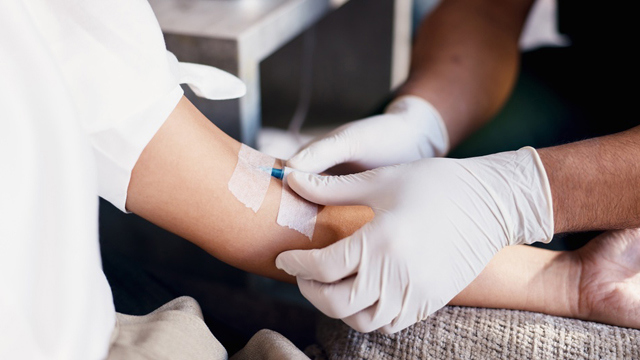
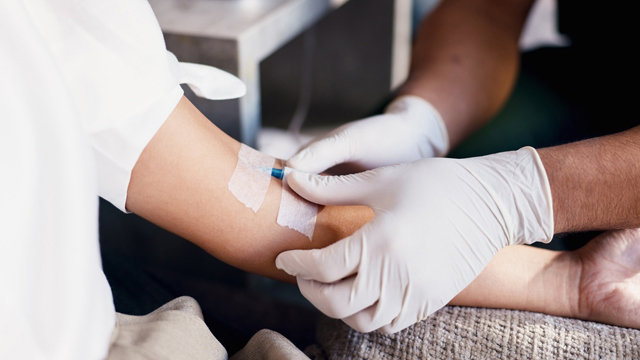
- The infusion is given while the patient rests in a private recliner, through a sterile peripheral catheter placed in an arm vein.
- The drip takes approximately 30 to 60 minutes and is completed within a single clinic visit.
- No anaesthesia is necessary; the only sensation is a brief pinprick when the catheter is placed.
- Medical-grade infusion sets, pharmaceutical-grade nutrient solutions and precision flow regulators are used, in dedicated private checkup suites.
What the clinic claims for the service and what the evidence establishes are different things, and the difference is worth stating at the outset rather than in a footnote. The National Cancer Institute records that the evidence base for high-dose intravenous vitamin C is limited by a lack of rigour in trial design: early studies suggested it was generally well tolerated, but their design limitations mean they do not establish benefit. Well tolerated is not the same as effective, and a service that is reasonable to choose is not the same as one that is demonstrated to work.
Who Performs Personalized Nutritional IV Therapy at Yonsei Mirae IFC Medical Center
Yonsei Mirae IFC Medical Center documents this service as being overseen by the physician named above rather than documenting that one individual personally performs every appointment, so the member of the clinical team you see on the day is determined by scheduling. The family medicine team documented for this department comprises Dr. Baik Seung Hyuk, Dr. Bae Jae Kyoung, Dr. Lee Yun-taek and Dr. Kim So-ra. Dr. Bae Jae Kyoung is a family medicine and preventive medicine specialist who studied at Kyung Hee University School of Medicine, completed an internship at Kyung Hee University Hospital and a residency at Seoul National University. Dr. Lee Yun-taek is a family medicine specialist who completed his internship and family medicine residency at Gachon University Gil Medical Center and was formerly a fellow in family medicine at Asan Medical Center. Dr. Kim So-ra is a family medicine specialist who completed her internship and family medicine residency at Pusan National University Yangsan Hospital. The clinically significant part of this service is not the infusion but the evaluation before it — the check that establishes whether an intravenous nutrient load is safe for this particular person — and that is a physician's judgement.
Formulation Options and the Alternatives
The clinic describes formulations as customised rather than offered as a fixed menu, selected against the patient's medical history and stated goals.
| - | Nutritional IV therapy | Oral supplementation |
|---|---|---|
| Route | Intravenous, bypassing the digestive system | Oral, subject to digestion and intestinal absorption |
| Onset | The clinic reports effects felt immediately or within hours | Slower, dependent on absorption |
| Duration of a session | Approximately 30 to 60 minutes in a recliner | None |
| Invasiveness | A catheter is placed in a vein | None |
| Evidence for benefit | Not established for high-dose intravenous vitamin C | Established for correcting a documented deficiency |
The clinic's comparison is that oral supplements lose potency through digestion and are limited by intestinal absorption, while intravenous delivery reaches the bloodstream directly. That much is a description of pharmacokinetics rather than a claim about outcomes: higher blood levels are achievable intravenously, and whether higher blood levels produce a benefit is the separate question the evidence has not settled.
Who Is a Good Candidate for Nutritional IV Therapy?

- Individuals experiencing chronic physical fatigue or high stress levels.
- People with nutrient malabsorption.
- People seeking proactive wellness care.
- Patients with severe renal impairment are not suitable candidates.
- Patients with unmanaged congestive heart failure are not suitable candidates.
- Patients with specific hypersensitivities to particular concentrated vitamins or intravenous solutions are not suitable candidates.
Those three exclusions are not formalities. An intravenous fluid and solute load is handled by the kidneys and the heart, and a person whose kidneys or heart are already struggling is the person for whom an elective infusion carries real risk. They are the reason this service requires a medical evaluation rather than a booking.
What to Expect: Procedure, Recovery, and Results Timeline
Preparation is simple: eat a light meal beforehand, stay well hydrated with oral water, and disclose all current medications and supplements. On arrival there is a pre-treatment evaluation, a vital-sign check and a review of medical history and goals, after which the formulation is selected. The patient rests in a private recliner while a sterile peripheral catheter is placed in an arm vein and the solution infuses steadily over approximately 30 to 60 minutes. No anaesthesia is used and the only discomfort is the brief pinprick of catheter placement. Possible minor effects include slight bruising at the injection site, a temporary coolness in the arm during the infusion, and mild dizziness if the infusion runs too quickly. Afterwards, apply light pressure to the catheter site for a few minutes, maintain adequate water intake, and avoid heavy exertion for the rest of the day. No recovery time is required and normal routines — work, travel, everyday activity — resume immediately.
| Stage | What to expect |
|---|---|
| Before | A light meal; good oral hydration; disclose all medications and supplements |
| Evaluation | Vital-sign check, medical history and goals reviewed, formulation selected |
| Placement | A sterile peripheral catheter in an arm vein; a brief pinprick, no anaesthesia |
| Infusion | Approximately 30 to 60 minutes, resting in a private recliner |
| During | Possible temporary coolness in the arm; mild dizziness if the drip runs too fast |
| Afterwards | Light pressure on the catheter site; keep drinking water; no heavy exertion that day |
| Recovery | None required; immediate return to work, travel or daily routine |
| Effects | The clinic reports increased energy and hydration felt within hours, lasting days to weeks |
That last row is the clinic's own account of what patients report, and it is presented here as that rather than as an established outcome. Hydration effects from an intravenous fluid load are physiologically unsurprising; the broader claims about energy, immunity and skin are not established by the evidence and are not made on this page.
Combining IV Therapy with Other Services
The service is most often taken alongside something else rather than as the reason for a visit.
- IV therapy is commonly combined with comprehensive checkups involving 3.0T MRI, low-dose CT, gastrointestinal endoscopy and multi-organ ultrasound.
- It is frequently scheduled after a checkup rather than before, since a long screening day is when patients most want it.
- Where fatigue is the reason for interest, the Fatigue Recovery Clinic's structured assessment is the service that investigates the cause rather than addressing the sensation.
- The infusion suite is part of the same facility as the checkup programmes, so no separate appointment elsewhere is involved.
Safety, Precision, and Clinic Standards
The immediate risks are modest and local: bruising at the injection site, temporary coolness in the arm, and dizziness if the infusion is given too rapidly — which is why flow is regulated rather than left to gravity alone. The clinic documents medical-grade intravenous infusion sets, high-purity pharmaceutical nutrient solutions and precision flow regulators, used in dedicated private suites. Any intravenous procedure carries a small risk of infection at the access site, which is the reason for sterile technique and for the instruction to apply pressure afterwards. Yonsei Mirae IFC Medical Center operates as a licensed Korean medical clinic under the Medical Service Act.
The more important safety point is about selection rather than technique. Severe renal impairment, unmanaged congestive heart failure and hypersensitivity to concentrated vitamins or intravenous solutions are documented contraindications, and they exist because an intravenous nutrient load is a real physiological demand rather than a pleasant hour in a chair. Disclose your medications and supplements honestly during the evaluation: interactions between an infused formulation and an existing regimen are the mechanism by which an elective wellness service becomes a clinical problem.
Fatigue deserves its own caution here, because it is the reason many patients ask about this service. The National Health Service advises that persistent unexplained fatigue warrants medical evaluation rather than self-diagnosis, because it can be the presenting sign of sleep apnoea, iron deficiency anaemia, diabetes, hyperthyroidism or ME/CFS, and that assessment typically includes blood tests for anaemia, diabetes and thyroid disease. An infusion that makes a tired person feel better for a few days has not ruled any of those out.
The clinic describes a One-Step model in which a finding can be routed the same day to an in-house department, or fast-tracked to a partner tertiary hospital.
The International Medical Center at Yonsei Mirae IFC Medical Center provides English-language support for international patients, and the clinic states that this assistance runs from consultation through recovery.
The Bottom Line
- An infusion of a customised vitamin and mineral formulation, taking 30 to 60 minutes, with no anaesthesia and no recovery period.
- Severe renal impairment, unmanaged congestive heart failure and vitamin or solution hypersensitivity are documented contraindications.
- The published evidence for high-dose intravenous vitamin C does not establish benefit, though early studies suggested it was well tolerated.
- The clinic's claims about energy, immunity and skin are its own; they are not established outcomes and are not repeated as such here.
- Persistent unexplained fatigue is a symptom to investigate, not a sensation to infuse against.
Frequently Asked Questions
**How long does an infusion take?**Approximately 30 to 60 minutes for the drip itself, completed within a single clinic visit, and preceded by the pre-treatment evaluation and vital-sign check. You rest in a private recliner for the duration.**Does it hurt?**Only briefly. No anaesthesia is needed, and the sensation is a quick pinprick when the catheter is placed in an arm vein. During the infusion some people notice a temporary coolness in the arm, which is the solution itself rather than a problem.**Who should not have this?**Patients with severe renal impairment, with unmanaged congestive heart failure, or with specific hypersensitivities to concentrated vitamins or intravenous solutions. These are documented contraindications, and they are the reason a medical evaluation precedes the service.**Does it actually work?**For high-dose intravenous vitamin C, the published evidence does not establish benefit — early studies suggested it was generally well tolerated, but their design limitations mean they cannot show it helps. The hydration effect of an intravenous fluid load is real; the broader claims are not established.**What should I do before the appointment?**Eat a light meal, drink water beforehand, and bring a complete list of your medications and supplements. The last of those matters most: the evaluation cannot assess an interaction it has not been told about.**What about afterwards?**Apply light pressure to the catheter site for a few minutes, keep up your water intake, and avoid heavy strenuous exertion for the rest of the day. There is no recovery period, and work, travel and daily activity can resume immediately.**I am always tired. Is this the right service?**Possibly not. Persistent unexplained fatigue is a symptom that warrants evaluation, because it can point to sleep apnoea, anaemia, diabetes or thyroid disease among other causes. The clinic's Fatigue Recovery Clinic is the service that investigates that; an infusion does not.Can I have this on the same day as a checkup?
Yes, and it is commonly arranged that way, alongside comprehensive checkups involving imaging, endoscopy and ultrasound. The infusion suite is in the same facility, so it does not require a separate appointment elsewhere.
Book a Consultation at Yonsei Mirae IFC Medical Center
An evaluation comes before an infusion, so a conversation about your medications and any kidney or heart condition is the first step rather than a formality. Enquiries and appointments go through the clinic's enquiry and booking page, or by telephone on . The family medicine team and the clinic's facilities are described further on the About Us page.
Yonsei Mirae IFC Medical Center is located on the second, third and fourth floors of IFC Mall, 133 Jeonpo-daero, Nam-gu, Busan, South Korea. Health screening runs Monday to Friday from 7:30 AM to 4:30 PM and Saturday from 7:30 AM to 12:30 PM, Korean Standard Time. Consultations run Monday to Friday from 8:00 AM to 6:00 PM and Saturday from 8:00 AM to 12:30 PM. The clinic is closed on Sundays and public holidays.
Disclaimer
This page is provided for informational purposes only and does not constitute medical advice, diagnosis or treatment. Whether any test or procedure described here is appropriate for you depends on your own medical history and can only be decided in consultation with a qualified physician.
Sources & Further Reading
- Intravenous Vitamin C (PDQ) — Health Professional Version — National Cancer Institute, U.S. National Institutes of Health
- Tiredness and fatigue — National Health Service, United Kingdom
Related Medical Services
Explore additional diagnostic examinations and specialist treatments available at Yonsei Mirae IFC Medical Center.

Life-Cycle Checkup Program
The Life-Cycle Checkup Program is a set of age- and life-stage-specific screening packages — pre-marital couples and senior citizens are the two examples the clinic names — designed so that the examinations a person...
Learn More

Fatigue Recovery Clinic
The Fatigue Recovery Clinic at Yonsei Mirae IFC Medical Center provides a structured medical assessment for persistent tiredness or low energy. Fatigue evaluation in Busan here means examining the possible contributing...
Learn More

Upper GI Series
An upper GI series uses swallowed contrast and X-ray imaging to assess structural and functional abnormalities of the oesophagus, stomach and duodenum. The clinic describes it as an indirect examination, in contrast to...
Learn More