Busan IFC Mall (2F–4F) · 6,600㎡ One-Day Comprehensive Health Screening & Specialist Care · International Patient Concierge
Dermatology Treatment · Consultation for Pricing
Medical Skincare
It is a physician-directed programme built from an assessment, combining topical care with clinic-delivered treatments. What distinguishes it from a cosmetic facial is that the plan is a medical one, directed at...
Schedule a ConsultationMedical Skincare
Medically reviewed by Dr. Baik Seung Hyuk, M.D., Ph.D., FASCRS, Hospital Director and Medical Director of Yonsei Mirae IFC Medical Center
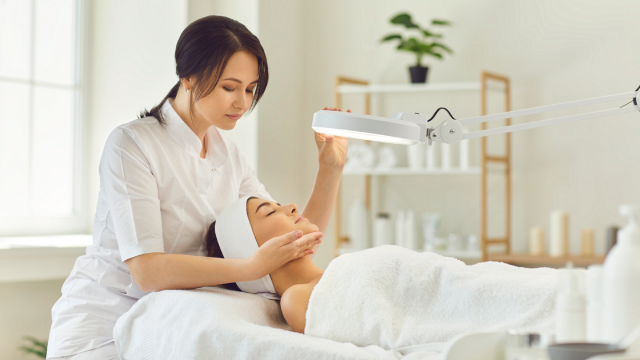
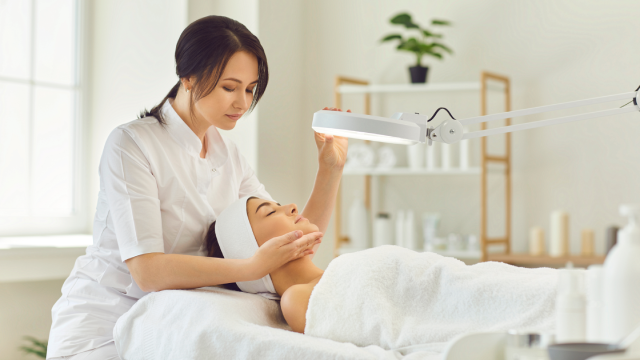
Physician-led medical skincare in Busan at Yonsei Mirae IFC Medical Center is a personalised skin-management programme rather than a single treatment: professional skincare products combined with medically supervised technologies, planned around the individual's skin condition and concerns. Because the programme covers everything from a low-intensity session to a laser or peel, the answer to almost every practical question — how long, how much downtime, how many sessions — is that it depends on what is in the plan. This page explains what determines that.
What Is Medical Skincare?
It is a physician-directed programme built from an assessment, combining topical care with clinic-delivered treatments. What distinguishes it from a cosmetic facial is that the plan is a medical one, directed at diagnosed or clinically assessed concerns.
- The programme addresses acne, post-acne marks, uneven pigmentation, sun-related skin changes, enlarged pores, fine lines and overall skin texture.
- It may combine professional skincare products with medically supervised technologies or treatments.
- The clinic assesses skin type and skin condition using a 3D JANUS II skin-analysis system, and plans the treatment method and number of sessions on that basis.
- Its dermatology services also include laser treatment, regenerative injections and radiofrequency lifting, which can be drawn into a combination plan.
- Results vary by treatment: some produce an immediate improvement in how the skin feels or looks, while acne improvement, collagen remodelling and pigmentation change take weeks or several sessions.
The logic of combining topical care with procedures is best illustrated by the condition that most demands it. The American Academy of Dermatology states that there is no single best treatment for melasma: the most effective approach usually combines sun protection with topical medication and sometimes a procedure, with laser or light treatment acting as an adjunct to that plan rather than a standalone cure. A medical skincare programme is that structure applied generally — the topical and protective work carrying the plan, with procedures placed inside it.
Who Performs Medical Skincare at Yonsei Mirae IFC Medical Center
Yonsei Mirae IFC Medical Center documents this service as being overseen by the physician named above rather than documenting that one individual personally performs every appointment, so the member of the clinical team you see on the day is determined by scheduling. Dr. Baik Seung Hyuk, who oversees the general screening team, is a board-certified colorectal surgeon holding M.D. and Ph.D. degrees and an International Fellow of the American Society of Colon and Rectal Surgeons.
"Physician-led" is the clinic's own description of this programme, and it is worth asking what it means in practice for your plan: which parts are delivered by a physician, which by other staff, and who reviews the response between sessions. The National Health Service advises patients considering an injectable cosmetic treatment to verify the practitioner's registration, training and insurance before proceeding, and notes that botulinum toxin is a prescription-only medicine that may be prescribed only after a consultation with a healthcare professional. Where a skincare programme includes an injectable or an energy-based component, that advice applies to it as much as to a standalone treatment.
What a Programme Can Include
A medical skincare plan is assembled rather than chosen, and the components differ substantially in intensity.
| Component | What it addresses | Typical downtime |
|---|---|---|
| Professional skincare products | The daily regimen underpinning any plan | None |
| Chemical peel | Some forms of acne, discoloration, rough skin, fine lines, sun-damaged appearance | Redness and scaling for several days, depending on depth |
| Laser and light treatment | Pigmentation, texture, acne scarring | Redness, swelling or crusting, depending on intensity |
| Radiofrequency lifting | Firmness and laxity | Generally limited |
| Regenerative injections | Listed among the clinic's skin-regeneration services | Varies |
The clinic promotes a one-day, one-stop service system across the centre, and its own documentation is careful about this point: that should not be taken to mean every medical skincare concern can be fully treated in one visit. Most cannot. Acne, pigmentation and texture are managed over a course, which is the honest shape of this service.
Who Is a Good Candidate for Medical Skincare?
- Adults, and adolescents depending on the specific treatment, with clinically assessed concerns such as acne, uneven skin tone or pigmentation.
- People with enlarged pores, signs of photoaging, fine lines, acne scarring or reduced skin quality.
- People who want a planned programme with monitoring rather than a single cosmetic treatment.
- Treatment may need to be postponed or modified for active skin infection, significant inflammation, open wounds or uncontrolled dermatologic disease.
- Treatment may need to be postponed after recent excessive sun exposure or tanning.
- Certain medications and photosensitising drugs, pregnancy for some light or laser treatments, and a history of abnormal scarring may all modify or rule out particular components.
What to Expect: Procedure, Recovery, and Results Timeline

Preparation follows the dermatologist's individualised instructions, and depending on the treatment may include avoiding excessive sun exposure or tanning, stopping or modifying certain irritating skincare products, following a prescribed pre-treatment regimen, and disclosing all medications and previous procedures. The consultation covers the main concern, skin type, previous treatments, medications, allergies, sun exposure and pigmentation history, supported by the 3D JANUS II analysis. There is no single treatment duration, because the programme includes different procedures; time depends on the technology selected, the area and whether procedures are combined. Discomfort varies similarly — some treatments cause little, while laser and energy-based procedures may cause warmth, tingling, stinging or brief pain. Recovery ranges from none at all for low-intensity treatments to redness, swelling, peeling, crusting or sensitivity for several days or longer after laser or peel treatments. Aftercare is consistent across the programme: gentle skincare and moisturiser as directed, no picking, scratching or aggressive exfoliation of treated skin, sun protection with sunscreen, and any treatment-specific medication or wound-care instructions.
| Stage | What to expect |
|---|---|
| Consultation | Main concern, skin type, previous treatments, medications, allergies, sun exposure, pigmentation history |
| Analysis | 3D JANUS II skin-type and skin-condition assessment informing the plan |
| Preparation | Individualised — sun avoidance, pausing irritating products, a pre-treatment regimen |
| Duration | No single figure; depends on technology, area and whether procedures are combined |
| Sensation | Little for mild treatments; warmth, tingling, stinging or brief pain for energy-based ones |
| Downtime | None for low-intensity treatments; several days or longer after laser or peel |
| Aftercare | Gentle skincare, no picking or exfoliating, sun protection, treatment-specific instructions |
| Results | Some immediate; acne, pigmentation and collagen changes over weeks and multiple sessions |
The travel implication follows directly from the downtime column. A low-downtime treatment can sit comfortably inside a short visit; a peel or an intensive laser treatment produces redness, peeling or crusting that will accompany you home. Decide which kind of treatment you are having before booking the flight, not afterwards.
Combining Treatments Within a Skincare Programme
Combination is the normal case here rather than the exception, and the clinic is explicit about how it should be approached.
- The clinic describes customised combination treatments and lists laser therapy, regenerative injections and radiofrequency lifting within its skin-regeneration centre.
- Combinations should be individualised rather than presented as a standard package for every patient — the clinic's own wording.
- The topical regimen is the constant element; procedures are placed inside it rather than replacing it.
- Where pigmentation is involved, sun protection is part of the combination rather than an afterthought, since it determines whether any of the rest holds.
- Sequencing matters: skin that has recently had an intensive treatment is not ready for another one, and a plan that ignores that is a plan optimised for a calendar rather than for skin.
Safety, Precision, and Clinic Standards

Medical skincare is not risk-free, and the clinic's documentation says so directly. Depending on the treatment, temporary effects may include redness, warmth, stinging, mild swelling, sensitivity, dryness, peeling, flaking, bruising or temporary pigmentation changes. The potential complications are more significant: burns, prolonged redness, infection, pigmentation changes, allergic reactions and scarring. Chemical peels specifically may cause redness, scaling, temporary hyper- or hypopigmentation, infection or scarring. Those risks track the intensity of the treatment rather than the name of the programme, which is why the assessment that sets the intensity is the safety-critical step. Yonsei Mirae IFC Medical Center operates as a licensed Korean medical clinic under the Medical Service Act.
The precision this service offers is in the assessment rather than in any single device. A 3D JANUS II analysis of skin type and condition is useful because it informs the choice of treatment and the number of sessions; it does not by itself make a treatment safe or effective. The judgement that follows it does.
One honest caveat belongs here. The clinic's documentation does not record a specific risk-reduction protocol for this service, in the way it does for its endoscopy service. What it documents is the assessment, the individualised planning, and the aftercare. For a programme that can include lasers and peels, it is reasonable to ask at the consultation what happens if a treatment produces more reaction than expected, and who is available to assess it.
The clinic describes a One-Step model in which a finding can be routed the same day to an in-house department, or fast-tracked to a partner tertiary hospital.
The International Medical Center at Yonsei Mirae IFC Medical Center provides English-language support for international patients, and the clinic states that this assistance runs from consultation through recovery.
The Bottom Line
- A physician-led programme combining professional skincare products with medically supervised treatments, planned from a skin analysis.
- It addresses acne, post-acne marks, pigmentation, pores, photoaging, fine lines and texture.
- Downtime ranges from none to several days or longer, depending entirely on which components are included.
- Most concerns are managed over a course of sessions; the one-day service model does not mean one-visit treatment.
- Burns, infection, pigmentation change and scarring are documented possible complications, and intensity is what governs them.
Frequently Asked Questions
**How is this different from a cosmetic facial?**It is a medical programme directed at clinically assessed concerns, planned from a skin analysis and capable of including lasers, peels and injections. A cosmetic facial is not assessed in that way and does not include treatments that carry these risks.**How long does a treatment take?**There is no single duration, because the programme includes different procedures. The time depends on the technology selected, the area treated and whether procedures are being combined in the same session.**Will it hurt?**It depends on the component. Some treatments cause little discomfort. Laser and energy-based procedures may cause warmth, tingling, stinging or brief pain, and the level varies with intensity and individual sensitivity.**How much downtime should I expect?**Anywhere from none to more than a week. Low-intensity treatments may produce only temporary redness; laser treatments and peels can cause swelling, peeling, crusting or sensitivity for several days or longer. Establish which you are having before making travel plans.**How many sessions will I need?**Usually more than one. Some improvements are visible soon after treatment, while acne improvement, pigmentation change and collagen remodelling develop across weeks and multiple sessions. The number is planned from the skin analysis and adjusted by response.**When would treatment be postponed?**With an active skin infection, significant inflammation, open wounds, uncontrolled dermatologic disease, or recent excessive sun exposure or tanning. Certain medications, photosensitising drugs, pregnancy for some light treatments, and a history of abnormal scarring also affect what can be done.**What are the more serious risks?**Burns, prolonged redness, infection, pigmentation changes, allergic reactions and scarring, depending on the treatment. Chemical peels carry their own version of these. They are uncommon, and they scale with the intensity of what is being done.What is the aftercare?
Gentle skincare and moisturiser as directed, no picking, scratching or aggressive exfoliation of treated skin, sun protection with sunscreen, and any treatment-specific medication or wound-care instructions. The sun protection applies to every component of the programme.
Book a Consultation at Yonsei Mirae IFC Medical Center
The consultation and the skin analysis are what turn a list of treatments into a plan, so they are the right place to start. Enquiries and appointments go through the clinic's enquiry and booking page, or by telephone on . The Dermatology and Anti-Aging Center is described further on the clinic's About Us page.
Yonsei Mirae IFC Medical Center is located on the second, third and fourth floors of IFC Mall, 133 Jeonpo-daero, Nam-gu, Busan, South Korea. Health screening runs Monday to Friday from 7:30 AM to 4:30 PM and Saturday from 7:30 AM to 12:30 PM, Korean Standard Time. Consultations run Monday to Friday from 8:00 AM to 6:00 PM and Saturday from 8:00 AM to 12:30 PM. The clinic is closed on Sundays and public holidays.
Disclaimer
This page is provided for informational purposes only and does not constitute medical advice, diagnosis or treatment. Whether any test or procedure described here is appropriate for you depends on your own medical history and can only be decided in consultation with a qualified physician.
Sources & Further Reading
- Melasma: Diagnosis and treatment — American Academy of Dermatology
- Choosing who will do your cosmetic procedure — National Health Service, United Kingdom
Related Medical Services
Explore additional diagnostic examinations and specialist treatments available at Yonsei Mirae IFC Medical Center.

Life-Cycle Checkup Program
The Life-Cycle Checkup Program is a set of age- and life-stage-specific screening packages — pre-marital couples and senior citizens are the two examples the clinic names — designed so that the examinations a person...
Learn More

Fatigue Recovery Clinic
The Fatigue Recovery Clinic at Yonsei Mirae IFC Medical Center provides a structured medical assessment for persistent tiredness or low energy. Fatigue evaluation in Busan here means examining the possible contributing...
Learn More

Upper GI Series
An upper GI series uses swallowed contrast and X-ray imaging to assess structural and functional abnormalities of the oesophagus, stomach and duodenum. The clinic describes it as an indirect examination, in contrast to...
Learn More