Busan IFC Mall (2F–4F) · 6,600㎡ One-Day Comprehensive Health Screening & Specialist Care · International Patient Concierge

Diagnostic Imaging · Consultation for Pricing
Low-Dose CT Scan
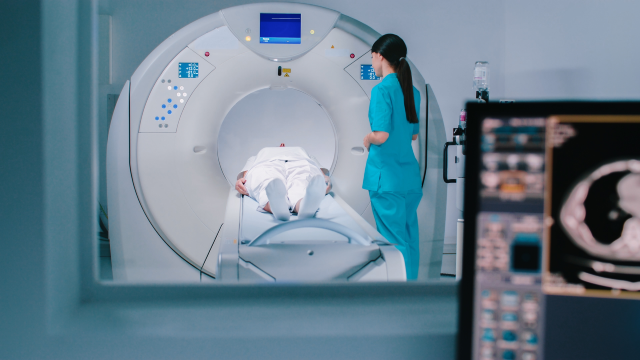
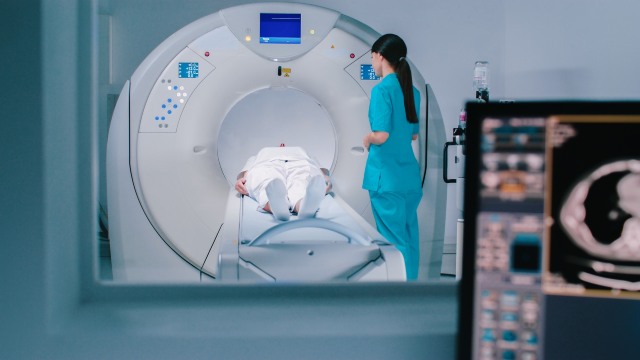
Low-dose CT in Busan is a chest scan performed at a substantially reduced radiation dose — the clinic documents 75 to 90 percent less than a standard CT — to produce cross-sectional three-dimensional images of the chest...
Schedule a ConsultationLow-Dose CT Scan
Medically reviewed by Dr. Seo Jeong-su, board-certified radiologist and diagnostic radiology specialist at Yonsei Mirae IFC Medical Center
Low-dose CT in Busan is a chest scan performed at a substantially reduced radiation dose — the clinic documents 75 to 90 percent less than a standard CT — to produce cross-sectional three-dimensional images of the chest for the early detection of lung disease and small nodules. It is one of the few screening examinations with strong trial evidence behind it, and also one with well-documented harms. This page covers the examination, who it is for, and both sides of that evidence.
What Is a Low-Dose CT Scan?
A low-dose CT is a computed tomography scan of the chest run on a reduced-radiation protocol. The images are cross-sectional and reconstructed in three dimensions, which is what allows small nodules to be identified and measured rather than merely glimpsed.
- The dose reduction the clinic documents is 75 to 90 percent compared with a standard CT scan.
- The examination is used for early detection of lung disease and of small pulmonary nodules.
- The equipment is a 128-channel MDCT scanner running low-dose scanning protocols.
- The scan itself takes under 10 minutes, and the whole evaluation is completed within a single clinic visit.
- The examination is entirely minimally uncomfortable and non-invasive, requiring no local, regional or general anaesthesia.
Lung screening by low-dose CT is unusual among screening tests in having a mortality result behind it. The National Cancer Institute's patient guide to lung cancer screening reports that annual screening with low-dose CT was better than chest x-ray at finding early-stage lung cancer and reduced the risk of dying from lung cancer in current and former heavy smokers — while carrying harms including false positives and overdiagnosis. Both parts of that finding belong in any decision to be screened, and the population it was established in matters as much as the result.
Who Performs the Low-Dose CT Scan at Yonsei Mirae IFC Medical Center
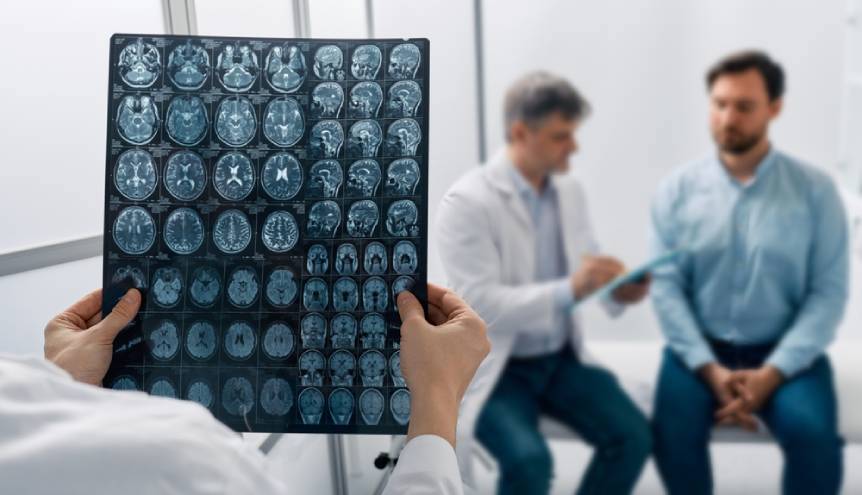
Yonsei Mirae IFC Medical Center documents this service as being overseen by the physician named above rather than documenting that one individual personally performs every appointment, so the member of the clinical team you see on the day is determined by scheduling. Dr. Seo Jeong-su is a board-certified radiologist and diagnostic radiology specialist who was formerly a professor at Ewha Womans University College of Medicine, a clinical professor in the department of health medicine at Samsung Seoul Hospital, and a visiting fellow at MD Anderson Cancer Center. Reading a low-dose chest CT is a specific skill within diagnostic radiology: the scan is designed to show small nodules, and most of the small nodules it shows are not cancer. Distinguishing the ones that warrant follow-up from the ones that do not is the substance of the examination, and it is a radiological judgement rather than an automatic output.
Scan Options and How They Compare
The value of a low-dose protocol is best understood against the two examinations on either side of it.
| Examination | Radiation | What it shows in the chest |
|---|---|---|
| Chest X-ray | Low | A single projection; limited for small nodules |
| Low-dose chest CT | Substantially reduced — 75 to 90 percent less than standard CT | Cross-sectional 3D detail; small nodules identifiable |
| Standard diagnostic CT | Full protocol dose | Maximum image quality, used where diagnosis rather than screening is the aim |
| MRI | None | Not the chest modality; strongest for soft tissue elsewhere |
Compared with a chest X-ray, low-dose CT provides significantly greater three-dimensional clarity while using up to 90 percent less radiation than a standard diagnostic CT. Where radiation must be avoided altogether, the alternative is a different modality rather than a different chest protocol: the National Institute of Biomedical Imaging and Bioengineering describes MRI as a non-invasive technique that images soft tissue — brain, spinal cord, nerves, muscles, ligaments and tendons — more clearly than x-ray or CT and without ionising radiation, which makes it the modality of choice when repeated imaging is needed. That is a description of MRI's territory, and the lung is not in it.
Who Is a Good Candidate for a Low-Dose CT Scan?
- Individuals aged over 40.
- Long-term or former smokers.
- People with a family history of lung disease.
- People who have been exposed to industrial pollutants.
- Pregnant individuals may be advised against routine low-dose CT scanning, and should discuss a non-radiation modality instead.
- People with severe unmanaged medical conditions requiring a non-radiation diagnostic approach may need an alternative.
What to Expect: Procedure, Recovery, and Results Timeline
Preparation is minimal: remove metallic jewellery, wear non-metallic examination clothing, and follow any fasting instruction given. The process runs from a health questionnaire evaluation, through selection of the low-dose imaging protocol, to the scan itself and a same-day physician consultation. On the day, patients check in, change into the hospital garments provided, and lie still on a sliding table for a chest scan that takes under ten minutes. Nothing is injected for a routine low-dose screening scan and no anaesthesia of any kind is used. The documented risks are minimal radiation exposure — substantially lower than a conventional CT — and occasional discomfort related to the position. There is no downtime, and everyday routines resume immediately after the examination. No specialised aftercare is required, though staying hydrated is encouraged and the findings are reviewed with the doctor.
| Stage | What to expect |
|---|---|
| Before | Metallic jewellery removed; non-metallic examination clothing; fasting only if instructed |
| Questionnaire | Health questionnaire evaluation, then selection of the low-dose protocol |
| Position | Lying still on a sliding table |
| Duration | Under 10 minutes for the scan itself |
| Anaesthesia | None of any kind |
| Radiation | Substantially reduced relative to a standard CT — 75 to 90 percent less |
| Recovery | Zero downtime; immediate return to normal routine |
| Results | Compiled through the streamlined diagnostic system, with a same-day physician consultation |
Because results are available the same day, an international patient can complete the examination and the conversation about it in one visit. What cannot be compressed into one visit is the follow-up interval: where a small nodule is found, the usual next step is a repeat scan after a defined period to see whether it has changed, and that appointment belongs to a future trip or to a physician at home.
Combining Low-Dose CT with Other Examinations
Chest screening is commonly one part of a wider examination programme.
- Low-dose CT is frequently combined with 3.0T MRI, where the questions being asked span the chest and soft tissue elsewhere.
- It is combined with high-definition endoscopy within comprehensive screening programmes.
- Abdominal ultrasound is often performed in the same visit, covering organs the chest scan does not.
- Blood biomarker evaluation is run alongside the imaging rather than separately.
Safety, Precision, and Clinic Standards
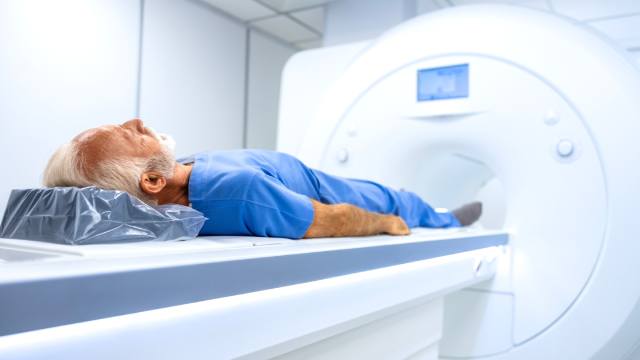
The examination's principal consideration is radiation, and the whole design of a low-dose protocol is a response to it. The clinic documents a reduction of 75 to 90 percent against a standard CT, achieved through its 128-channel MDCT hardware and low-dose scanning technology. Radiation is cumulative over a lifetime, which is why a screening scan is repeated at an interval rather than casually, and why pregnancy is a documented reason to avoid it. Beyond the dose, the risks are limited to position-related discomfort. The facility is organised around a one-day checkup system using separated movement paths and automated RFID tracking, which is what allows a ten-minute scan to be scheduled among several other examinations. Yonsei Mirae IFC Medical Center operates as a licensed Korean medical clinic under the Medical Service Act.
The second consideration is not a physical risk but a diagnostic one, and it deserves as much attention. A scan designed to detect small nodules will detect small nodules — most of which are benign. The consequence is a follow-up pathway for findings that would never have caused harm, with the anxiety and the repeat imaging that come with it. This is the overdiagnosis and false-positive burden the screening evidence documents alongside its mortality benefit, and it is why lung screening is recommended for people at elevated risk rather than offered as a general precaution. A patient who does not fall into a higher-risk group is trading a smaller chance of benefit against the same chance of a false alarm.
The clinic describes a One-Step model in which a finding can be routed the same day to an in-house department, or fast-tracked to a partner tertiary hospital.
The International Medical Center at Yonsei Mirae IFC Medical Center provides English-language support for international patients, and the clinic states that this assistance runs from consultation through recovery.
The Bottom Line
- A low-dose chest CT uses 75 to 90 percent less radiation than a standard CT and takes under ten minutes.
- It is minimally uncomfortable, needs no anaesthesia and has no recovery period, and results are available the same day.
- The evidence for lung screening — better early detection and reduced lung cancer mortality — was established in current and former heavy smokers.
- The same evidence documents false positives and overdiagnosis as real harms, which is why candidacy matters.
- A small nodule usually means a repeat scan at an interval rather than an immediate answer; plan for that follow-up.
Frequently Asked Questions
**How much less radiation is "low-dose"?**The clinic documents a reduction of 75 to 90 percent compared with a standard CT scan, achieved by running a reduced-dose protocol on its 128-channel MDCT scanner. The trade-off for a lower dose is some image quality, which is acceptable for screening but not for every diagnostic question.**How long does the scan take?**Under ten minutes for the scan itself. The whole evaluation, including the questionnaire, protocol selection and the same-day physician consultation, is completed within a single clinic visit.**Who should actually have this scan?**The clinic lists people over 40, long-term or former smokers, those with a family history of lung disease, and those exposed to industrial pollutants. The trial evidence for a mortality benefit was established specifically in current and former heavy smokers, which is worth weighing if you are outside that group.**What preparation is needed?**Remove metallic jewellery and wear the non-metallic examination clothing provided. Fasting is only required if you are specifically instructed, which generally relates to other examinations in the same visit rather than to the chest scan itself.**Will anything be injected?**Not for a routine low-dose screening scan. No anaesthesia of any kind is used either — local, regional or general. The examination is entirely non-invasive: you lie on a table that moves through the scanner.**What happens if a nodule is found?**Most small nodules are not cancer. The usual response is a repeat scan after a defined interval to see whether it has changed, rather than an immediate intervention. Where a finding needs more than observation, the clinic's referral route applies.**Can I have this scan if I might be pregnant?**Raise it before the appointment. Pregnant individuals may be advised against routine low-dose CT, and a non-radiation diagnostic modality would be considered instead. This is one of the specific contraindications the clinic documents.Is this the same as a full chest CT?
No. A standard diagnostic CT uses a full-protocol dose and produces maximum image quality, and is used when diagnosis rather than screening is the aim. The low-dose protocol trades some of that quality for a substantially lower dose, which is the right trade for a repeated screening examination.
Book a Consultation at Yonsei Mirae IFC Medical Center
Whether low-dose CT screening is worthwhile for you depends on your smoking history, age and exposures, so it is worth discussing rather than simply booking. Enquiries and appointments go through the clinic's enquiry and booking page, or by telephone on . The imaging department and its scanners are described further on the clinic's About Us page.
Yonsei Mirae IFC Medical Center is located on the second, third and fourth floors of IFC Mall, 133 Jeonpo-daero, Nam-gu, Busan, South Korea. Health screening runs Monday to Friday from 7:30 AM to 4:30 PM and Saturday from 7:30 AM to 12:30 PM, Korean Standard Time. Consultations run Monday to Friday from 8:00 AM to 6:00 PM and Saturday from 8:00 AM to 12:30 PM. The clinic is closed on Sundays and public holidays.
Disclaimer
This page is provided for informational purposes only and does not constitute medical advice, diagnosis or treatment. Whether any test or procedure described here is appropriate for you depends on your own medical history and can only be decided in consultation with a qualified physician.
Sources & Further Reading
- Lung Cancer Screening (PDQ) — Patient Version — National Cancer Institute, U.S. National Institutes of Health
- Magnetic Resonance Imaging (MRI) — National Institute of Biomedical Imaging and Bioengineering, U.S. National Institutes of Health
Related Medical Services
Explore additional diagnostic examinations and specialist treatments available at Yonsei Mirae IFC Medical Center.
Life-Cycle Checkup Program
The Life-Cycle Checkup Program is a set of age- and life-stage-specific screening packages — pre-marital couples and senior citizens are the two examples the clinic names — designed so that the examinations a person...
Learn More

Fatigue Recovery Clinic
The Fatigue Recovery Clinic at Yonsei Mirae IFC Medical Center provides a structured medical assessment for persistent tiredness or low energy. Fatigue evaluation in Busan here means examining the possible contributing...
Learn More
Upper GI Series
An upper GI series uses swallowed contrast and X-ray imaging to assess structural and functional abnormalities of the oesophagus, stomach and duodenum. The clinic describes it as an indirect examination, in contrast to...
Learn More