Busan IFC Mall (2F–4F) · 6,600㎡ One-Day Comprehensive Health Screening & Specialist Care · International Patient Concierge
Breast & Thyroid Care · Consultation for Pricing
Breast & Thyroid Biopsy
A breast biopsy in Busan or a thyroid biopsy is the step taken when imaging has found something it cannot identify. A small sample of cells or tissue is obtained from the lesion and examined by pathology, which is the...
Schedule a ConsultationBreast & Thyroid Biopsy
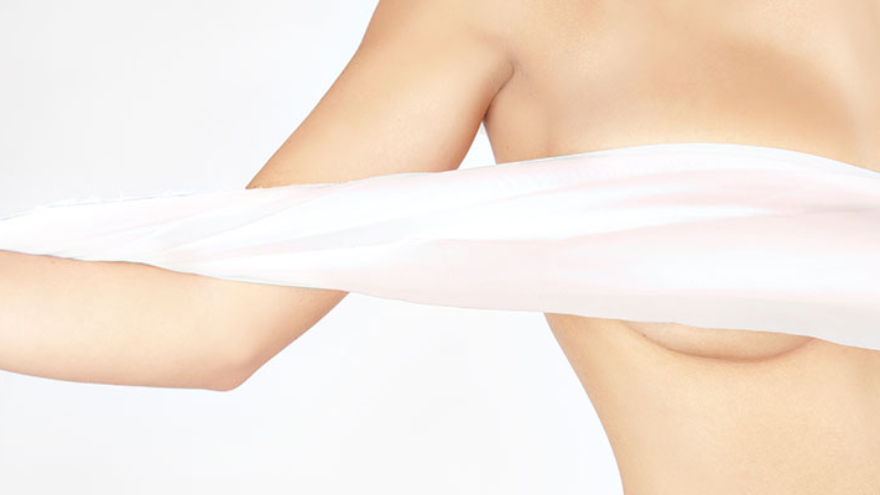
Medically reviewed by Dr. Kim Seung-il, breast and thyroid specialist and lead of the Breast & Thyroid Center at Yonsei Mirae IFC Medical Center
A breast biopsy in Busan or a thyroid biopsy is the step taken when imaging has found something it cannot identify. A small sample of cells or tissue is obtained from the lesion and examined by pathology, which is the only way to establish whether it is benign or malignant. This page covers when a biopsy becomes the right step, what image-guided needle biopsy involves, what the risks are, and what a result does and does not settle.
What Is a Breast or Thyroid Biopsy?
A biopsy is a diagnostic procedure in which a small sample of cells or tissue is taken from a suspicious breast or thyroid lesion and examined by a pathologist. It is not a treatment, and it is not a routine screening test: it is what happens when imaging has narrowed the question as far as imaging can.
- For the breast, the commonly used approaches are ultrasound-guided core-needle biopsy, fine-needle aspiration and vacuum-assisted biopsy.
- For thyroid nodules, fine-needle aspiration is the approach commonly used to determine whether a nodule has benign or malignant features.
- The purpose is a tissue or cellular diagnosis where imaging cannot establish whether a lesion is benign or malignant.
- A benign pathology result can prevent unnecessary surgery; a malignant one guides treatment. Both outcomes are useful, and the first is the more common.
- The result is a diagnosis of the sampled lesion. It does not mean the whole breast or thyroid is permanently free of disease.
Thyroid fine-needle aspiration has a reporting system worth knowing about before the result arrives. The American Thyroid Association describes thyroid fine-needle aspiration biopsy as typically performed under ultrasound guidance, with results reported in six Bethesda System categories, of which a benign result carries a malignancy risk of typically under 3 percent. A result in this field is therefore a category with a probability attached rather than a simple yes or no, and understanding that in advance makes the conversation about the result a much easier one.
Who Performs Breast and Thyroid Biopsy at Yonsei Mirae IFC Medical Center
Yonsei Mirae IFC Medical Center documents this service as being overseen by the physician named above rather than documenting that one individual personally performs every appointment, so the member of the clinical team you see on the day is determined by scheduling. Dr. Kim Seung-il is documented as a breast and thyroid specialist and as the lead of the clinic's Breast & Thyroid Center. The clinic publishes no licence, board certification, education or training details for him, and this page claims none.
There is a further gap on this page specifically, and it is more consequential than a missing credential. The clinic's documentation does not establish its own biopsy protocol— which techniques it performs, in what setting, with what sampling approach, or how specimens are handled and reported. What it does document is the imaging that leads up to a biopsy: high-resolution breast and thyroid ultrasound, mammography with AI-assisted computer diagnosis, and its precision thyroid ultrasound. This page therefore describes what breast and thyroid needle biopsy involves in general terms, and does not describe how this clinic performs it. Anyone considering a biopsy here should ask directly: which technique, performed by whom, where the specimen is analysed, and how the result will be communicated. Those are reasonable questions, and this page cannot answer them.
Biopsy Options and the Alternatives to Them
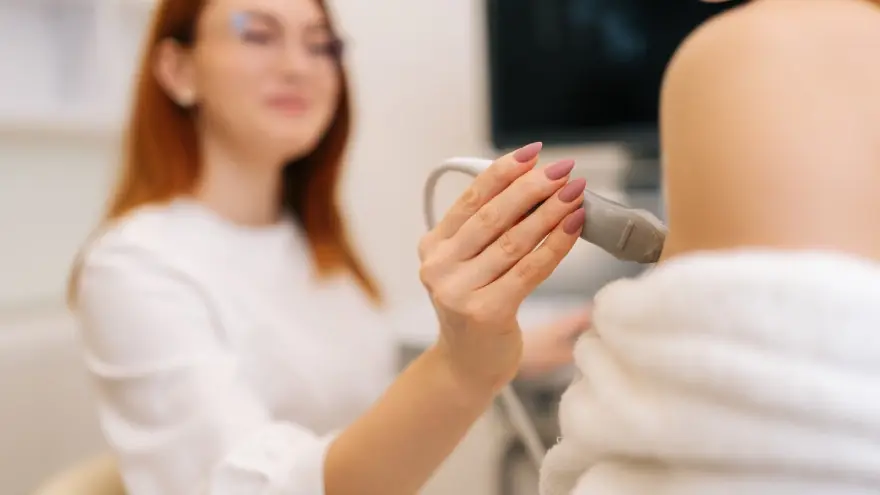
Biopsy is one option among several, and for many lesions it is not the first.
| Option | What it involves | When it applies |
|---|---|---|
| Ultrasound-guided core-needle biopsy (breast) | A core of tissue taken under ultrasound guidance, with local anaesthesia | A breast lesion whose imaging characteristics warrant tissue diagnosis |
| Fine-needle aspiration (breast or thyroid) | Cells drawn through a fine needle, usually under ultrasound guidance | Thyroid nodules meeting criteria for sampling; some breast lesions |
| Vacuum-assisted biopsy (breast) | A larger tissue sample obtained with vacuum assistance | Where a core biopsy would not obtain enough tissue |
| Ultrasound surveillance | Repeat imaging at an interval instead of sampling | Lesions considered benign, or selected low-risk thyroid nodules |
| Complementary imaging | Mammography, or MRI where clinically indicated | Where another view may resolve the question without sampling |
The clinic states explicitly that mammography and breast ultrasound detect different types of lesions and that complementary testing is most effective — so a further imaging examination is sometimes the answer where a biopsy might be assumed. For selected low-risk thyroid nodules, surveillance ultrasound may be appropriate rather than sampling, with fine-needle aspiration used when a nodule meets the criteria for it.
An image-guided needle biopsy is also considerably less demanding than the surgical alternative. RadiologyInfo.org, published by the Radiological Society of North America and the American College of Radiology, describes ultrasound-guided breast biopsy as less invasive than surgical biopsy, using no ionising radiation, with a haematoma risk under about 1 percent and an infection risk requiring antibiotics of under about 1 in 1,000.
Who Is a Good Candidate for a Breast or Thyroid Biopsy?
- Patients with a breast or thyroid lesion whose imaging characteristics warrant tissue diagnosis.
- Patients with breast masses, or suspicious calcifications or asymmetry, requiring pathological confirmation.
- Patients with thyroid nodules showing suspicious ultrasound features, or with another clinical indication for fine-needle aspiration.
- Patients whose lesion has changed during follow-up imaging.
- Biopsy may need to be postponed or specially planned in patients with significant bleeding risk, on certain anticoagulant or antiplatelet medications, with an active infection at the biopsy site, or unable to remain still.
- Anticoagulants increase bleeding risk during procedures involving biopsy, and the clinic's general examination guidance recommends advance consultation about medication management.
What to Expect: Procedure, Recovery, and Results Timeline
Prolonged fasting is usually not required for an ultrasound-guided needle biopsy performed under local anaesthesia. Patients should provide a complete medication history — anticoagulants and antiplatelet drugs in particular — and disclose allergies, pregnancy status and any previous biopsy or surgery. Most percutaneous breast or thyroid biopsies are performed under local anaesthesia rather than general anaesthesia; the anaesthetic reduces the pain of needle insertion, though pressure or a pulling sensation may still be felt during sampling. An ultrasound-guided breast core biopsy commonly takes approximately 20 to 60 minutes depending on the lesion and the number of samples, while thyroid fine-needle aspiration is usually shorter, often around 15 to 30 minutes including preparation. Image-guided needle biopsies are usually outpatient procedures requiring little recovery, and normal activities can often resume the same day or shortly afterwards, though strenuous activity may be restricted briefly depending on the site and technique. Afterwards, apply pressure to the biopsy site, keep the dressing clean and dry according to the instructions given, and watch for increasing swelling, bleeding, fever, redness or severe pain. Contact the clinic if significant bleeding or another concerning symptom occurs.
| Stage | What to expect |
|---|---|
| Before | No prolonged fasting for a needle biopsy under local anaesthesia; full medication history required |
| Disclose | Anticoagulants and antiplatelet drugs, allergies, pregnancy status, previous biopsy or surgery |
| Anaesthesia | Local anaesthesia for breast core biopsy; thyroid FNA with or without it, depending on technique |
| Duration | Breast core biopsy roughly 20–60 minutes; thyroid FNA roughly 15–30 minutes including preparation |
| Sensation | Brief needle discomfort, then pressure or pulling during sampling rather than sharp pain |
| Recovery | Outpatient; normal activity often the same day, with strenuous activity briefly restricted |
| Aftercare | Pressure on the site, dressing kept clean and dry, watch for swelling, bleeding, fever or severe pain |
| Results | Pathology takes longer than the imaging did — the specimen must be processed and examined |
The results timeline is the part that most often shapes an international patient's plans. Ultrasound images are available during the examination, but a biopsy result is not: the specimen has to be processed and examined, and the exact timeframe depends on the type of biopsy and the pathology testing required. After an uncomplicated outpatient needle biopsy many patients can travel once the medical team confirms there is no significant bleeding or other complication — but the timing should be confirmed with the treating physician, because travelling immediately after an invasive procedure is not always appropriate, and because the result will arrive after the patient has left.
Safety, Precision, and Clinic Standards

The documented risks are bleeding or haematoma, infection, persistent pain and, rarely, injury to nearby structures depending on the biopsy location and technique. Breast needle biopsy may leave temporary bruising or a small scar depending on the technique used. Thyroid fine-needle aspiration has a generally low complication rate, though bleeding and temporary discomfort can occur. Common effects after a needle biopsy are temporary pain or tenderness, bruising, mild swelling and a small amount of bleeding at the puncture site; thyroid FNA commonly causes mild neck soreness that resolves relatively quickly. Mild soreness, bruising or swelling may persist for several days after a breast core biopsy. Infection is uncommon. Yonsei Mirae IFC Medical Center operates as a licensed Korean medical clinic under the Medical Service Act.
The clinic's documented strength here is what happens before the biopsy rather than the biopsy itself: high-resolution breast and thyroid ultrasound, mammography with AI-assisted computer diagnosis, and precision thyroid ultrasound, all of which inform whether sampling is warranted and where. Breast ultrasound is specifically described as useful for dense breasts, tissue imbalance and masses, while thyroid ultrasound assesses nodule shape, size and composition and can monitor change over time. Those examinations are how a lesion arrives at the question of biopsy in the first place.
The clinic describes a One-Step model in which a finding can be routed the same day to an in-house department, or fast-tracked to a partner tertiary hospital.
The International Medical Center at Yonsei Mirae IFC Medical Center provides English-language support for international patients, and the clinic states that this assistance runs from consultation through recovery.
The Bottom Line
- A biopsy answers what imaging cannot: whether a specific lesion is benign or malignant.
- Breast lesions are commonly sampled by ultrasound-guided core needle, fine-needle aspiration or vacuum-assisted biopsy; thyroid nodules by fine-needle aspiration.
- Local anaesthesia is usual, the procedure is outpatient, and recovery is generally short with brief restriction of strenuous activity.
- Anticoagulant and antiplatelet medication must be disclosed in advance, because bleeding is the principal risk.
- The clinic documents the imaging that leads to a biopsy but not its own biopsy protocol — ask directly about technique, setting and reporting before proceeding.
Frequently Asked Questions**When does a biopsy become necessary?**When a breast or thyroid lesion has imaging characteristics that warrant tissue diagnosis — a mass, suspicious calcifications or asymmetry, a thyroid nodule with suspicious ultrasound features, or a lesion that has changed during follow-up. Many lesions never reach that threshold and are followed with repeat imaging instead.**Will it hurt?**Most breast and thyroid needle biopsies involve discomfort rather than severe pain. Local anaesthetic is commonly used for a breast core biopsy and may be used for a thyroid biopsy. Expect brief needle discomfort, then pressure or pulling during sampling, and soreness afterwards.**How long does the procedure take?**An ultrasound-guided breast core biopsy commonly takes approximately 20 to 60 minutes depending on the lesion and the number of samples. Thyroid fine-needle aspiration is usually shorter, often around 15 to 30 minutes including preparation.**I take a blood thinner — what should I do?**Tell the clinic well before the appointment rather than on the day. Anticoagulant and antiplatelet medication increases bleeding risk during a biopsy, and the clinic's general examination guidance recommends consulting in advance about how the medication should be managed.**What should I watch for afterwards?**Increasing swelling, bleeding, fever, redness or severe pain. Apply pressure to the site as instructed and keep the dressing clean and dry. Contact the clinic if significant bleeding or another concerning symptom develops rather than waiting for the follow-up appointment.**How soon will I know the result?**Later than you will know the imaging findings. The specimen must be processed and examined by a pathologist, and the timeframe depends on the type of biopsy and the testing required. Plan for the result arriving after the appointment rather than during it.**Does a benign result mean I am in the clear?**It means the sampled lesion is benign. It is a diagnosis of what was sampled, not a statement that the whole breast or thyroid is permanently free of disease, and any recommended follow-up imaging still applies.Can I fly home afterwards?
After an uncomplicated outpatient needle biopsy, many patients can travel once the medical team confirms there is no significant bleeding or other complication. Confirm the timing with the treating physician, since travel immediately after an invasive procedure is not always appropriate.
Book a Consultation at Yonsei Mirae IFC Medical Center
A biopsy follows an imaging finding rather than being booked on its own, so the conversation usually starts with the scan that raised the question. Enquiries and appointments go through the clinic's enquiry and booking page, or by telephone on . Background on the centre and the diagnostic services around it is set out on the clinic's About Us page.
Yonsei Mirae IFC Medical Center is located on the second, third and fourth floors of IFC Mall, 133 Jeonpo-daero, Nam-gu, Busan, South Korea. Health screening runs Monday to Friday from 7:30 AM to 4:30 PM and Saturday from 7:30 AM to 12:30 PM, Korean Standard Time. Consultations run Monday to Friday from 8:00 AM to 6:00 PM and Saturday from 8:00 AM to 12:30 PM. The clinic is closed on Sundays and public holidays.
Disclaimer
This page is provided for informational purposes only and does not constitute medical advice, diagnosis or treatment. Whether any test or procedure described here is appropriate for you depends on your own medical history and can only be decided in consultation with a qualified physician.
Sources & Further Reading
- Fine Needle Aspiration Biopsy of Thyroid Nodules — American Thyroid Association
- Breast Biopsy (Ultrasound-Guided) — Radiological Society of North America and American College of Radiology
Related Medical Services
Explore additional diagnostic examinations and specialist treatments available at Yonsei Mirae IFC Medical Center.
Life-Cycle Checkup Program
The Life-Cycle Checkup Program is a set of age- and life-stage-specific screening packages — pre-marital couples and senior citizens are the two examples the clinic names — designed so that the examinations a person...
Learn More

Fatigue Recovery Clinic
The Fatigue Recovery Clinic at Yonsei Mirae IFC Medical Center provides a structured medical assessment for persistent tiredness or low energy. Fatigue evaluation in Busan here means examining the possible contributing...
Learn More
Upper GI Series
An upper GI series uses swallowed contrast and X-ray imaging to assess structural and functional abnormalities of the oesophagus, stomach and duodenum. The clinic describes it as an indirect examination, in contrast to...
Learn More