Busan IFC Mall (2F–4F) · 6,600㎡ One-Day Comprehensive Health Screening & Specialist Care · International Patient Concierge

Dermatology Treatment · Consultation for Pricing
Anti-Aging Injectables
Anti-aging injectables in Busan at Yonsei Mirae IFC Medical Center are minimally invasive treatments for selected visible signs of aging — wrinkles, fine lines and loss of facial volume — delivered as small quantities...
Schedule a ConsultationAnti-Aging Injectables

Medically reviewed by Dr. Baik Seung Hyuk, M.D., Ph.D., FASCRS, Hospital Director and Medical Director of Yonsei Mirae IFC Medical Center
Anti-aging injectables in Busan at Yonsei Mirae IFC Medical Center are minimally invasive treatments for selected visible signs of aging — wrinkles, fine lines and loss of facial volume — delivered as small quantities of an injectable placed at planned points. The treatment is quick and the recovery is short, which makes it easy to underestimate. This page covers what the treatment does, how long it lasts, the complications that are uncommon but serious, and the checks worth making on any practitioner who will hold the needle.
What Are Anti-Aging Injectables?
Injectable treatments address different aspects of facial aging depending on the product used: some relax the muscle activity that creates dynamic wrinkles, others restore volume or contour. The approach begins with an individualised assessment of the patient's condition and aging-related concerns.
- The treatments address age-related wrinkles, fine lines and volume changes in adults seeking a non-surgical option.
- The area is assessed and cleansed, the selected injectable is prepared, and small amounts are administered at planned treatment points; the provider then checks symmetry and gives aftercare instructions.
- Depending on the injectable and the area, topical or local numbing may be used; many injectable procedures involve only brief discomfort from the needle.
- Results depend strongly on the injectable used, the treatment area, the dose and individual response.
- Botulinum toxin gradually reduces targeted muscle activity and wrinkles rather than producing an immediate permanent change, with effects generally lasting around three to four months.
That last point deserves emphasis because it shapes everything else: these treatments are temporary by design. A result that lasts three to four months is a result that needs repeating, and a patient who travels for the first treatment should consider where the maintenance will happen.
Who Performs Anti-Aging Injectables at Yonsei Mirae IFC Medical Center
Yonsei Mirae IFC Medical Center documents this service as being overseen by the physician named above rather than documenting that one individual personally performs every appointment, so the member of the clinical team you see on the day is determined by scheduling. Dr. Baik Seung Hyuk, who oversees the general screening team, is a board-certified colorectal surgeon holding M.D. and Ph.D. degrees and an International Fellow of the American Society of Colon and Rectal Surgeons.
For this treatment more than any other in the department, that matters, and there is published advice on what to do about it. The National Health Service advises patients considering an injectable cosmetic treatment to verify the practitioner's registration, training and insurance before proceeding, and notes that botulinum toxin is a prescription-only medicine that may be prescribed only after a consultation with a healthcare professional. Those are questions to ask rather than assumptions to make, wherever the treatment is being arranged.
Injectable Options and What Each Addresses
Different injectables solve different problems, and the consultation is where the mismatch between what a patient wants and what a product does gets resolved.
| Concern | What addresses it | Character of the result |
|---|---|---|
| Dynamic wrinkles from muscle movement | Botulinum toxin | Gradual onset; generally around three to four months |
| Loss of facial volume | Volumising injectables | Immediate change, with duration depending on product |
| Contour changes | Product and placement selected for the area | Varies by product, area and dose |
| Fine lines | Depends on cause — movement, volume or skin quality | Varies; may be better addressed by skincare or a device |
The clinic describes its anti-aging care as personalised management intended to maintain health and to support quality of life, rather than as a single procedure. In practice, an assessment that concludes a particular concern is better addressed by skincare or by an energy-based treatment than by an injection is the assessment working correctly.
Who Is a Good Candidate for Anti-Aging Injectables?
- Adults with age-related wrinkles, fine lines or volume changes seeking a non-surgical option.
- Adults wanting to reduce dynamic wrinkles, volume loss or certain contour changes.
- People who accept that the results are temporary and require maintenance.
- Treatment may be inappropriate for people with certain allergies or serious allergies to a product component.
- Treatment may need to be postponed where there is an active skin infection or significant inflammation at the planned injection site.
- Treatment may be inappropriate for people with certain bleeding disorders or uncontrolled medical conditions, and individual assessment is essential.
What to Expect: Procedure, Recovery, and Results Timeline
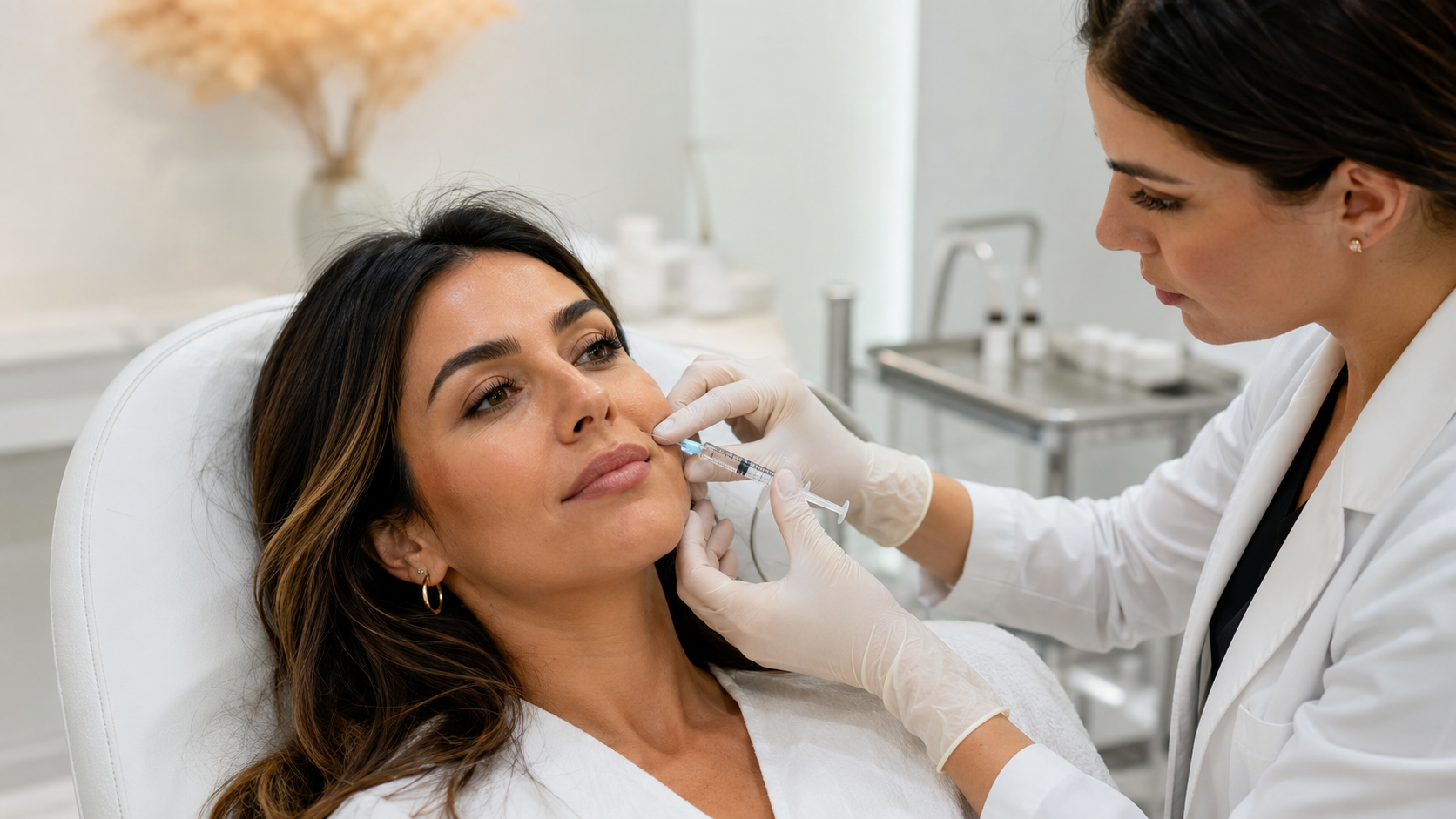
Disclose your medications, allergies, previous injectable treatments and relevant medical history; avoiding factors that increase bruising may be recommended depending on your circumstances. At the appointment the area is assessed and cleansed, the injectable is prepared, and small amounts are administered at planned points, after which symmetry is checked and aftercare explained. There is usually some brief discomfort from the needle — pinching, stinging, pressure, tenderness or temporary soreness — varying by injection site and product. There is no single duration, because it depends on the injectable, the number of areas and the treatment plan. Most people return to normal activities immediately, though the treated area should not be rubbed or massaged, and strenuous exercise is generally left for about two hours. Mild swelling, redness or bruising may remain for several days. Afterwards, follow the instructions given, avoid unnecessary pressure on the treated areas, and monitor for unusual swelling, pain, skin colour changes or other concerning symptoms.
| Stage | What to expect |
|---|---|
| Before | Disclose medications, allergies, previous injectables and medical history |
| Assessment | Individualised assessment of the concern before any product is selected |
| Injection | Small amounts at planned points; symmetry checked afterwards |
| Sensation | Brief needle discomfort — pinching, stinging, pressure or soreness |
| Duration | No single figure; depends on the injectable, the number of areas and the plan |
| Immediately after | Normal activity; no rubbing or massaging the area; about two hours before strenuous exercise |
| Days | Mild swelling, redness or bruising may persist for several days |
| Result | Botulinum toxin develops gradually and lasts around three to four months; other products vary |
For international patients, allowing at least one to two days gives time for the consultation, the treatment and a check afterwards. A same-day treatment on the day of departure leaves no margin for the swelling or bruising that commonly follows, and none at all for the review if something looks wrong.
Combining Injectables with Other Treatments
Facial aging has several components, and injectables address only some of them.
- Injectables address movement and volume; energy-based treatments address firmness and texture, which is why the two are often planned together.
- Where skin quality is the underlying concern, the physician-led medical skincare programme is the more appropriate route.
- The clinic's skin-regeneration centre lists regenerative injections and radiofrequency lifting alongside its laser services, and describes combinations as individualised rather than packaged.
- Where treatments are combined, sequencing matters — swelling from an injectable can complicate the assessment of a device-based treatment performed at the same visit.
A word about how the result should be judged, since this is the treatment most often assessed too early. Botulinum toxin develops gradually rather than appearing at the appointment, so the face in the mirror on the way out is not the result. Volumising products show an immediate change, but some of what is visible on the first day is swelling rather than product. In both cases the sensible point of assessment is after the initial reaction has settled, which is also when any asymmetry worth correcting becomes apparent. Booking a review rather than judging it yourself in a hotel mirror is the better approach, and it is another argument for allowing a day or two before flying.
Safety, Precision, and Clinic Standards

Common short-term effects are redness, swelling, tenderness or soreness, bruising, itching and localised discomfort. The serious complications are uncommon but important to understand, and they differ by product: filler risks include infection, nodules or granulomas, allergic reactions, tissue damage, and accidental injection into a blood vessel. That last one is the reason injectable treatment belongs in medical hands — it is a vascular event, not a cosmetic disappointment, and its consequences are not confined to the skin. The clinic describes an individualised approach with customised management according to each person's characteristics. Yonsei Mirae IFC Medical Center operates as a licensed Korean medical clinic under the Medical Service Act.
The setting matters as much as the practitioner. The American Academy of Dermatology states that botulinum toxin therapy should be administered only in a medical setting by a qualified physician, and never at a non-medical spa, party, salon or private home, because product obtained without a medical licence has caused long-term muscle paralysis and permanent eye damage. Those are not theoretical harms, and they follow from the product rather than from the technique — which is why where the treatment happens is a safety question in its own right.
Aftercare is where a patient's own vigilance matters. Unusual swelling, pain, skin colour changes or other concerning symptoms should be reported rather than waited out — the timeline on a vascular complication is hours, not days, and a patient who has flown home has made that conversation harder. Establish before the treatment how you would reach the clinic afterwards, and keep that contact route available for the following week.
One further point specific to this service. The clinic's own documentation for anti-aging injectables records that consultations are conducted primarily in Korean and does not confirm English-language support for this particular service, even though English support is documented at clinic level. For a treatment whose safety rests on a detailed exchange about allergies, medications and previous injectables, that is worth confirming before booking rather than discovering at the appointment.
The clinic describes a One-Step model in which a finding can be routed the same day to an in-house department, or fast-tracked to a partner tertiary hospital.
The International Medical Center at Yonsei Mirae IFC Medical Center provides English-language support for international patients, and the clinic states that this assistance runs from consultation through recovery.
The Bottom Line
- Injectables treat wrinkles, fine lines and volume loss through small amounts placed at planned points, with brief needle discomfort.
- Botulinum toxin works gradually and lasts around three to four months; other products vary by type, area and dose.
- Most people resume normal activity immediately, avoiding pressure on the area and strenuous exercise for about two hours.
- Serious complications are uncommon but real, and accidental injection into a blood vessel is why this is a medical procedure.
- Verify the practitioner's registration, training and insurance beforehand — botulinum toxin is a prescription-only medicine.
Frequently Asked Questions
**How long will the result last?**Botulinum toxin generally lasts around three to four months, reducing targeted muscle activity gradually rather than producing an immediate permanent change. Other injectables vary considerably by product, area and dose, and some develop their effect over time rather than at once.**Does it hurt?**There is usually brief discomfort from the needle — pinching, stinging, pressure, tenderness or temporary soreness. The amount varies by injection site and product. Topical or local numbing may be used depending on the treatment and the area.**How long is the appointment?**There is no single answer, because it depends on which injectable is used, how many areas are treated and what the plan involves. The assessment is part of the appointment, and at a first visit it is the longer part.**What should I avoid afterwards?**Rubbing or massaging the treated area, and strenuous exercise for about two hours. Beyond that, most people return to normal activities immediately. Mild swelling, redness or bruising may remain visible for several days.**What are the serious risks?**They are uncommon but they exist: infection, nodules or granulomas, allergic reactions, tissue damage, and accidental injection into a blood vessel. This is the reason injectables are a medical procedure and the reason the practitioner's qualifications matter.**When should I contact the clinic afterwards?**If you notice unusual swelling, pain, changes in skin colour, or any other concerning symptom. These should be reported rather than waited out, and it is worth agreeing before the treatment how you would reach the clinic once you have left.**How should I check who is treating me?**Verify the practitioner's registration, training and insurance before proceeding — that is the standing advice for any injectable cosmetic treatment. Botulinum toxin is a prescription-only medicine and may be prescribed only after a consultation with a healthcare professional.Will the consultation be in English?
Confirm it when booking. English-language support is documented at clinic level through the International Medical Center, but the clinic's documentation for this specific service records consultations as being conducted primarily in Korean and does not confirm English support for it.
Book a Consultation at Yonsei Mirae IFC Medical Center
Ask about the practitioner, the product and the language of the consultation when you book — all three belong in the conversation before a treatment date is set. Enquiries and appointments go through the clinic's enquiry and booking page, or by telephone on . The Dermatology and Anti-Aging Center is described further on the clinic's About Us page.
Yonsei Mirae IFC Medical Center is located on the second, third and fourth floors of IFC Mall, 133 Jeonpo-daero, Nam-gu, Busan, South Korea. Health screening runs Monday to Friday from 7:30 AM to 4:30 PM and Saturday from 7:30 AM to 12:30 PM, Korean Standard Time. Consultations run Monday to Friday from 8:00 AM to 6:00 PM and Saturday from 8:00 AM to 12:30 PM. The clinic is closed on Sundays and public holidays.
Disclaimer
This page is provided for informational purposes only and does not constitute medical advice, diagnosis or treatment. Whether any test or procedure described here is appropriate for you depends on your own medical history and can only be decided in consultation with a qualified physician.
Sources & Further Reading
- Choosing who will do your cosmetic procedure — National Health Service, United Kingdom
- Botulinum toxin therapy: FAQs — American Academy of Dermatology
Related Medical Services
Explore additional diagnostic examinations and specialist treatments available at Yonsei Mirae IFC Medical Center.

Life-Cycle Checkup Program
The Life-Cycle Checkup Program is a set of age- and life-stage-specific screening packages — pre-marital couples and senior citizens are the two examples the clinic names — designed so that the examinations a person...
Learn More

Fatigue Recovery Clinic
The Fatigue Recovery Clinic at Yonsei Mirae IFC Medical Center provides a structured medical assessment for persistent tiredness or low energy. Fatigue evaluation in Busan here means examining the possible contributing...
Learn More

Upper GI Series
An upper GI series uses swallowed contrast and X-ray imaging to assess structural and functional abnormalities of the oesophagus, stomach and duodenum. The clinic describes it as an indirect examination, in contrast to...
Learn More