Busan IFC Mall (2F–4F) · 6,600㎡ One-Day Comprehensive Health Screening & Specialist Care · International Patient Concierge

Clinic News & Media
Endoscopy: Stomach, Colorectal Cancer Highly Curable If Found Early [Column: Dir. Baik Seung Hyuk]
Endoscopy for early stomach and colorectal cancer detection: when to get a gastroscopy or colonoscopy, and the risks to know. Book your endoscopy today.
Schedule a Consultation
Endoscopic examinations can be broadly classified into gastroscopy and enteroscopy. Gastroscopy is a procedure in which an endoscope is inserted through the mouth to observe the esophagus, stomach, and part of the duodenum. In Korea, gastric cancer has the highest incidence rate among all cancers, making regular gastroscopic examinations essential. In the case of early-stage gastric cancer, a cure can be expected in over 90% of cases if treated with surgical removal or, in some cases, endoscopic surgery. For preventive purposes, if a lesion is discovered during the examination, polyps or abnormalities in the examination site can be immediately resected and samples collected.
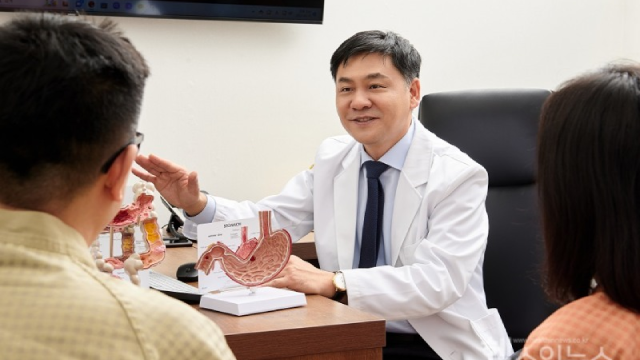
Chief Director Baik Seung Hyuk of Busan Future IFC Health Checkup Center
While there are various reasons, such as specific diseases, requiring a gastroscopy, it is essential for adult men and women aged 40 and older to undergo a gastroscopy about once a year to detect early gastric cancer and other diseases, even in the absence of specific symptoms. Similarly, colonoscopy is mandatory for adult men and women aged 50 and older to diagnose early colorectal cancer and polyps, even in the absence of specific symptoms.
However, acute gastric mucosal lesions rarely occur during the procedure, and a diagnosis should be suspected if symptoms such as epigastric pain, vomiting, or bleeding appear 3 to 7 days after the examination. Hypersensitivity reactions to local anesthetics used during sedation may occur, and conditions such as glaucoma or benign prostatic hyperplasia may temporarily worsen due to the injection of parasympathetic blockers. Nevertheless, the occurrence of these complications is very rare, and most can be detected during or immediately after the examination. To minimize the occurrence of complications, it is important to consult thoroughly with a doctor beforehand and disclose your medical history and medication history.
In addition, bleeding can occur as a complication of polypectomy, but this can generally be prevented by performing the procedure carefully. However, spontaneous bleeding that occurs very rarely around one week after polypectomy is caused by secondary infections from intestinal bacteria and cannot be prevented at the time of the procedure. Therefore, while it is advisable to take precautions such as avoiding excessive alcohol consumption to prevent such spontaneous bleeding, it is more important to undergo an endoscopy promptly if a large amount of dark blood is observed during a bowel movement.
(Written by: Baik Seung Hyuk, Chief Director of Busan Mirae IFC Health Checkup Center)